Aluminum Nitride Surface Modification Powder
- Custom and standard options available.
- Fast lead times guaranteed.
- High performance at a competitive price.
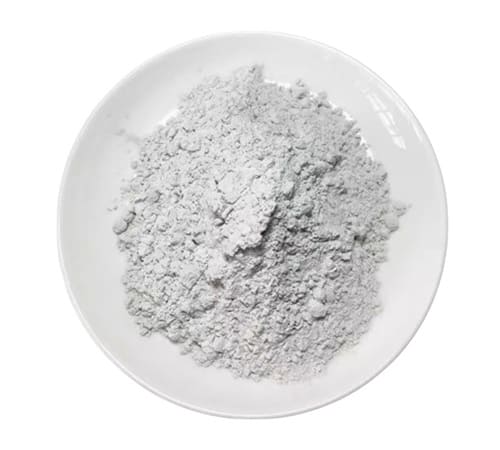
Aluminum nitride surface-modified powder is based on high-purity aluminum nitride. Treated via special modification processes, it enhances dispersibility and interface bonding strength while retaining high thermal conductivity, high-temperature resistance, and insulation. It is suitable for electronic packaging, ceramic sintering, etc., to optimize composite material performance. NexusX Advanced Materials, as a premier manufacturer and supplier of high-quality aluminum nitride products, focuses on producing high-performance aluminum nitride granulation powder.
Or email us at [email protected]
Aluminum Nitride Surface Modification Powder Data Sheet
| Purity: | 99%-99.9% |
| Particle Size: | 30-120 μm or customized |
| CAS: | 24304-00-5 |
| Melting Point: | 2200℃ |
| Boiling Point: | 2249℃ |
Aluminum Nitride Surface Modification Powder Description
Aluminum nitride surface-modified powder is based on high-purity aluminum nitride. Through treatment with modifiers such as silane coupling agents and titanates or plasma modification processes, it effectively improves surface hydrophilicity/hydrophobicity and dispersibility, solving the problem of easy agglomeration of traditional aluminum nitride. The powder not only retains aluminum nitride’s inherent high thermal conductivity (thermal conductivity up to 200-300W/(m·K)), excellent insulation, and high-temperature resistance but also enhances interface bonding with matrices like resins and ceramics. Widely used in electronic packaging materials, high thermal conductivity composites, ceramic sintering aids, etc., it significantly improves the thermal conductivity efficiency and structural stability of end products, meeting the demand for high-performance materials in electronics, new energy, and other industries.
Aluminum Nitride Surface Modification Powder Specifications
| Product | AlN Granulation Powder-1 | AlN Granulation Powder-2 | |
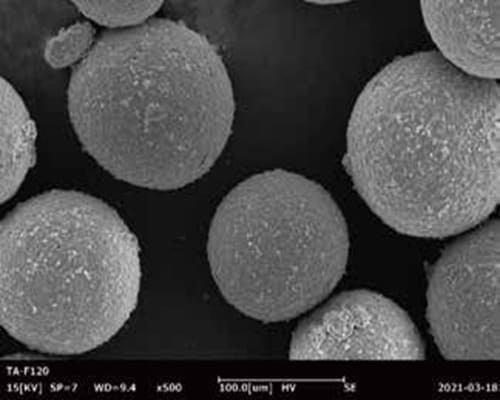
| Average Particle Size (μm) | 40-60 | 8-15 | |
| Sphericity | 40-60% | ≥98% | |
| Y2O3 (wt%) | 3-4 | 4-5 | |
| Impurity Content | Ca (ppm) | <30 | <50 |
| Fe (ppm) | <15 | <20 | |
| Si (ppm) | <40 | <50 | |
| Apparent Density (g/cm3) | 0.8-1.0 | 0.8-1.0 | |
| Hall Flow Rate (s/50g) | 80-100 | 80-100 | |
| Recommended Sintering Temperature | 1750-1850 ℃ | ||
| Note | Sintering additives can be formulated according to customer requirements. | ||
Aluminum Nitride Surface Modification Powder SEM
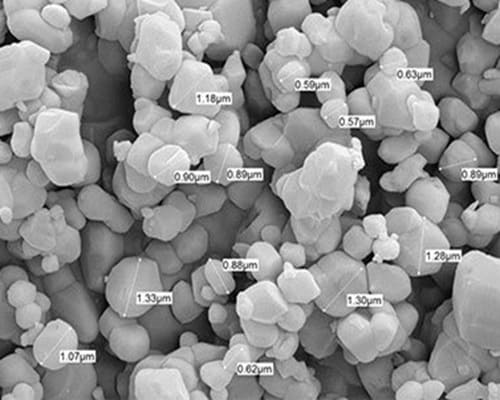
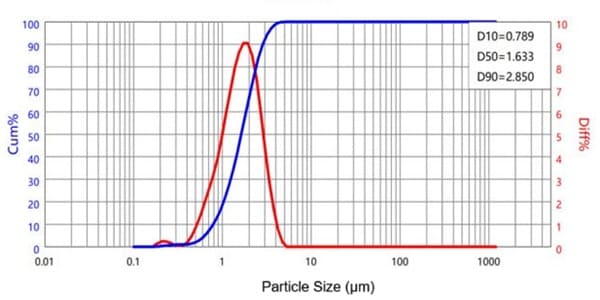
Aluminum Nitride Surface Modification Powder Particle Size Distribution
Aluminum Nitride Surface Modification Powder Features
- Enhanced Dispersibility
- Retained Core Advantages
- Superior Interface Compatibility
- Broad Process Adaptability
- Stable Chemical Properties
Aluminum Nitride Powder Surface Modification Solutions
- Silane Coupling Agent Modification
Widely used for organic matrices: silane agents (amino/epoxy-functional) react with AlN surface hydroxyls, forming organic coatings to boost resin dispersibility and interface bonding—fit for electronic packaging composites. - Titanate/Zirconate Modification
For plastic/rubber matrices: coupling agents chelate with AlN surface ions, reducing surface energy to prevent agglomeration, ensuring composite thermal conductivity and mechanical toughness. - Plasma Modification
Eco-friendly dry method: plasma (O₂/N₂ or CH₄/C₂H₄) etches/grafts AlN surfaces, cleaning impurities and adding functional groups—suitable for high-purity needs like semiconductor thermal management. - Inorganic Coating Modification
Sol-gel/CVD applies SiO₂/Al₂O₃ coatings: improves AlN moisture resistance and sinterability, lowering ceramic sintering temperature while retaining high thermal conductivity. - Surfactant Adsorption
Cost-effective for short-term dispersion: anionic/non-ionic surfactants adsorb on AlN, creating steric hindrance—fit for water-based slurries, but less durable for high-temperature use.
Aluminum Nitride Surface Modification Powder Hydrolysis Testing
The unmodified AIN undergoes almost complete hydrolysis after 2 hours at 70°C, resulting in a strong, irritating ammonia odor and significant clumping at the bottom of the cup. In contrast, our modified product shows no ammonia odor and no clumping even after 72 hours of hydrolysis, with almost no signs of hydrolysis.
- Experimental Conditions: 30g of Aluminum Nitride, 300g of pure water, water temperature at 70°C.
- Experimental Method: The degree of hydrolysis is determined by observing the experimental phenomena and measuring the pH value of the solution.
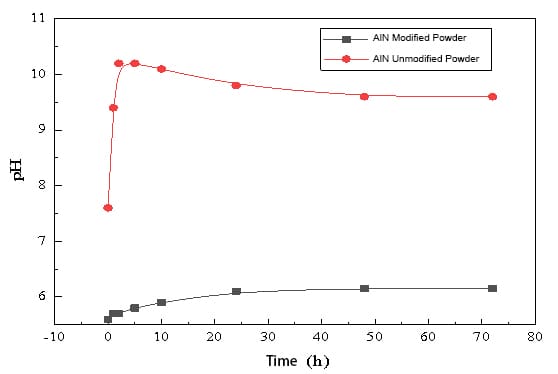
| Time (h) | 0 | 1.0 | 2.0 | 5.0 | 10.0 | 24.0 | 48.0 | 72.0 |
| AlN Modified Powder (pH) | 5.6 | 5.7 | 5.7 | 5.8 | 5.9 | 6.1 | 6.15 | 6.15 |
| AlN Unmodified Powder (pH) | 7.6 | 9.4 | 10.2 | 10.2 | 10.1 | 9.8 | 9.6 | 9.6 |
Aluminum Nitride Surface Modification Powder Applications
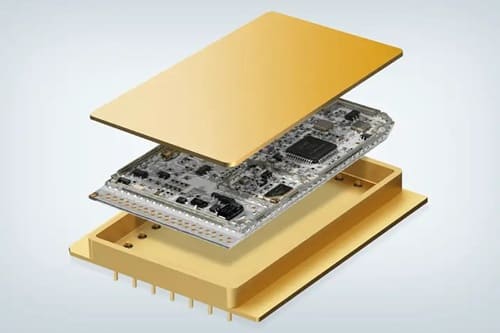
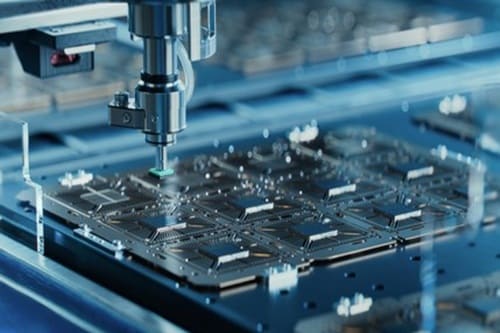
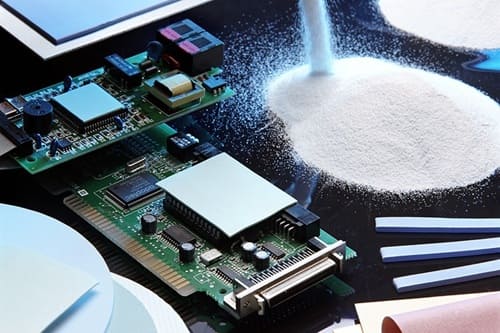
- Electronic Packaging: Enhances dispersion in epoxy/silicone resins, ideal for chip/LED thermal management substrates and encapsulants.
- High-Thermal Composites: Blended with polymers/ceramics, boosts thermal conductivity (50-100 W/(m·K)) for 5G/vehicle battery heat sinks.
- Ceramic Sintering Aids: Lowers AlN ceramic sintering temp (100-200°C) for semiconductor wafer carriers and high-temp sensors.
- Water-Based Ceramic Slurries: Prevents agglomeration, ensuring uniform consistency for AlN ceramic green body casting.
- Thermal Interface Materials (TIMs): Mixed with greases/phase-change materials for CPU/GPU/inverter heat gap filling.
- Aerospace Thermal Insulation: Combined with high-temp resins, makes lightweight insulation for aircraft engines/satellites.
Aluminum Nitride Surface Modification Powder Packaging
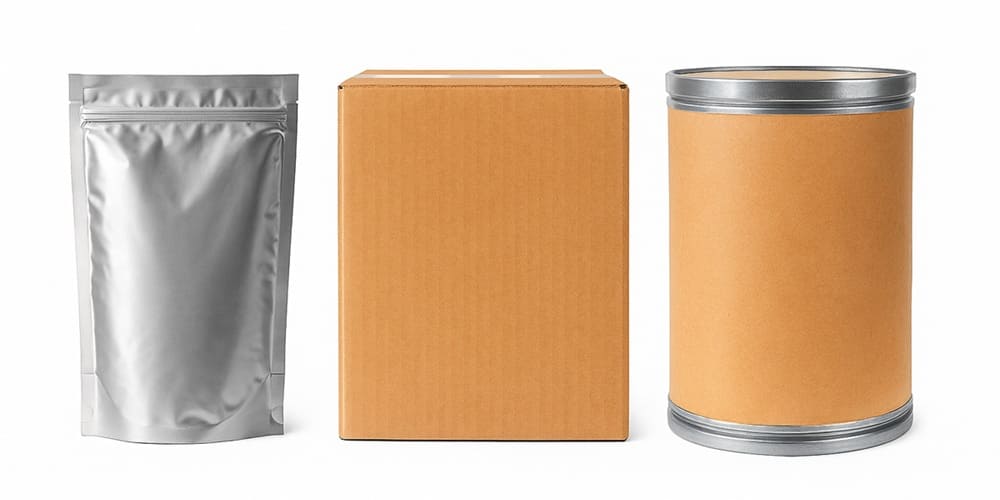
The Aluminum Nitride Granulation Powder is carefully placed in wooden cases or cartons with additional support from soft materials to prevent any shifting during transportation. This packaging method guarantees the integrity of the products throughout the delivery process.
Download
- SAFETY DATA SHEET (SDS) -Aluminum Nitride Granulation Powder
FAQ
Why is surface modification necessary for aluminum nitride powder?
Unmodified aluminum nitride powder is prone to agglomeration and has poor compatibility with organic/inorganic matrices. Modification solves these issues, while retaining its high thermal conductivity and insulation—ensuring it works effectively in end products.
Which modification method is most suitable for electronic packaging resin matrices?
Does surface modification reduce the thermal conductivity of aluminum nitride powder?
No. High-quality modification (e.g., silane or plasma methods) only optimizes surface properties (dispersibility, compatibility) without damaging the powder’s internal structure, thus preserving its inherent high thermal conductivity.
For high-purity scenarios like semiconductor thermal management, which modification method is preferred?
Plasma surface modification is preferred. It is a dry, chemical-free process that avoids introducing impurities, cleans the powder surface, and improves compatibility—meeting the strict purity requirements of semiconductor applications.
What are the limitations of surfactant adsorption modification for aluminum nitride powder?
It has poor durability. The surfactant adheres via physical adsorption, which easily fails under high temperatures or harsh conditions. Thus, it is only suitable for short-term, low-temperature applications like water-based ceramic slurries.
Get A Quote
Request a personalized quote tailored to your specific requirements.