
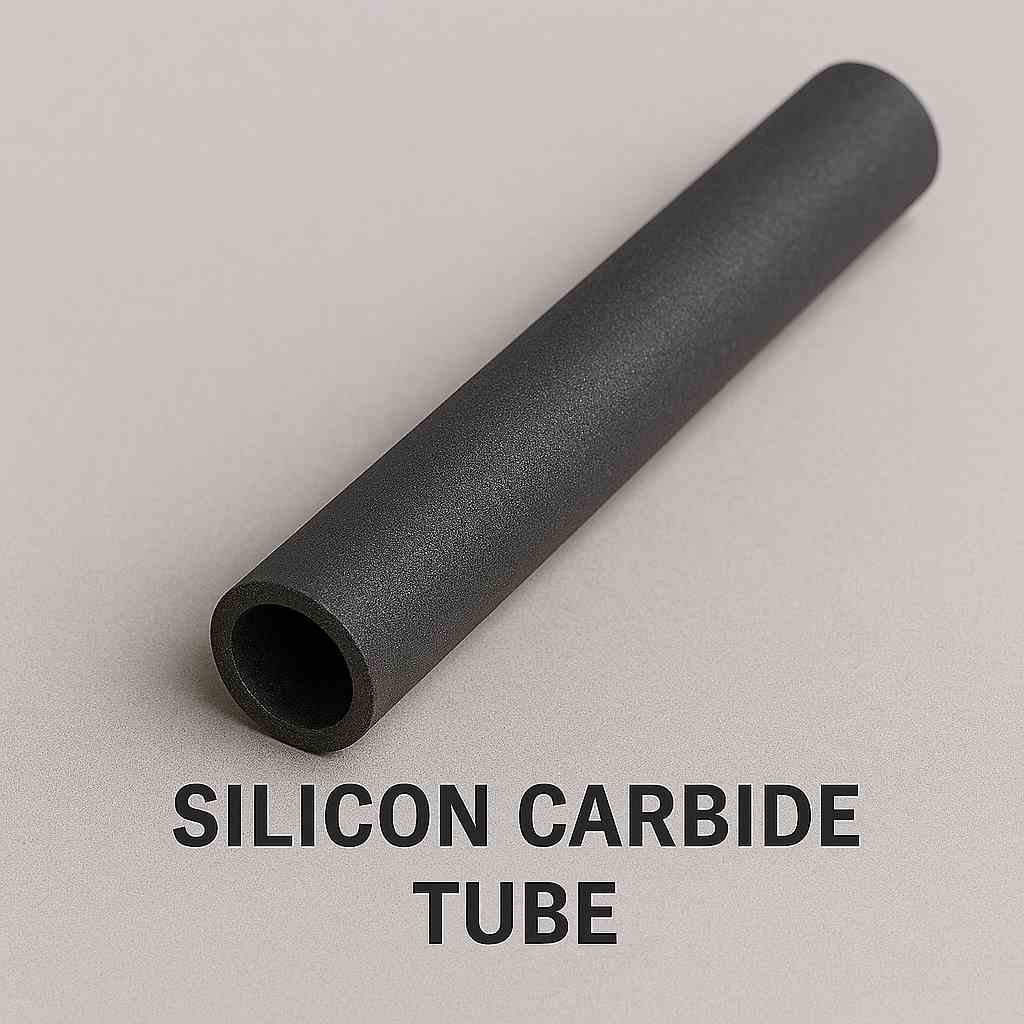
Silicon Carbide Tube
- Custom and standard options available.
- Fast lead times guaranteed.
- High performance at a competitive price.
Silicon Carbide Tube is made from high-purity silicon carbide (SiC), offering excellent high-temperature, corrosion, and thermal shock resistance and mechanical properties. It is widely used in semiconductor manufacturing, chemical reaction equipment, heat exchangers, and electrical components. As a leading supplier and manufacturer of premium silicon carbide products, we can supply high-quality silicon carbide tubes with various specifications and competitive prices, offering customized solutions to meet specific requirements.
Silicon Carbide Tube Data Sheet
| Purity: | ≥99% |
| Color: | Black or Dark grey |
| Chemical Formula: | SiC |
| Material Grades: | Reaction Bonded SiC, Pressureless Sintered SiC, Hot-pressed SiC, etc. |
| Density: | >3.2 g/cm³ |
| Maximum Operating Temperature: | 1600℃ |
Silicon Carbide Tube Description
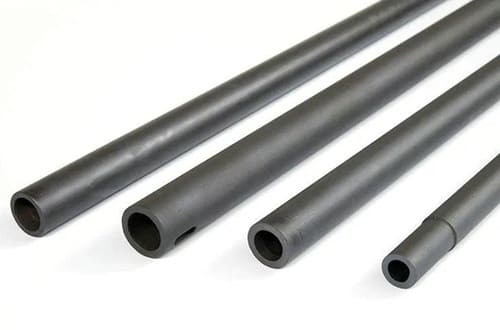
Silicon Carbide (SiC) primarily exists in two crystal structures: the cubic β-SiC and the hexagonal α-SiC. Compared to other ceramics such as alumina (Al2O3) and boron carbide (B4C), SiC exhibits superior mechanical properties, better oxidation resistance, higher wear resistance, and a lower friction coefficient. Silicon Carbide Tube is made from high-purity silicon carbide (SiC), withstanding temperatures up to 1600℃ and remaining stable even under extreme temperature fluctuations. It can efficiently transfer heat, optimizing heating and cooling processes. NexusX can supply high-precision silicon carbide tubes with customized solutions for diverse industry and research applications.
Silicon Carbide Tube Applications
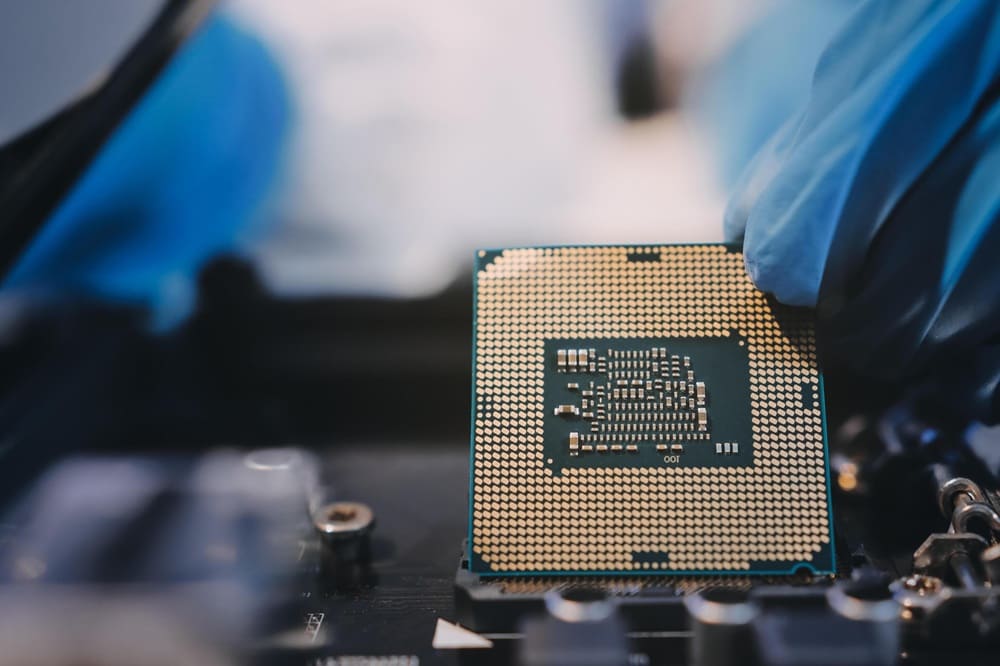
- Semiconductor Industry: Used as high-temperature furnace tubes for crystal growth, annealing, and other semiconductor processing under extreme temperatures.
- Heat Exchangers: Employed in petroleum, chemical, nuclear, and other high-temperature and high-pressure environments for heat exchange equipment, thanks to their excellent thermal conductivity and corrosion resistance.
- Photovoltaic Industry: Used in manufacturing heating elements and other critical components in photovoltaic devices.
- Aerospace: Silicon carbide tubes are used as structural materials in high-temperature environments, widely applied in engines, rockets, and other aerospace technologies.
- Electrical Industry: Used as heating elements and electrical components capable of operating stably under high-temperature and high-voltage conditions.

Silicon Carbide Tube Packaging
Silicon carbide foam filter products are typically packaged in vacuum-sealed bags to prevent moisture or contamination and wrapped with foam to cushion vibrations and impacts during transport, ensuring the quality of products in their original condition.

Download
- SAFETY DATA SHEET (SDS) -Silicon Nitride Custom Parts
FAQ
What are the core advantages of silicon carbide tubes compared with traditional metal tubes and ordinary ceramic tubes?
Silicon carbide tubes feature ultra-high hardness, excellent high-temperature and corrosion resistance, as well as good thermal conductivity and low thermal expansion coefficient. They are not prone to deformation or damage in environments with sudden temperature changes and strong corrosive media, and have a much longer service life than traditional tubes.
What is the maximum temperature that silicon carbide tubes can withstand, and what heating scenarios are they suitable for?
Conventional silicon carbide tubes can withstand temperatures up to 1600℃, while modified and enhanced models can endure temperatures of 1800℃. They are suitable for scenarios such as metallurgical high-temperature heat treatment furnaces, chemical tubular reactors, polysilicon purification furnaces in the photovoltaic industry, and high-temperature heating equipment in laboratories.
What is the basic preparation process of silicon carbide tubes?
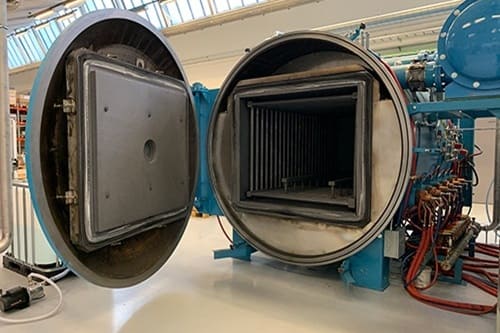
Using high-purity silicon carbide powder as the raw material, add sintering aids and binders to prepare a uniform slurry. Form tubular green bodies via extrusion molding or slip casting, then conduct drying and degreasing. Sinter the green bodies in a high-temperature furnace, and finally perform cutting and precision finishing of inner holes to ensure the dimensional accuracy and inner wall smoothness of the tubes.
What are the key performance indicators for judging the quality of silicon carbide tubes?
The key indicators for evaluating the quality of silicon carbide tubes include maximum temperature resistance, thermal shock stability, compressive strength, inner wall dimensional accuracy, corrosion resistance to acid and alkali media, and the bulk density of the material.
What precautions should be taken during the installation and use of silicon carbide tubes?
Get A Quote
Request a personalized quote tailored to your specific requirements.