
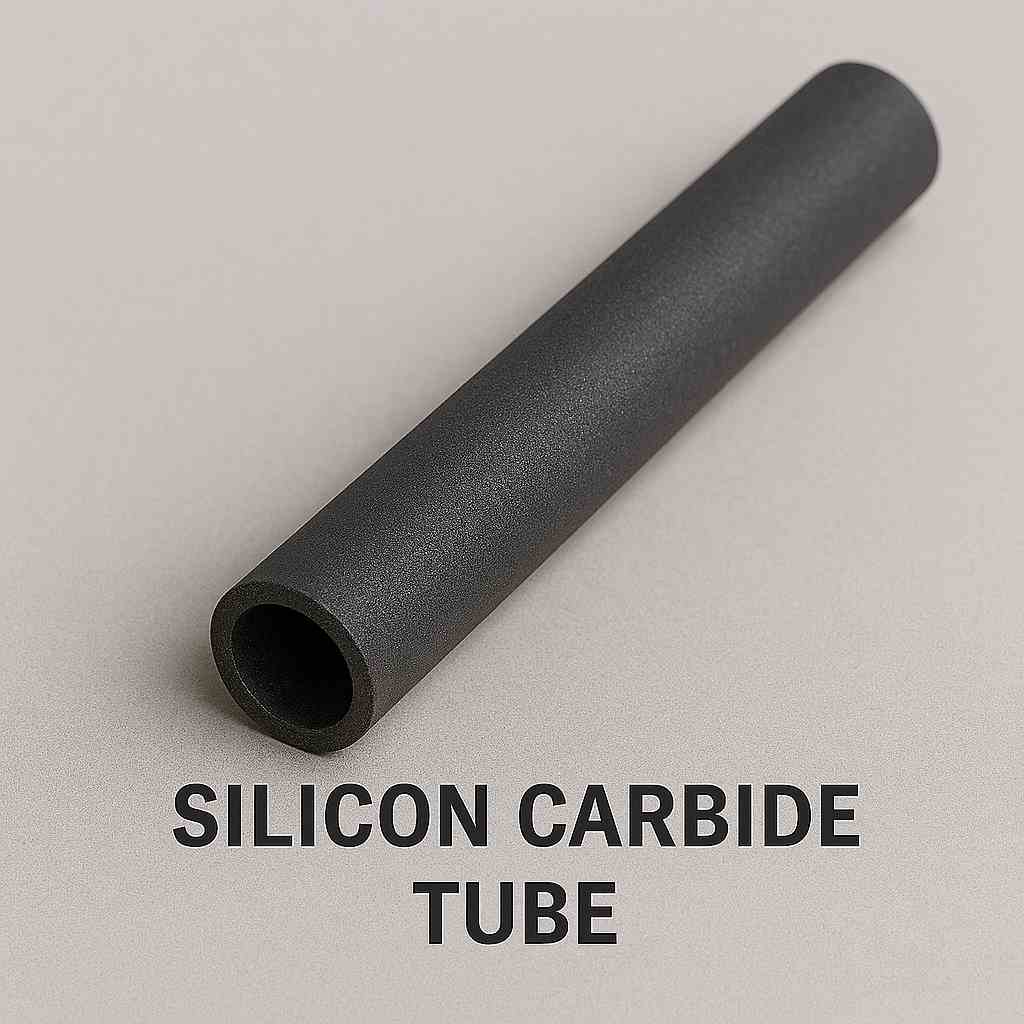
Silicon Carbide Rod/Bar
- Custom and standard options available.
- Fast lead times guaranteed.
- High performance at a competitive price.
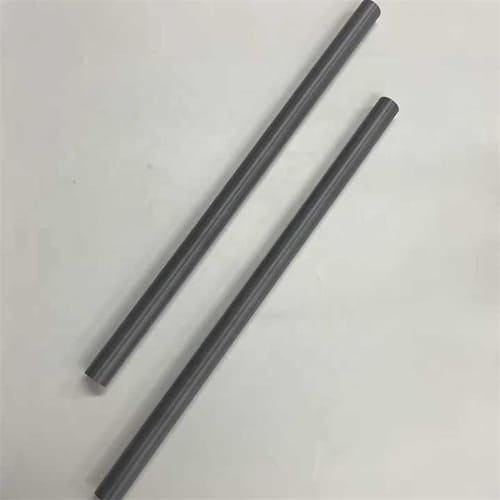
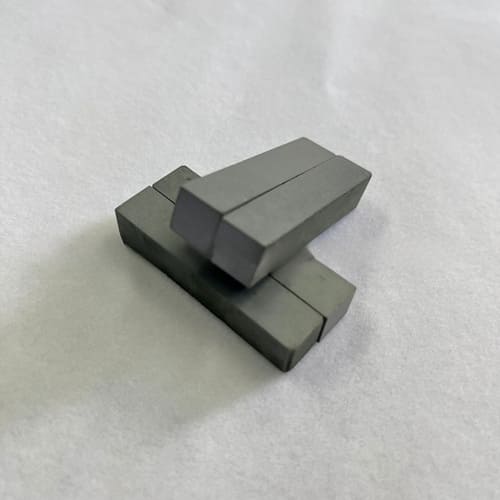
Silicon Carbide Rod/Bar is made from high-purity silicon carbide (SiC), offering excellent thermal stability, electrical conductivity, chemical stability, and mechanical strength. It is widely used in high-temperature, high-pressure, corrosion-resistant, and electronic industries. As a leading supplier and manufacturer of premium silicon carbide products, we can supply high-quality silicon carbide rods and bars with various specifications and competitive prices, offering customized solutions to meet specific requirements.
Silicon Carbide Rod/Bar Data Sheet
| Purity: | ≥99% |
| Color: | Black or Dark grey |
| Chemical Formula: | SiC |
| Material Grades: | Reaction Bonded SiC, Pressureless Sintered SiC, Hot-pressed SiC, etc. |
| Density: | >3.2 g/cm³ |
| Maximum Operating Temperature: | 1600℃ |
Silicon Carbide Rod/Bar Description
Silicon Carbide (SiC) primarily exists in two crystal structures: the cubic β-SiC and the hexagonal α-SiC. Compared to other ceramics such as alumina (Al2O3) and boron carbide (B4C), SiC exhibits superior mechanical properties, better oxidation resistance, higher wear resistance, and a lower friction coefficient. Silicon Carbide Rod/Bar is made from high-purity silicon carbide (SiC), possessing exceptional thermal stability, electrical conductivity, chemical stability, and mechanical strength. These excellent properties make it widely used in semiconductor applications, photovoltaic power generation, heating elements, and various industrial furnaces. NexusX can supply high-precision silicon carbide rods with customized solutions for diverse industry and research applications.
Silicon Carbide Rod/Bar Features
- High-Temperature Stability: Can operate stably above 1600°C with excellent oxidation resistance.
- High Thermal Conductivity: Enables rapid heating and cooling, improving energy efficiency.
- Exceptional Mechanical Strength: Extreme hardness (Mohs 9.5) ensures wear and pressure resistance.
- Chemical Corrosion Resistance: Resists acids, alkalis, and molten metals, ideal for harsh environments.
- Adjustable Electrical Resistivity: Suitable for heating elements and semiconductor applications.
- Energy-Efficient & Eco-Friendly: >90% thermal efficiency reduces power consumption.
- Low Thermal Expansion: Maintains dimensional stability under extreme temperature changes.
Silicon Carbide Rod/Bar Applications
- High-Temperature Heating Elements: Used as heating elements in industrial furnaces, ceramic sintering, and metal heat treatment.
- Semiconductor Manufacturing: Serve as support materials or heating elements in high-temperature reactors for wafer growth and chip production.
- Abrasives and Cutting Tools: Utilized in grinding wheels, sandpaper, and cutting tools for processing metals and ceramics.
- Refractory Materials: Used to produce high-temperature and corrosion-resistant refractory bricks and furnace linings for metallurgy and chemical industries.
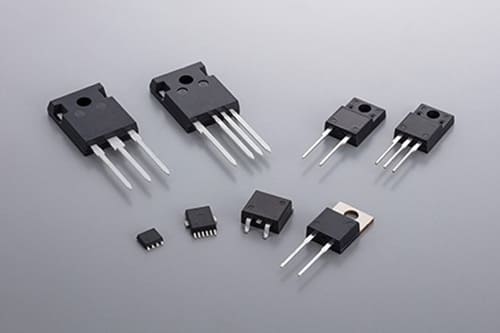
- Electronic Devices: Act as substrate materials for high-power, high-frequency devices like MOSFETs and Schottky diodes.
- Aerospace: Applied in high-temperature structural components, such as turbine blades and thermal protection systems.


Silicon Carbide Rod/Bar Packaging
Silicon carbide foam filter products are typically packaged in vacuum-sealed bags to prevent moisture or contamination and wrapped with foam to cushion vibrations and impacts during transport, ensuring the quality of products in their original condition.

Download
- SAFETY DATA SHEET (SDS) -Silicon Nitride Custom Parts
FAQ
What is a silicon carbide rod/bar and what are its core characteristics?
It is a ceramic component sintered from high-purity silicon carbide powder at high temperature, with both heating and structural functions. Core characteristics: high temperature resistance (long-term use at 1400–1600℃), chemical stability (resistant to acids and alkalis except hydrofluoric acid), low thermal expansion, and semiconductor properties.
Why are silicon carbide rods/bars prone to fracture and how to avoid it?
The reason is that it is a brittle ceramic material with weak resistance to thermal shock and mechanical impact. Prevention methods: control heating/cooling rate at ≤5℃/min; handle with care during installation and avoid heavy knocking; fix with ceramic fixtures to ensure uniform stress.
What is the working principle of silicon carbide rods/bars as heating elements, and what is the difference from metal heating elements?
The principle is that electric current passes through doped semiconductor silicon carbide and generates heat by the Joule heating effect. Differences: it has higher temperature resistance, longer service life and is suitable for multiple atmospheres; metal heating elements have lower temperature resistance, are prone to oxidation and can only be used in air environment.
What are the key installation and maintenance points for silicon carbide rods/bars?
Installation: avoid knocking and squeezing, ensure firm electrode connection, and arrange multiple rods with reasonable spacing. Maintenance: heat up slowly to prevent cracking; clean dust with compressed air after cooling; replace promptly if cracks appear or heating efficiency drops.
What are the production processes and key influencing parameters of silicon carbide rods/bars?
Get A Quote
Request a personalized quote tailored to your specific requirements.