
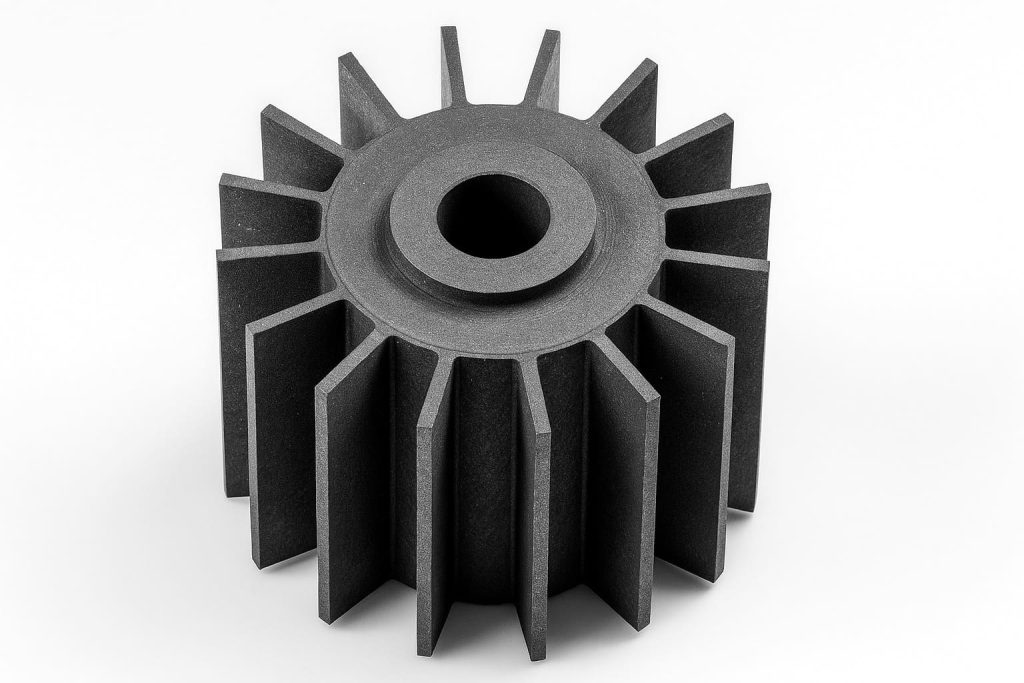
Graphite Rotor
The Graphite Rotor is a precision-engineered rotor component made from high-purity graphite, designed for high-speed centrifugal, vacuum, or corrosive environments. With lightweight construction, high strength, and excellent thermal stability, it significantly enhances equipment efficiency and durability. It is widely used in lithium battery manufacturing, semiconductors, photovoltaics, and other high-end industrial applications.
- Custom and standard options available.
- Fast lead times guaranteed.
- High performance at a competitive price.
Graphite Rotor Data Sheet
| Purity | ≥99.9% |
| Color | Dark Gray to Black |
| Chemical Formula | C |
| Material Grades | Natural Graphite, Synthetic Graphite, Specialty Graphite, Composites Graphite |
| Density | 1.7–1.92 g/cm³ |
| Maximum Operating Temperature | Up to 3000°C (in inert atmosphere) |
| Thermal Conductivity | 100–200 W/m·K |
Graphite Rotor Description
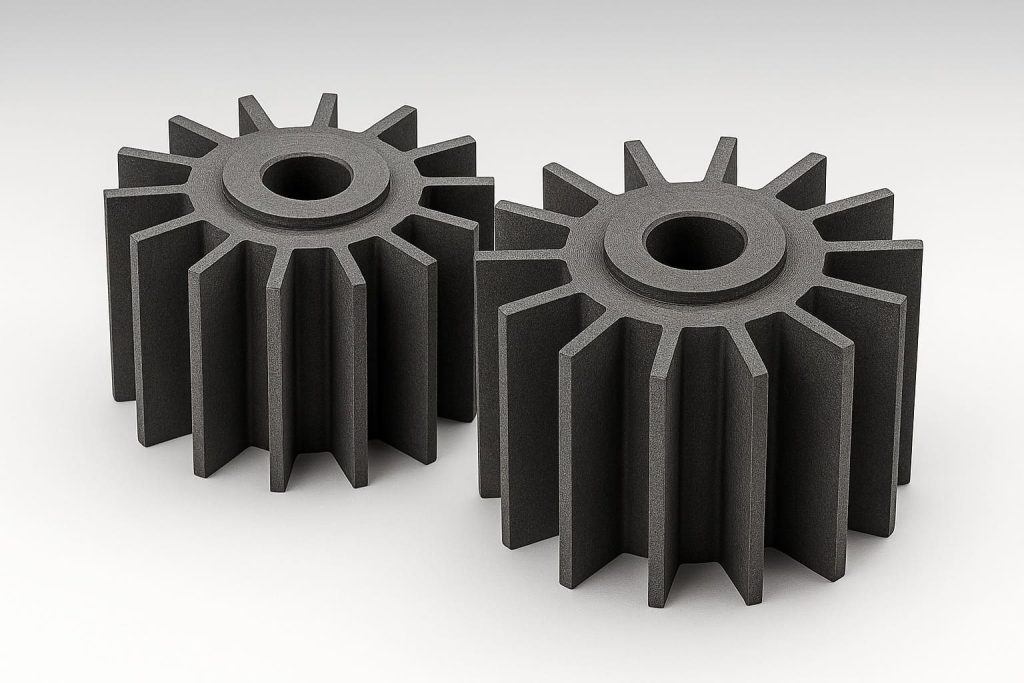
The Graphite Rotor is a core component precision-machined from isostatically pressed high-purity graphite. Its exceptional self-lubricating properties, high thermal conductivity, and dimensional stability under extreme temperatures make it the ideal choice for vacuum heat treatment, crystal growth, and high-speed rotational applications, effectively reducing energy consumption, minimizing maintenance, and significantly extending equipment service life.
Graphite Rotor Specifications
| Items | Unit | Value | |
| Grain Size | mm | 0.045-4 | |
| Bulk Density | g/cm3 | 1.65-1.95 | |
| Resistivity | μΩ•m | 8.0-11.0 | |
| Bending Strength | Mpa | 18-55 | |
| Compressive Strength | Mpa | 36-100 | |
| The Coefficient of Thermal Expansion (C.T.E) | ×10-6/ ℃ | 2.9-3.0 | |
| Ash | % | 0.1-0.3 | |
| Specifications | Graphite rotor | mm | Φ70-250 |
| Impeller | mm | Φ85-350 | |
| Products can be customized according to order requirements or specific drawings. | |||
Graphite Rotor Features
- High Purity & Heat Resistance: Made of high-purity graphite, withstands extreme temperatures with excellent thermal stability.
- Low Density & High Strength: Lightweight yet offers remarkable mechanical strength and thermal shock resistance.
- Self-Lubricating & Corrosion-Resistant: Low friction coefficient, requires no external lubrication; resistant to various chemicals.
- Precision & Customization: Can be machined with high precision into complex shapes for specific application needs.
- Conductive & Thermally Conductive: Good electrical and thermal conductivity, beneficial for heat dissipation and electrical transmission.
Graphite Rotor Applications
- Semiconductor & Photovoltaic Industry: Used in crystal growth furnaces (for silicon, SiC, etc.) as crucibles, heaters, and insulation components.
- Lithium-ion Battery Manufacturing: A key consumable in high-temperature rotary kilns for the graphitization of anode materials.
- Vacuum Heat Treatment: Serves as furnace beds, fixtures, and heating elements in vacuum or inert atmosphere high-temperature furnaces.
- Industrial High-Temperature Furnaces: Acts as high-temperature resistant parts in sintering, melting processes for glass, metallurgy, and ceramics.
- Special Mechanical Seals: Used as wear-resistant, self-lubricating sealing rings in pumps and reactors under harsh conditions.
Graphite Ceramic Packaging
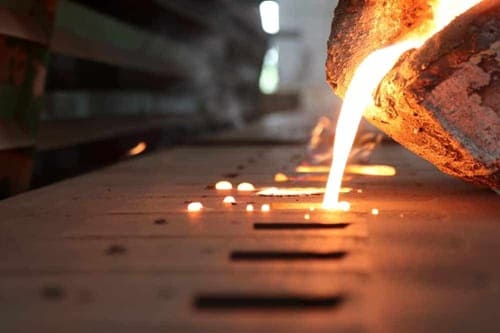
Graphite ceramic products are typically packaged in vacuum-sealed bags to prevent moisture or contamination and wrapped with foam to cushion vibrations and impacts during transport, ensuring the quality of products in their original condition.

Download
- SAFETY DATA SHEET (SDS) -Graphite Rotor
FAQ
What is a Graphite Rotor? What is its primary function?
A Graphite Rotor is a high-speed rotating component precisely machined from high-purity graphite. Its primary function is to degas, purify, and homogenize molten metals (like aluminum or magnesium alloys) through high-speed rotation in high-temperature, vacuum, or protective atmosphere environments.
Why choose graphite as the rotor material? What are its key advantages?
Graphite is chosen for its unique combination of properties: extremely high heat resistance (up to 3000°C), excellent thermal stability and thermal shock resistance, good self-lubricity to reduce wear, and chemical inertness, minimizing reaction with molten metals.
What is the typical service life of a Graphite Rotor? What factors affect its lifespan?
The service life ranges from tens to hundreds of hours, depending on process conditions. Key factors include operating temperature, corrosiveness of the melt, rotational speed, frequency of start-stop cycles, and the use of protective coatings.
Can Graphite Rotors be customized in size and shape?
Yes, absolutely. Professional graphite component manufacturers can customize rotors in different diameters, lengths, impeller shapes (e.g., umbrella, paddle), and thread specifications based on customer equipment interfaces, process requirements, and furnace dimensions.
How to properly install and preheat a new Graphite Rotor?
Ensure clean and tight connection threads and check drive shaft alignment during installation. Preheating must follow the principle of “slow and even,” typically using a heater or slowly rotating the rotor above the melt to gradually raise its temperature from ambient to operating level, avoiding direct immersion into the hot melt.
Get A Quote
Request a personalized quote tailored to your specific requirements.