
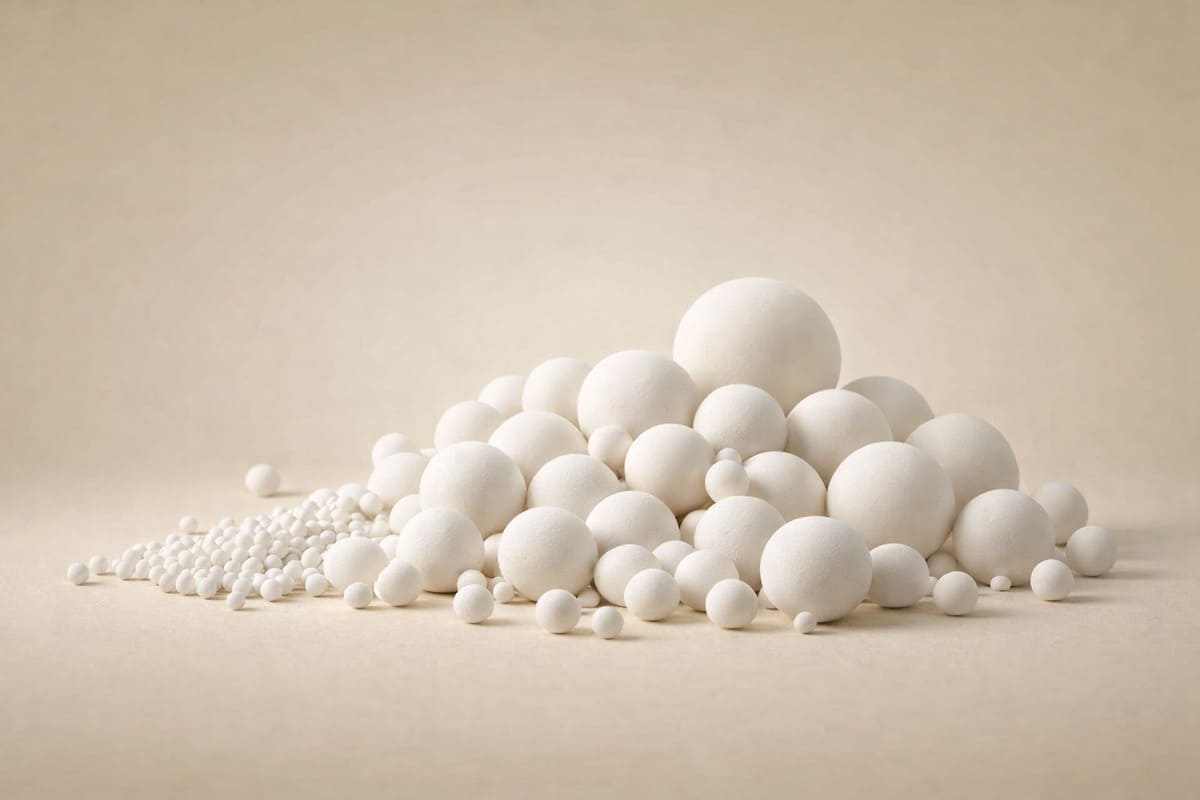
Alumina Ball
- Custom and standard options available.
- Fast lead times guaranteed.
- High performance at a competitive price.
Alumina Ball is a durable ceramic grinding media and catalyst support. It offers high hardness, excellent wear resistance, and chemical stability. Ideal for fine grinding minerals, ceramics, or paints, and for use in petrochemical towers. Its high alumina content ensures low contamination and long service life. NexusX Advanced Materials, as a premier manufacturer and supplier of high-quality. Alumina (Al2O3) products, focuses on producing high-precision aluminum nitride silicon structural compenents through advanced technologies for diverse application fields.
Or email us at [email protected]
Alumina Ball Data Sheet
Purity: | 95%, 96%, 99%, 99.5%, 99.7%, 99.95% |
Color: | White |
Density: | 3.7-3.98 g/cm3 |
Diameter: | 0.8-100 mm, or customized |
Alumina Ball Descriptions
Alumina balls are high-performance ceramic spheres primarily used as grinding media and catalyst support. Manufactured from high-purity aluminum oxide, they offer exceptional hardness, wear resistance, and chemical inertness. These features make them ideal for fine grinding applications in industries such as ceramics, mining, paints, and coatings. In petrochemical processes, alumina balls serve as tower packing and support bed materials, providing excellent thermal stability and resistance to corrosive environments. Their uniform spherical shape ensures consistent contact and efficient operation. With low contamination rates and long service life, alumina balls help reduce operational downtime and maintenance costs. Available in various alumina content grades—typically 68%, 75%, 80%, 92%, and 95%—they can meet different performance requirements ranging from general milling to high-intensity industrial applications.
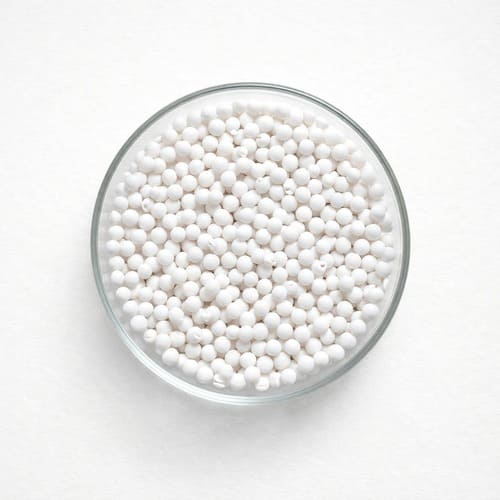
Alumina Ball Advantages
- High Hardness – Mohs hardness of 9, providing excellent grinding efficiency and wear resistance.
- Low Contamination – High-purity alumina minimizes product contamination during milling, ideal for sensitive materials.
- Chemical Inertness – Resistant to acids, alkalis, and most corrosive chemicals, ensuring stability in harsh environments.
- Excellent Thermal Stability – Withstands high temperatures (up to 1500°C in some grades), suitable for petrochemical and catalytic processes.
- Uniform Spherical Shape – Ensures consistent contact, smooth operation, and reduced wear on equipment.
- Long Service Life – Outlasts natural pebbles and many other ceramic media, reducing replacement frequency and downtime.
- High Grinding Efficiency – Smooth surface and high density improve milling performance while lowering energy consumption.
- Versatile Applications – Suitable for both wet and dry grinding, as well as catalyst support and tower packing in refineries.
Alumina Ball Applications
- Fine Grinding in Ball Mills – Used for grinding minerals, ceramics, glazes, and pigments to achieve ultra-fine particle sizes.
- Ceramic Industry – Milling of feldspar, quartz, clay, and other raw materials for tile, sanitary ware, and tableware production.
- Mining and Mineral Processing – Grinding of ores such as gold, copper, iron, and limestone.
- Paint and Coating Industry – Dispersing and grinding pigments, fillers, and resin systems to achieve smooth finishes.
- Petrochemical Industry – Serves as catalyst support bed and tower packing in reactors, absorbers, and distillation columns.
- Chemical Processing – Inert filler for high-temperature or corrosive chemical reactors and columns.
- Pharmaceutical and Food Industries – Contamination-free grinding of active ingredients, excipients, and food-grade materials.
- Wet and Dry Milling – Suitable for both grinding methods across various industrial processes.
- Gas and Liquid Filtration – Used as support media or filter beds in water treatment and gas scrubbing systems.
- Refractory and Advanced Ceramics – Grinding of silicon carbide, zirconia, and other high-performance ceramic powders.

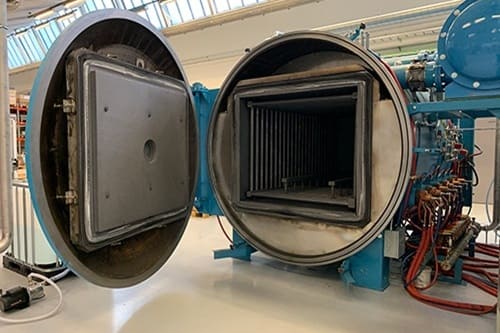
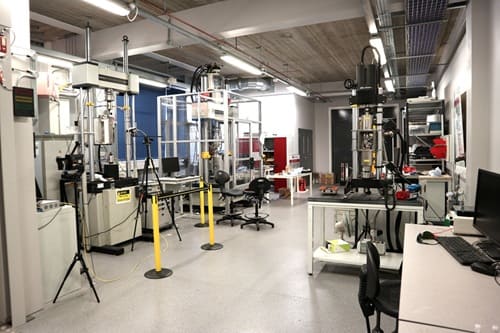

Alumina Ceramic Machining
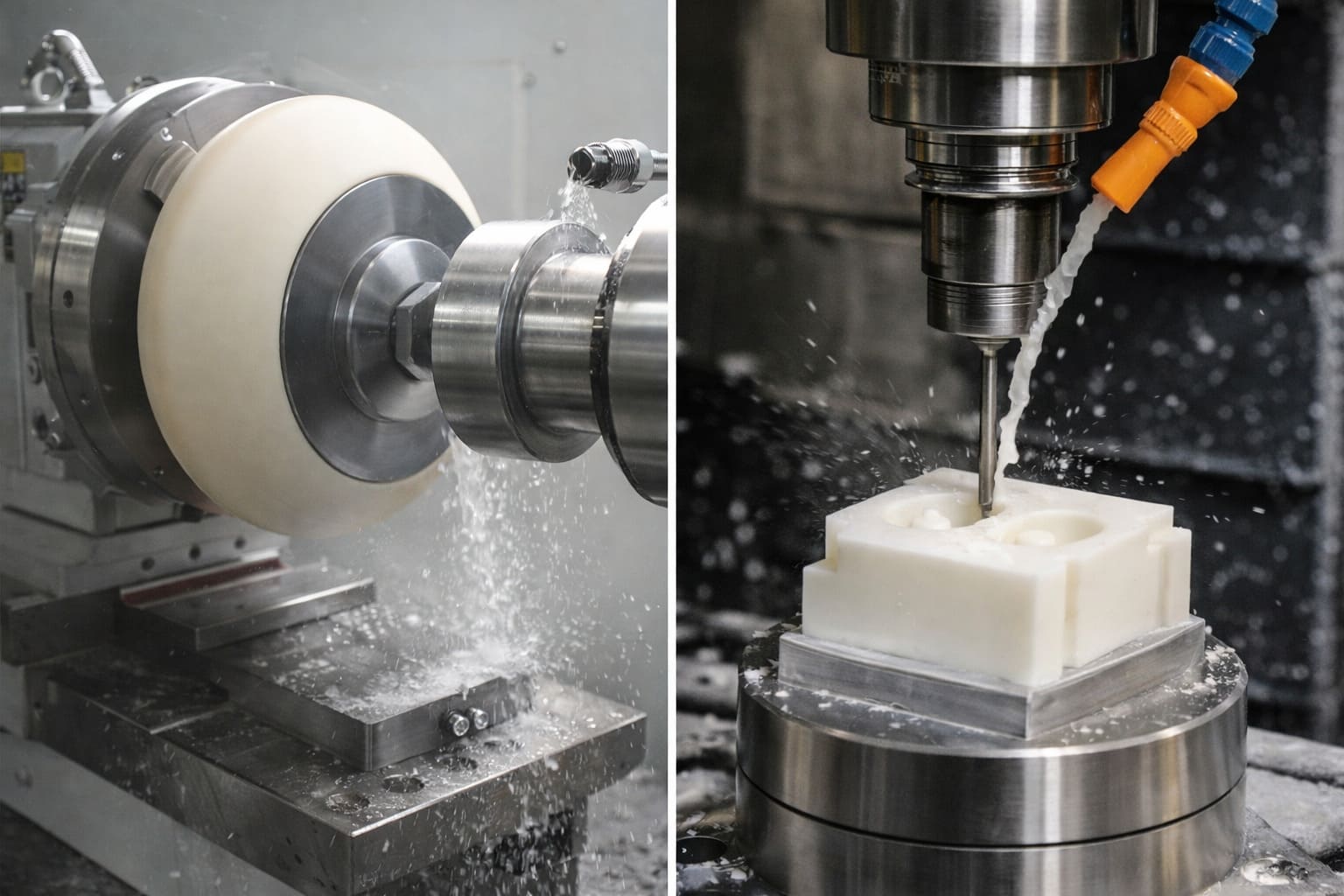
Alumina ceramics are produced through methods such as injection molding, die pressing, isostatic pressing, slip casting, and extrusion. After sintering and densification, machining requires diamond grinding techniques. Advanced Ceramic Hub utilizes cutting-edge green and biscuit machining technology to produce more complex components with traditional methods. Our advanced machining center includes drilling, grinding, milling, polishing, sawing, tapping, threading, and turning, enabling the manufacture of alumina ceramic components with tight tolerances and high complexity. During the machining process, the following precautions should be observed:
- Shrinkage Control: Alumina ceramics shrink by about 20% during sintering, requiring dimensional adjustments in the green body stage.
- Tolerance Control: Precise tolerances are unachievable in the green or pre-sintered state; fine machining should follow sintering.
- Diamond Grinding: Post-sintering, high-hardness alumina requires diamond grinding, as conventional methods fall short.
- Tool Selection: Diamond-coated tools or grinding wheels are essential to handle ceramic hardness and prevent tool damage.
- Temperature Control: Strict temperature management during sintering prevents cracking or deformation.
- Stress Management: Excessive stress during machining must be avoided to prevent brittle failure.
- Cutting Speed and Feed Rate: Controlled speeds and feeds ensure quality and extend tool life.
- Surface Treatment: Post-machining polishing removes defects, enhancing performance and appearance.
Alumina Ceramic Packaging
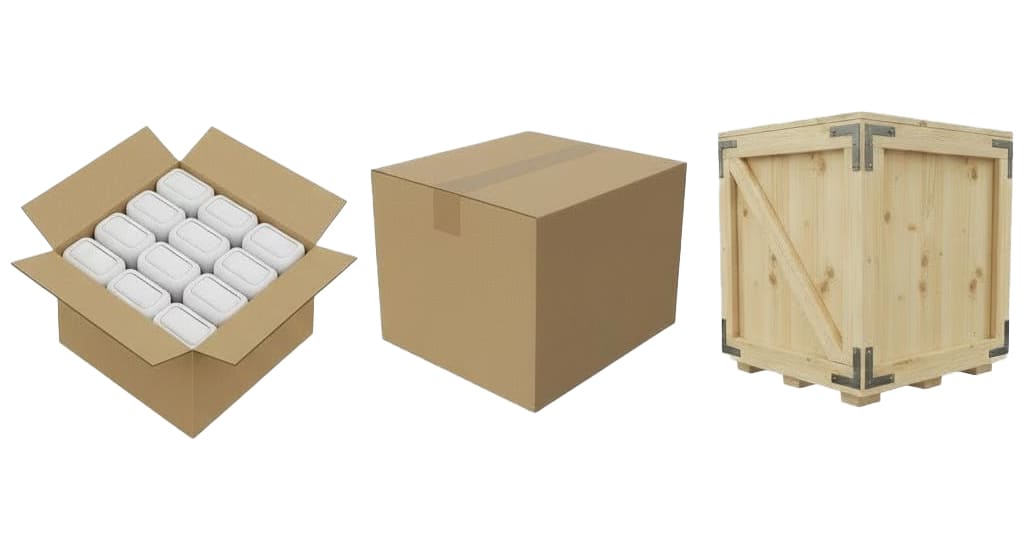
The Alumina Ceramic products are carefully placed in wooden cases or cartons with additional support from soft materials to prevent any shifting during transportation. This packaging method guarantees the integrity of the products throughout the delivery process.
Download
- SAFETY DATA SHEET (SDS) -Alumina Ball
FAQ
What is an Alumina Ball and what is it used for?
An Alumina Ball is a ceramic sphere made from high-purity aluminum oxide, primarily used as grinding media and catalyst support in industries such as ceramics, mining, paints, and petrochemicals.
How does an Alumina Ball improve grinding efficiency?
An Alumina Ball improves grinding efficiency through its high hardness (Mohs 9) and density, which effectively crush materials in ball mills, reduce grinding time, and ensure uniform particle size.
What alumina content grades are available for Alumina Balls?
Common grades include 68%, 75%, 80%, 92%, and 95%+ alumina content. Higher content provides greater hardness, wear resistance, and chemical stability for various applications.
What industries commonly use Alumina Balls as catalyst support?
Petrochemical, natural gas processing, fertilizer production, and fine chemical industries commonly use Alumina Balls as catalyst support and tower packing in reactors and adsorbers.
How should Alumina Balls be stored and handled?
Store in a dry, clean environment to avoid moisture and contamination. Handle carefully to prevent impact damage, and inspect for cracks or breakage before use.
Get A Quote
Request a personalized quote tailored to your specific requirements.