
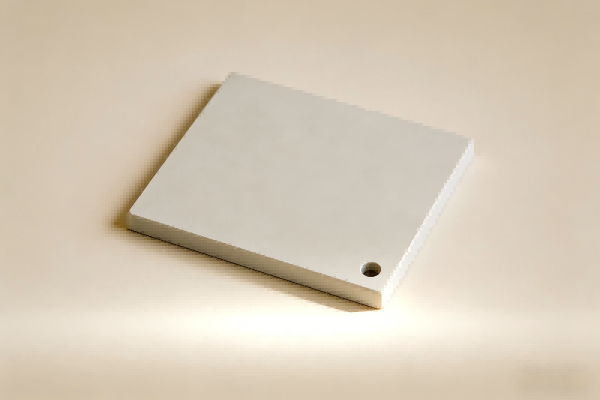
Aluminum Nitride Substrate
- Custom and standard options available.
- Fast lead times guaranteed.
- High performance at a competitive price.
The Aluminum Nitride Substrate is a ceramic substrate made from aluminum nitride. It combines high thermal conductivity (170-230W/(m·K)), strong electrical insulation, and high-temperature resistance, with a thermal expansion coefficient matching silicon chips. It’s a key heat-dissipating and insulating component in power electronics, RF modules, etc. NexusX Advanced Materials, as a premier manufacturer and supplier of high-quality aluminum nitride products, focuses on producing high-precision aluminum nitride substrates for diverse application fields.
Or email us at [email protected]
Aluminum Nitride Substrate Data Sheet
| Purity: | 95%-99% |
| Density: | 3.32 g/cm3 |
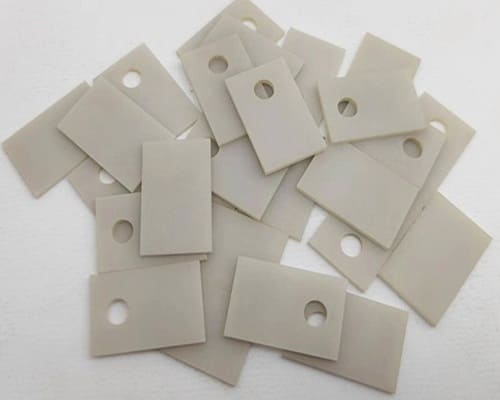
| Appearance: | Dark Gray / Light Gray / Beige |
| Dimensions: | Customized |
| Shape: | Rectangular, Round, or customized |
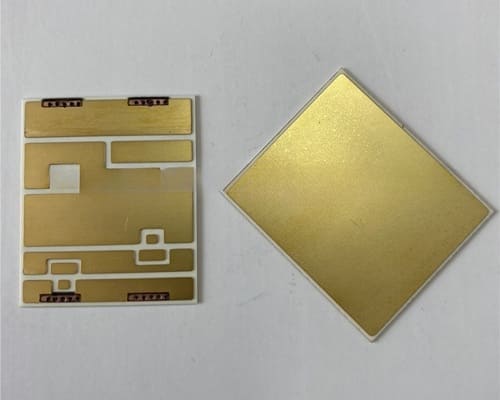
| Surface Finish: | Rough, Polishing, or Metallization |
Aluminum Nitride Substrate Description
Aluminum Nitride Substrate is a new type of ceramic substrate made from high-purity aluminum nitride ceramics through processes such as forming and sintering. Its core advantages include ultra-high thermal conductivity (with a theoretical value of 320W/(m·K), much higher than that of aluminum oxide substrates), excellent electrical insulation, and a thermal expansion coefficient highly compatible with semiconductor chips, which can effectively relieve thermal stress. Widely used in high heat density electronic fields such as 5G base stations, new energy vehicle power modules, and LED chips, it enables efficient heat dissipation, enhances device stability and service life, and serves as a key material for high-end electronic packaging.
Aluminum Nitride Substrate Properties
| Item | Unit | AlN-170 | AlN-190 | AlN-200 | AlN-230 | |
| Density | g/cm3 | 3.3 | 3.3 | 3.28 | 3.3 | |
| Melting Point | ℃ | 2500 | 2500 | — | — | |
| Surface Roughness | μm | 0.2~0.6 | 0.3~0.5 | 0.2~0.5 | 0.2~0.6 | |
| Thermal | Thermal Conductivity | 25℃ W/(m.k) | 170-190 | 190-210 | 204 | 233 |
| Coefficient of thermal expansion | 20~300℃ (10-6/℃) | 4.6 | 4.6 | 4.0-5.0 | 4.0-5.0 | |
| Electrical | Dielectric Constant | 1 MHz, 25℃ | 8.56 | 8.56 | — | — |
| Dielectric Loss | 1 MHz, 25℃ | 4.6×10⁻⁴ | 4.6×10⁻⁴ | — | — | |
| Volume resistivity | 20℃.Ω.cm | 1.4×10¹⁴ | 1.4×10¹⁴ | >1014 | >1014 | |
| Dielectric Strength | KV/mm | ≥15 | ≥15 | >20 | >20 | |
| Mechanical | Flexural Strength | Mpa | 300-400 | 300-400 | 350 | 300 |
| Elastic Modulus | GPa | 310-320 | 310-320 | — | — | |
| Warpage | ~/25(length) | ≤3‰ | ≤3‰ | ≤3‰ | ≤3‰ | |
Aluminum Nitride Substrate Standard Specifications
| Product | Thickness | Length & Width |
| 170W Standard Product | 0.381 mm | 4×4 inch (101.6×101.6 mm) 4.5×4.5 inch (114.3×114.3 mm) 120×120 mm 5×5 inch (127×127 mm) 5.5×7.5 inch (139.7×190.5 mm) |
| 0.5 mm | ||
| 0.635 mm | ||
| 1.0 mm | ||
| 1.5 mm | ||
| 170W Non-standard Product | 0.1~0.2 mm | 2×2 inch (50.8×50.8 mm) |
| 0.2~0.3 mm | 2×2 inch (50.8×50.8 mm) 3×3 inch (76.2×76.2 mm) 4×4 inch (101.6×101.6 mm) 4.5×4.5 inch (114.3×114.3 mm) | |
| 2.0~3.0 mm | ||
| 1.0~3.0 mm | 150 mm, 200 mm, 300 mm | |
| 200W | (0.3~0.38)±0.01 mm | 4.5×4.5 inch (114.3×114.3 mm) |
| 230W | (0.3~0.38)±0.01 mm | 4.5×4.5 inch (114.3×114.3 mm) |
Aluminum Nitride Substrate Advantages
- Ultra-high Thermal Conductivity
- Excellent Electrical Insulation
- High Compatibility of Thermal Expansion Coefficient
- Good Chemical Stability
- Low Dielectric Loss
Aluminum Nitride Substrate Applications
- Power Electronic Modules: Such as IGBT (Insulated Gate Bipolar Transistor) modules for new energy vehicles and power units for industrial frequency converters. They can quickly dissipate the heat generated by high-power devices during operation, preventing performance degradation or damage caused by high temperatures, and ensuring the stable operation of vehicle power systems and industrial equipment.
- 5G Communication Equipment: Used in radio frequency power amplifiers (PA) and millimeter-wave modules of 5G base stations. In high-frequency signal transmission scenarios, they not only meet insulation requirements and achieve efficient heat dissipation but also reduce signal attenuation due to low dielectric loss, ensuring the communication quality and coverage of base stations.
- LED Lighting and Display: Suitable for the packaging of high-power LED chips (such as LEDs for automotive headlights and outdoor display screens). They solve the problems of fast LED light decay and short service life caused by insufficient heat dissipation of traditional substrates, improving the luminous efficiency and long-term reliability of LED devices.
- Semiconductor and Microelectronic Packaging: Used as packaging substrates for microwave radio frequency chips and sensors (such as temperature sensors and pressure sensors). Especially in high-end fields like aerospace and medical care, they can adapt to extreme environments (high temperature, vibration) and ensure the accurate operation of chips.
- New Energy Field: Such as power modules of photovoltaic inverters and converter components of energy storage systems. They can cope with the temperature difference changes and high-power heat dissipation needs of new energy equipment during long-term outdoor operation, improving the system energy efficiency and service life.





Aluminum Nitride Ceramic Packaging
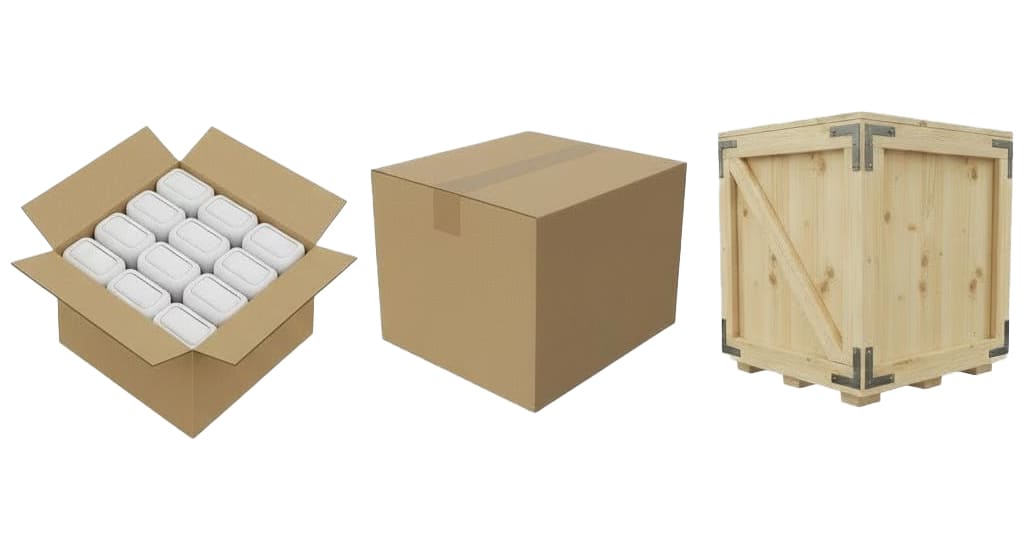
Aluminum Nitride Ceramic products are typically packaged in vacuum-sealed bags to prevent moisture or contamination and wrapped with foam to cushion vibrations and impacts during transport, ensuring the quality of products in their original condition.
Download
- SAFETY DATA SHEET (SDS) -Aluminum Nitride Substrate
FAQ
What's its theoretical thermal conductivity, and how does it compare to alumina substrates?
320W/(m·K), much higher than alumina substrates (20-30W/(m·K)), enabling better heat dissipation.
Why suits semiconductor chip packaging?
Its thermal expansion coefficient matches chips (e.g., silicon), reducing thermal stress; plus excellent insulation ensures safety.
Where used in new energy vehicles, and what's its role?
In IGBT modules and its high thermal conductivity dissipates heat, protecting the module and stabilizing the power system.
What advantage in 5G equipment, and for which parts?
Low dielectric loss cuts signal attenuation; used in 5G base station PA and millimeter-wave modules, meeting insulation/heat needs.
Why stand out in high-power LED apps?
Ultra-high thermal conductivity solves heat buildup, slowing LED light decay and extending lifespan; insulation ensures safety.
Get A Quote
Request a personalized quote tailored to your specific requirements.