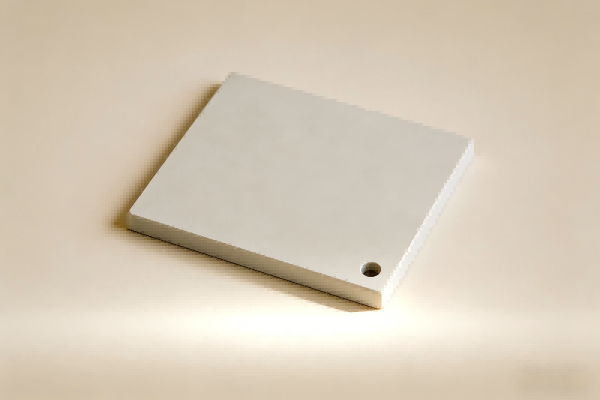
Aluminum Nitride Heater
- Custom and standard options available.
- Fast lead times guaranteed.
- High performance at a competitive price.
Or email us at [email protected]
Aluminum Nitride Heater Data Sheet
| Purity: | 95%-99% |
| Density: | 3.32 g/cm3 |
| Appearance: | Dark Gray / Light Gray / Beige |
| Thickness: | 0.8-3.0 mm |
| Dimensions: | Customized |
| Maximum Working Temperature: | 500℃ |
| Maximum Watt Density: | 155 W/cm2 |
| Heating Line Resistance Tolerance: | ±20% |
| Heating Speed: | 150℃/s |
| TCR: | 0.0015±0.0003 |
Aluminum Nitride Heater Description
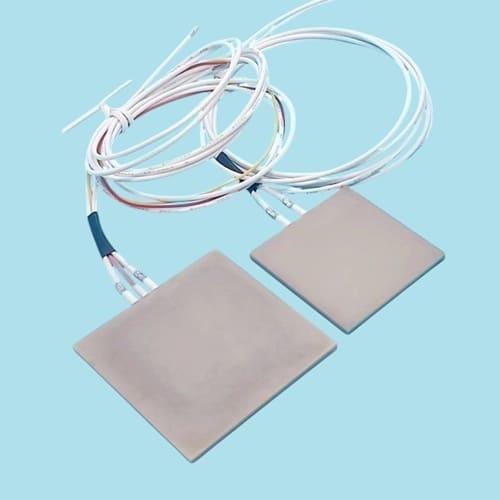
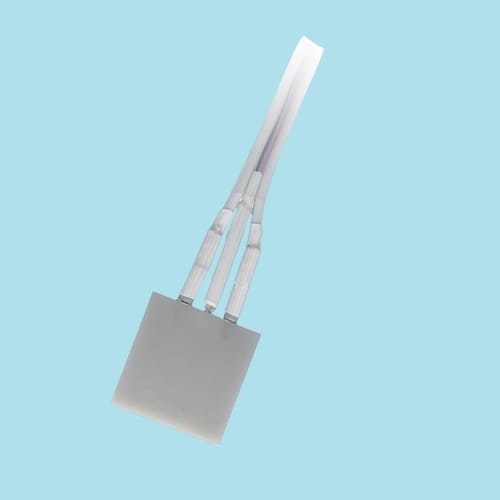
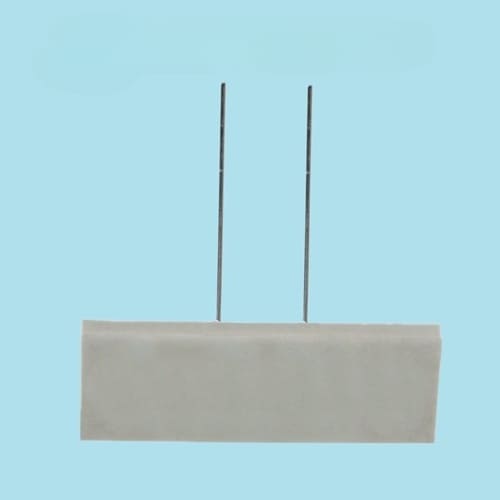
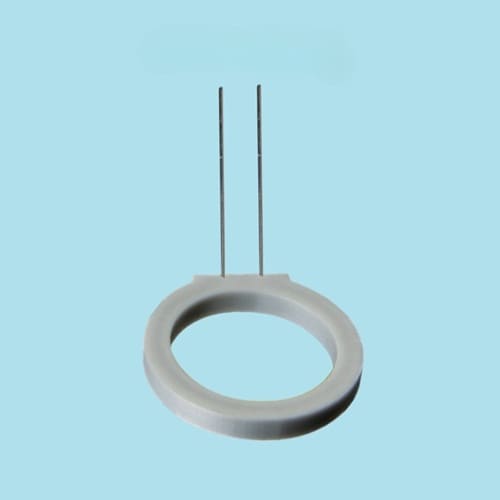
Aluminum Nitride Heater Advantages
- Capable of withstanding high temperatures up to 1000°C.
- Exceptional thermal conductivity (170-220 W/m·K) and uniform heat distribution.
- Hard, dense, non-porous substrate with high purity.
- Superior resistance to moisture and chemicals.
- Excellent flexibility in size and shape customization.
- Precise and repeatable patterning with evenly distributed wattage.
- Excellent dielectric properties
- Low coefficient of thermal expansion
- Low mass: fast temperature ramp-up and cool-down
- Low leakage current
- No outgassing with inorganic systems
Aluminum Nitride Heater Applications
- Semiconductor/Microelectronics: Used for stage heating in wafer coating (PVD/CVD), etching, and packaging welding. It ensures temperature uniformity within ±1℃, preventing contamination or yield loss.
- Electronic Manufacturing: Applied in local welding of high-frequency PCB circuits and high-temperature aging tests of electronic components. It fits compact spaces, avoids short circuits, and enables precise temperature control.
- Medical Industry: Used for core heating in medical laser equipment (e.g., dental lasers) and constant-temperature cultivation of biological samples, meeting the requirement of cleanliness without volatilization.
- Optics/New Energy: Suitable for temperature control in optical lens coating and heating in lithium battery pole piece drying, with thermal shock resistance to adapt to the working conditions of precision equipment.





Aluminum Nitride Ceramic Packaging
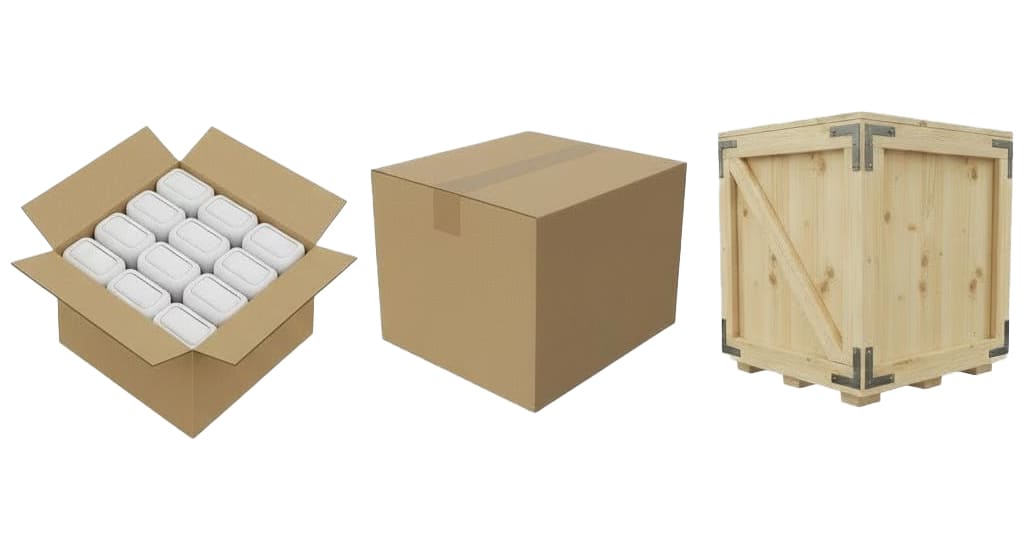
Aluminum Nitride Ceramic products are typically packaged in vacuum-sealed bags to prevent moisture or contamination and wrapped with foam to cushion vibrations and impacts during transport, ensuring the quality of products in their original condition.
Download
- SAFETY DATA SHEET (SDS) -Aluminum Nitride Heater
FAQ
What's the core material of aluminum nitride heaters, and why is it special?
Core material is aluminum nitride (AlN) ceramic. It stands out for ultra-high thermal conductivity, stable high-temperature insulation, strong thermal shock resistance, and no high-temperature volatilization.
How do aluminum nitride heaters outperform traditional heaters?
What semiconductor processes need aluminum nitride heaters?
Wafer coating (PVD/CVD), etching, and packaging welding—ensuring precise temperature control to avoid yield loss.
Where are aluminum nitride heaters used in medical fields?
Medical laser devices (e.g., dental lasers) and biological sample cultivation—meeting cleanliness and stable temperature needs.
Can aluminum nitride heaters adapt to new energy scenarios?
Yes, e.g., lithium battery pole piece drying—resisting thermal shock and ensuring uniform heating for product quality.
Get A Quote
Request a personalized quote tailored to your specific requirements.