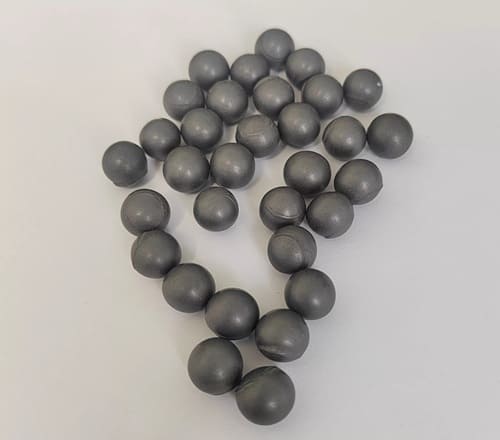
Boron Carbide Ceramic Ball
- Custom and standard options available.
- Fast lead times guaranteed.
- High performance at a competitive price.
Or email us at [email protected]
Boron Carbide Ceramic Ball Data Sheet
| Purity: | ≥99.5% |
| Apparence: | Black or grey |
| Chemical Formula: | B₄C |
| Density: | 2.46-2.62 g/cm³ |
Boron Carbide Ceramic Ball Description
Boron Carbide Ceramic Ball Advantages
- Extremely high hardness: Ranked the 3rd hardest material in nature, second only to diamond and cubic boron nitride
- Strong wear resistance: Far outperforms traditional metal and alumina balls with low wear rate
- Excellent neutron absorption: Efficiently absorbs neutrons, suitable for nuclear shielding scenarios
- Good chemical stability: Resistant to acids, alkalis and high-temperature corrosion, with strong environmental adaptability
- Reliable structure: Manufactured via isostatic pressing sintering, featuring uniform density and high dimensional accuracy
Boron Carbide Ceramic Ball Applications
- Nuclear Energy Field: Used as neutron absorbers for neutron shielding and control in nuclear reactors, ensuring the safe and stable operation of nuclear reactions.
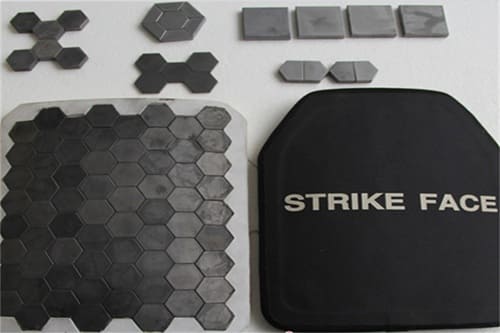
- High-End Protection: Integrated into equipment such as bulletproof armor and special protective devices, it resists impacts with its high hardness to enhance protective performance.
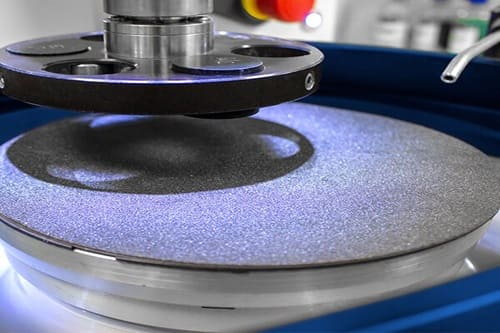
- Ultra-Precision Machining: Serves as grinding media for ultra-precision grinding and polishing of semiconductor chips and aerospace precision components.
- Wear-Resistant Equipment: Installed in mechanical parts like high-end bearings and valves, replacing traditional metal balls to reduce wear and extend equipment service life.
- Chemical Industry: Applied in stirring or conveying components under harsh conditions of strong corrosion and high temperature, leveraging chemical inertness to avoid erosion by media such as acids and alkalis.

Boron Carbide Ceramic Packaging
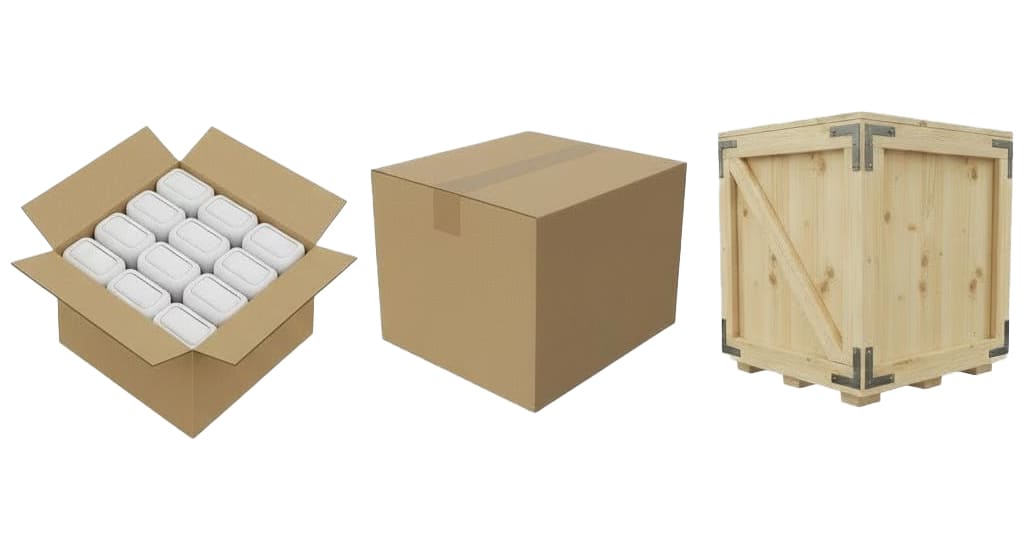
Boron Carbide ceramic products are typically packaged in vacuum-sealed bags to prevent moisture or contamination and wrapped with foam to cushion vibrations and impacts during transport, ensuring the quality of products in their original condition.
Download
- SAFETY DATA SHEET (SDS) -Boron Carbide Ceramic Ball
FAQ
What level does boron carbide ceramic ball rank in terms of hardness among natural materials?
It is the third hardest material in nature, second only to diamond and cubic boron nitride, with a significant hardness advantage.
Why can boron carbide ceramic balls be used in the nuclear energy field?
The core reason is that they have excellent neutron absorption capacity. They can be used as neutron absorbers for neutron shielding and control in nuclear reactors, ensuring the safety of nuclear reactions.
Compared with traditional metal balls, what is the biggest advantage of boron carbide ceramic balls in the application of mechanical parts?
The biggest advantage is their extremely strong wear resistance—their wear rate is much lower than that of traditional metal balls. When installed in parts such as bearings and valves, they can greatly extend the service life of equipment.
Can boron carbide ceramic balls be used in strongly corrosive environments?
Yes. They have excellent chemical inertness, which enables them to resist corrosion from acids, alkalis and high-temperature environments, making them suitable for strong corrosion working conditions in the chemical industry.
Which step in the preparation process of boron carbide ceramic balls is crucial for their structural stability?
Get A Quote
Request a personalized quote tailored to your specific requirements.