
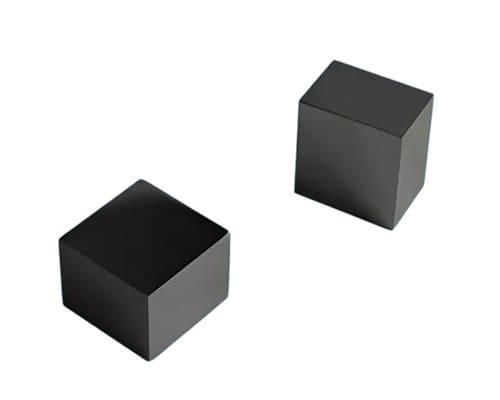
Boron Carbide Block
- Custom and standard options available.
- Fast lead times guaranteed.
- High performance at a competitive price.
Or email [email protected]
Boron Carbide Block Data Sheet
| Purity: | ≥99.5% |
| Apparence: | Black or grey |
| Chemical Formula: | B₄C |
| Density: | 2.46-2.62 g/cm³ |
Boron Carbide Block Description
Boron carbide blocks are bulk inorganic non-metallic materials made from high-purity boron carbide powder as the core raw material, with a small amount of sintering aids added, through batching and mixing, compression molding, high-temperature sintering at 1800-2200℃, and precision processing. They have outstanding performance advantages: a Mohs hardness of 9.3, second only to diamond and cubic boron nitride, with wear resistance far exceeding that of ordinary metals and ceramics; a density of only 2.52g/cm³, much lower than steel, combining high strength and lightweight characteristics; they also possess excellent chemical stability, being able to resist corrosion from most acids and alkalis, and have excellent neutron absorption capacity, which can effectively shield nuclear radiation. Based on these properties, they are indispensable in many key fields: they can be processed into bulletproof inserts and protective components for armored vehicles, used as neutron shielding parts and control rod components in nuclear reactors, and also made into wear-resistant valves, sandblasting nozzles and other mechanical parts, making them high-performance functional materials for cross-field applications.
Boron Carbide Block Advantages
- Exceptional Hardness & Wear Resistance
- Lightweight with High Strength
- Superior Chemical Stability
- Excellent Neutron Absorption
- Low Thermal Expansion & High Temperature Resistance
- Eco-Friendly & Long-Lasting
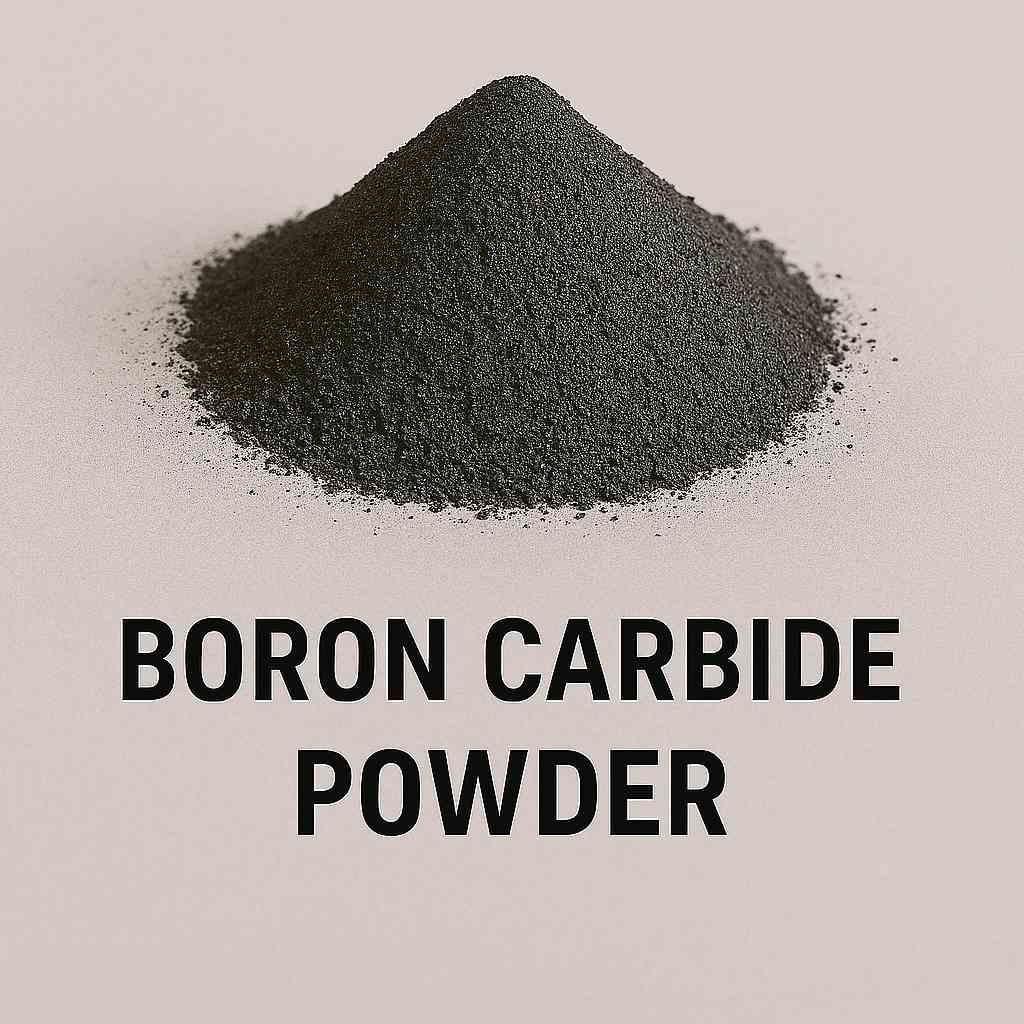
Boron Carbide Powder Advantages
- Ultra-high hardness
- Low density
- Excellent chemical stability
- High thermal resistance
- Fine particle control
- Versatile application range
Boron Carbide Block Applications
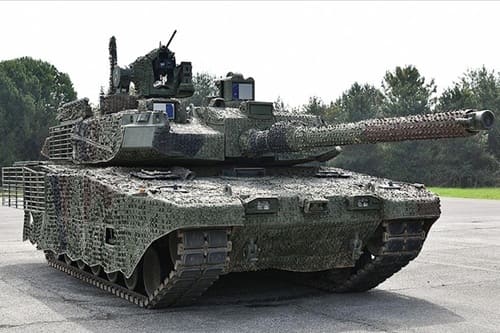
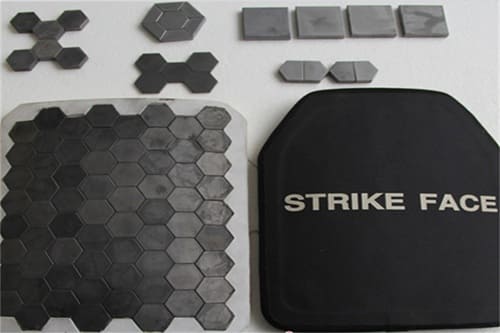
- Armor Protection: Used to produce ballistic plates or armor blocks, offering high-strength, lightweight protection for military vehicles and personal gear.
- Nuclear Industry: Employed as neutron shielding material in nuclear reactors or radioactive material storage for radiation protection.
- Abrasive Tools: Processed into wear-resistant components for cutting, grinding, or polishing tools, ideal for machining high-hardness materials.
- Industrial Wear Components: Utilized as wear-resistant liners or molds in high-wear environments like mining and metallurgy.
- High-Temperature Equipment: Applied as corrosion-resistant structural blocks in high-temperature furnaces or chemical reaction systems.

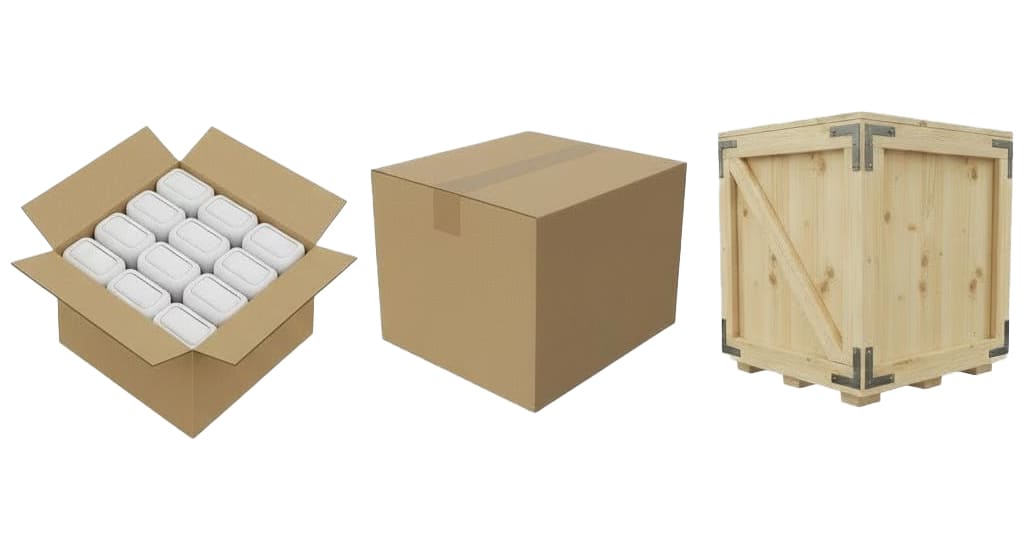
Boron Carbide Ceramic Packaging
Boron Carbide ceramic products are typically packaged in vacuum-sealed bags to prevent moisture or contamination and wrapped with foam to cushion vibrations and impacts during transport, ensuring the quality of products in their original condition.
Download
- SAFETY DATA SHEET (SDS) -Boron Carbide Block
FAQ
What's used to make boron carbide blocks?
Core material: high-purity boron carbide powder (plus small sintering aids). Process: batching → molding → 1800–2200℃ sintering → precision machining.
Why use the boron carbide block for bulletproof armor?
Extreme hardness (Mohs 9.3) resists penetration, and low density (2.52g/cm³) keeps armor lightweight.
How does the boron carbide block shield nuclear radiation?
Its boron-10 isotope strongly absorbs neutrons (key in nuclear radiation), used for reactor shielding and spent fuel storage.
How is the boron carbide block better than steel for wear resistance?
Harder (Mohs 9.3 vs. steel’s 5–6) and more corrosion-resistant (resists most acids/alkalis), no rusting.
Is the boron carbide block stable at high temperatures?
Get A Quote
Request a personalized quote tailored to your specific requirements.