
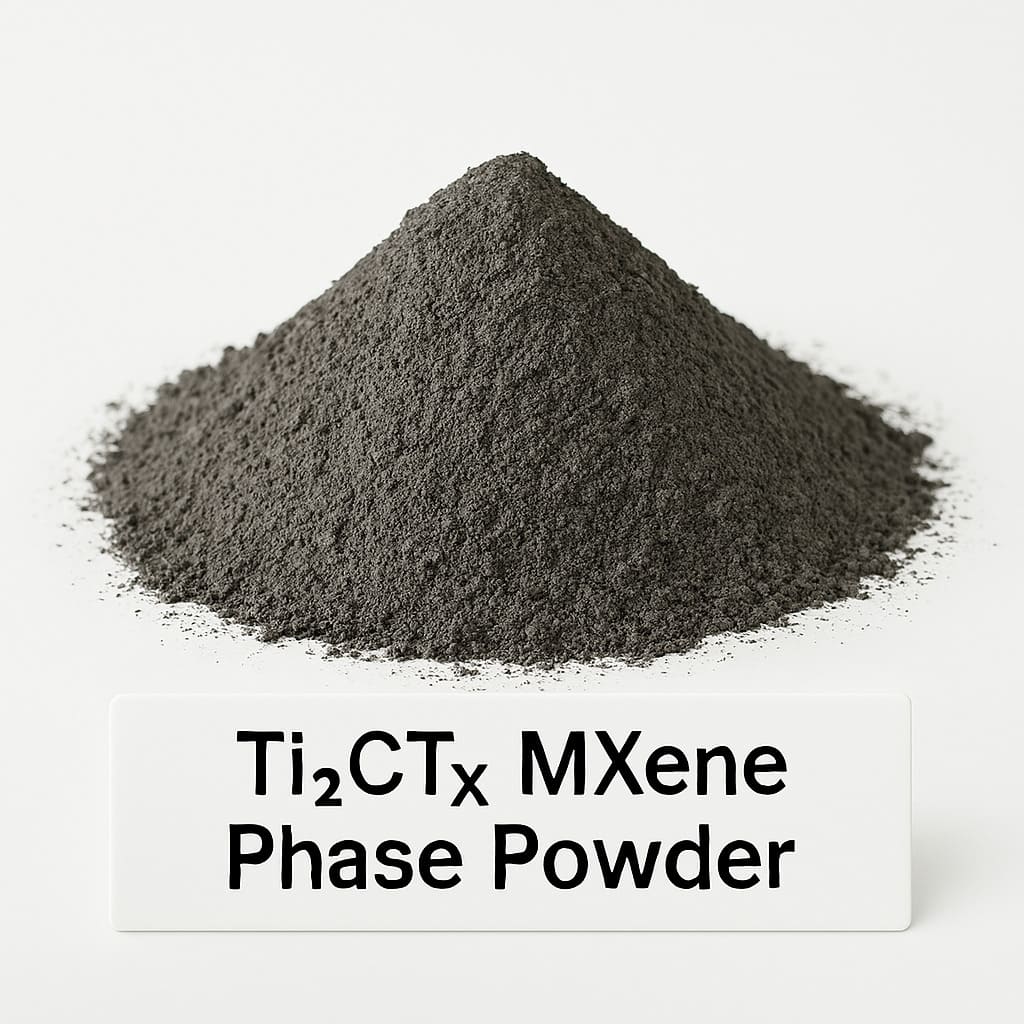
Ti2CTx MXene Phase Powder
Ti₂CTₓ MXene phase powder is a two-dimensional transition metal carbide derived from the Ti₂AlC MAX phase through selective etching of aluminum layers. Characterized by its accordion-like layered structure and abundant surface terminations (Tₓ = -O, -OH, -F), it exhibits high electrical conductivity, hydrophilic behavior, and tunable surface chemistry. This MXene shows promising potential in energy storage (e.g., batteries and supercapacitors), electromagnetic interference shielding, sensors, and catalytic applications, though its stability in ambient conditions requires careful handling.
- Custom and standard options available.
- Fast lead times guaranteed.
- High performance at a competitive price.
Ti2CTx MXene Phase Powder Data Sheet
| Purity: | ≥98% |
| Size : | 2–20 µm, 200–1000 nm or customized |
Ti2CTx MXene Phase Powder Description
Ti₂CTₓ MXene Phase Powder is a two-dimensional layered material synthesized from the Ti₂AlC MAX phase by selectively etching the aluminum layers using fluoride-containing etchants such as hydrofluoric acid, resulting in a multilayered structure with abundant surface terminations denoted as Tₓ (primarily -O, -OH, and -F groups). This powder exhibits excellent metallic conductivity, good hydrophilicity, and a tunable interlayer spacing, which contribute to its strong performance in electrochemical energy storage applications including lithium-ion and sodium-ion batteries as well as supercapacitors. Furthermore, its high specific surface area, combined with the active surface chemistry, enables effective use in electromagnetic interference shielding, gas sensing, catalysis (e.g., hydrogen evolution reaction), and composite reinforcement. However, like many MXenes, Ti₂CTₓ is susceptible to oxidation under ambient conditions, requiring careful storage and handling, often in inert or vacuum environments, to preserve its structural integrity and functional properties.
Ti2CTx MXene Phase Powder Specifications
| Parameter | Multilayer Ti2CTx Powder | Single-Layer Ti2CTx Powder |
| Size | 2–20(µm) | 200–1000(nm) |
| Number of Layers | Multilayer | ≤5 Layers |
| Conductivity (S/cm) | 10–100 | 2000 ± 500 |
| Surface Groups | -OH, =O, -F, -Cl | |
| Etching Process | LiF/HCl Etching | |
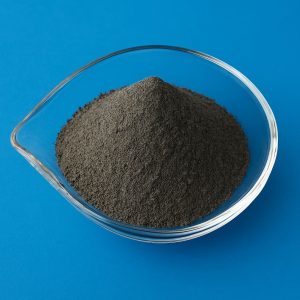
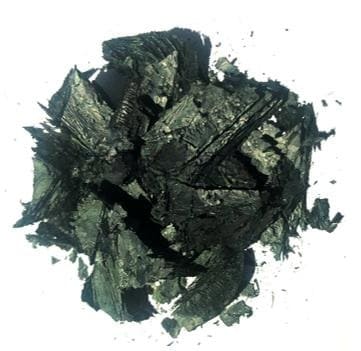
| Appearance | Green powdered material | |
| Structure | Two-dimensional layered material | |
| Production Method | Lithium fluoride/hydrochloric acid system reaction | |
| Conductivity | High conductivity with multiple vanadium oxidation states, demonstrating excellent energy storage performance | |
| Storage | Stored in vacuum drying or inert environments | |
Ti2CTx MXene Phase Powder Features
- 2D Layered Structure: Accordion-like morphology with stacked nanosheets after etching the Al layer from Ti₂AlC.
- Surface Functionalization (Tₓ): Terminated with -O, -OH, and -F groups, enabling tunable surface chemistry.
- Metallic Conductivity: Exhibits high electrical conductivity, beneficial for electrodes and conductive composites.
- Hydrophilicity: Good dispersibility in water and polar solvents, facilitating solution processing.
- Tunable Interlayer Spacing: Intercalation with ions, molecules, or polymers can modulate the interlayer distance.
- Moderate Specific Surface Area: Provides accessible active sites for adsorption and reactions.
- Electrochemical Activity: Demonstrates good performance as an electrode material in batteries and supercapacitors.
- Oxidation Sensitivity: Requires careful storage (e.g., inert atmosphere) to prevent degradation.
Ti2CTx MXene Phase Powder Applications
- Energy Storage: Used as an electrode material in lithium-ion batteries, sodium-ion batteries, and supercapacitors due to its high conductivity and intercalation capability.
- Electromagnetic Interference (EMI) Shielding: Incorporated into coatings and composites for lightweight, efficient EMI shielding materials.
- Sensing: Applied in chemical and gas sensors, leveraging its high surface area and responsive electrical properties.
- Catalysis: Functions as a catalyst or support in electrocatalytic reactions, such as the hydrogen evolution reaction (HER).
- Environmental Remediation: Utilized as an adsorbent for the removal of heavy metals and organic pollutants from water.
- Composite Materials: Reinforced into polymer, ceramic, or metal matrices to enhance electrical, mechanical, or barrier properties.
- Optoelectronics: Explored for use in transparent conductive films and related electronic components.
- Lubrication & Wear Resistance: Added to lubricants or coatings to reduce friction and improve wear resistance.
- Antibacterial Coatings: Applied in coatings and surfaces for potential antimicrobial and biomedical applications.
- Energy Harvesting: Investigated for potential use in triboelectric nanogenerators (TENGs) and other energy conversion devices.

Ti2CTx MXene Phase Powder Packaging
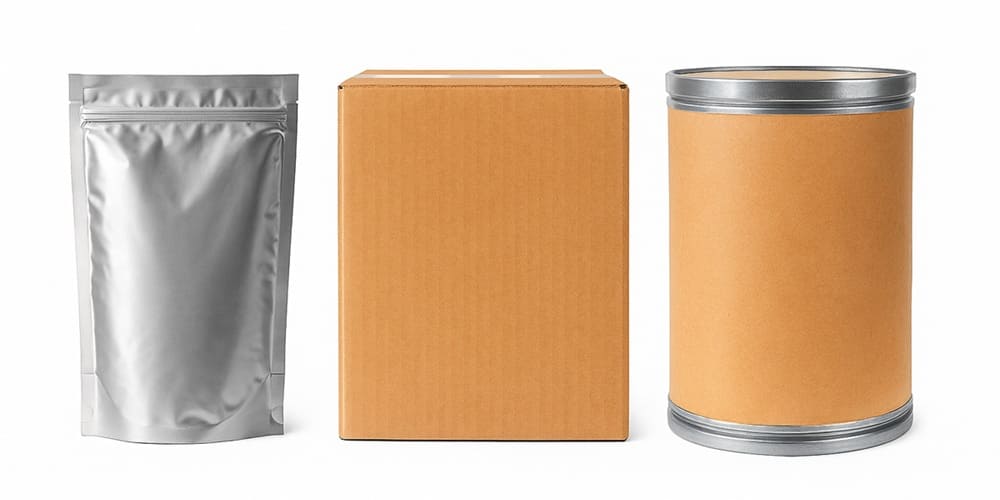
Ti2CTx MXene Phase Powder is typically packaged in sealed, moisture-proof plastic bags, then placed in sturdy drum containers or fiber cartons to prevent contamination and ensure safe transport. Standard packaging sizes include 1 kg, 5 kg, and 10 kg options, with custom packaging available upon request to meet specific usage or storage needs.
Download
- SAFETY DATA SHEET (SDS) -Ti2CTx MXene Phase Powder
FAQ
What is Ti₂CTₓ MXene Phase Powder?
Ti₂CTₓ MXene phase powder is a two-dimensional (2D) transition metal carbide material derived from the Ti₂AlC MAX phase by selectively etching the aluminum layers. The “Tₓ” represents surface functional groups such as -O, -OH, and -F.
What are the key properties of Ti₂CTₓ?
Key properties include high electrical conductivity, hydrophilic surface, tunable interlayer spacing, good electrochemical activity, and a layered 2D structure.
Is Ti₂CTₓ suitable for batteries?
Yes, it is a promising electrode material for lithium-ion and sodium-ion batteries due to its high conductivity and ion intercalation capacity.
Is Ti₂CTₓ powder prone to oxidation?
Yes, it is sensitive to oxidation in air. Storage in vacuum or inert atmosphere (e.g., argon) is recommended for long-term stability.
Can Ti₂CTₓ be dispersed in water?
Yes, due to its hydrophilic functional groups (-OH, -O), it forms stable aqueous dispersions suitable for solution processing.
Get A Quote
Request a personalized quote tailored to your specific requirements.