PECVD Graphite Boat
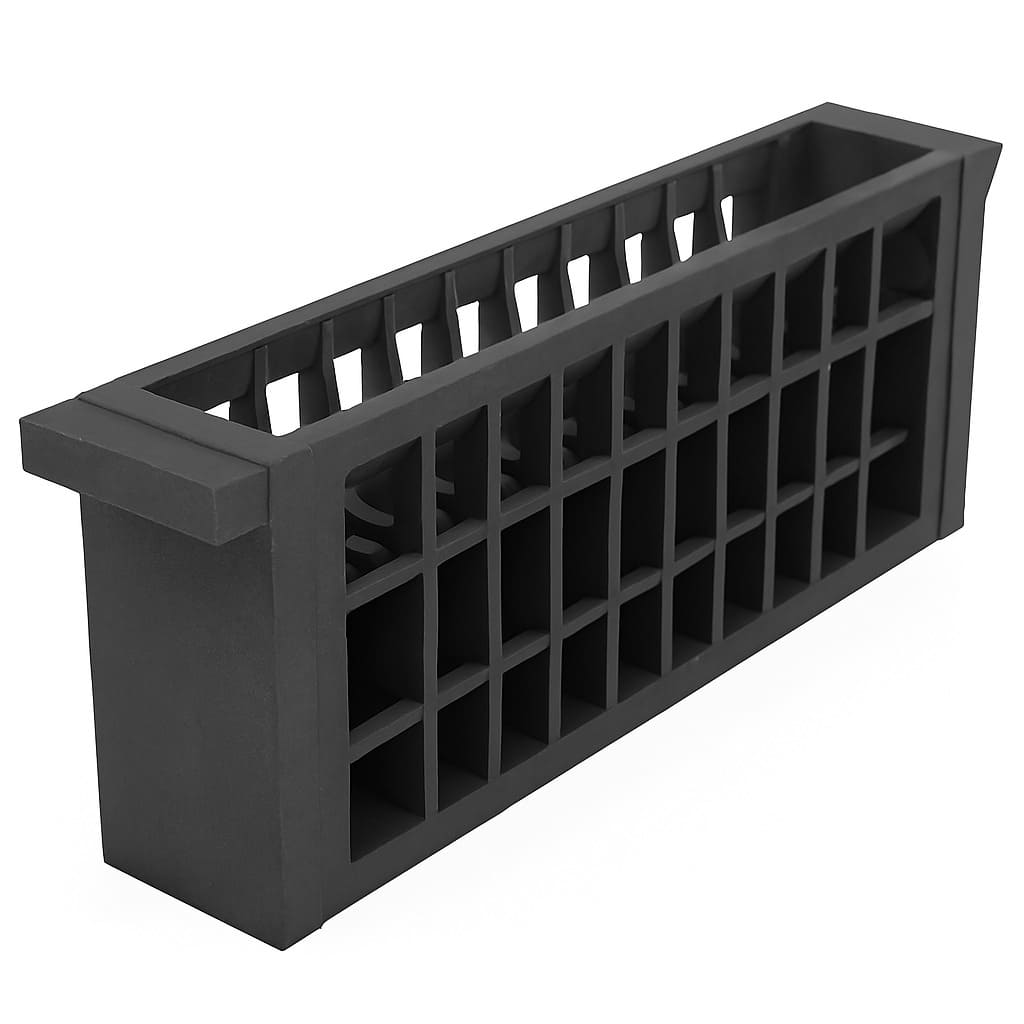
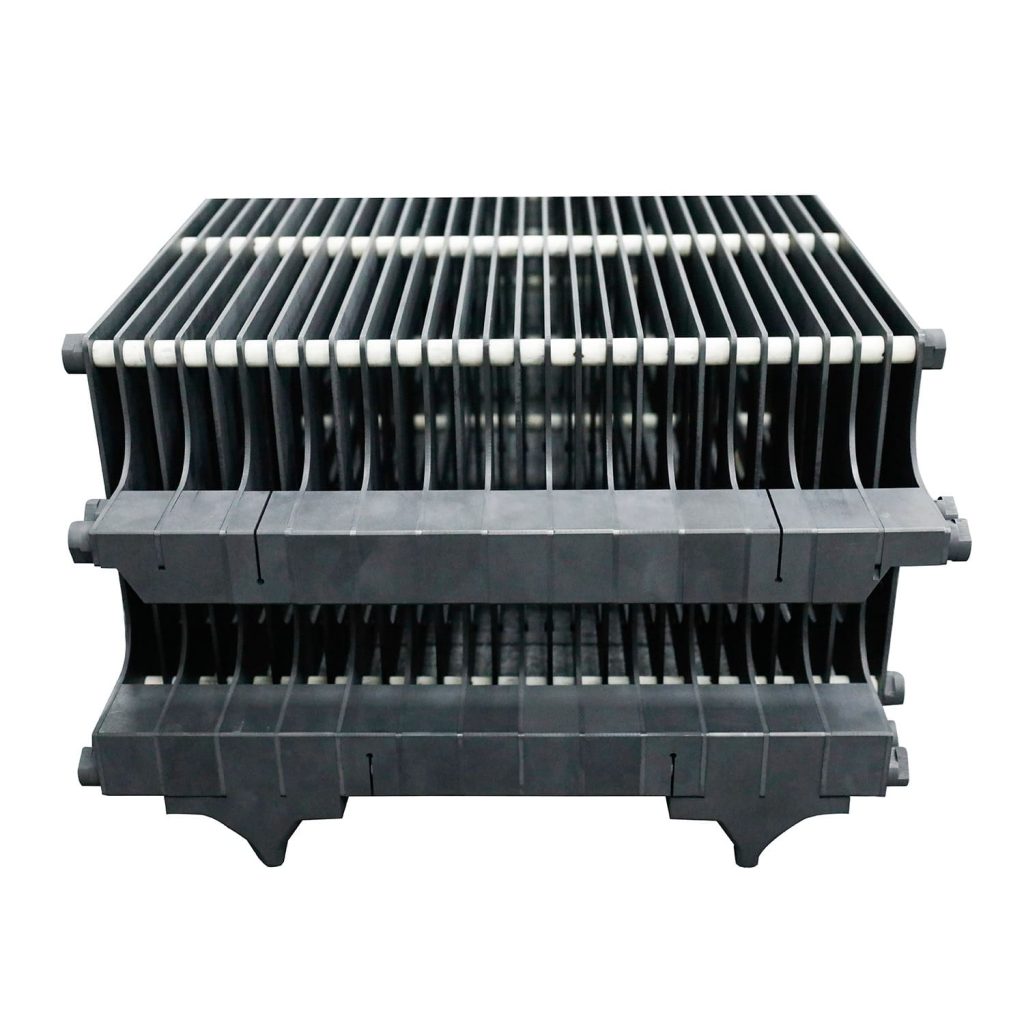
The PECVD Graphite Boat is a core carrier component in Plasma Enhanced Chemical Vapor Deposition (PECVD) processes, precision-manufactured from high-purity isostatic graphite. It holds silicon wafers in high-temperature plasma environments, providing a uniform and stable heating platform for depositing thin films such as silicon nitride and silicon oxide. Leveraging graphite’s excellent heat resistance, conductivity, and thermal stability, it ensures even wafer heating, minimizes process-induced deformation, and maintains stable reactive gas flow. It is a critical consumable that guarantees deposition uniformity and process yield in semiconductor manufacturing.
- Custom and standard options available.
- Fast lead times guaranteed.
- High performance at a competitive price.
PECVD Graphite Boat Data Sheet
| Purity | ≥99.9% |
| Color | Dark Gray to Black |
| Chemical Formula | C |
| Material Grades | Natural Graphite, Synthetic Graphite, Specialty Graphite, Composites Graphite |
| Density | 1.65–1.95 g/cm³ |
| Maximum Operating Temperature | Up to 3000°C (in inert atmosphere) |
| Thermal Conductivity | 100–200 W/m·K |
PECVD Graphite Boat Description
The PECVD Graphite Boat is a critical carrier component in semiconductor manufacturing for PECVD processes, precision-machined from high-purity isostatic graphite. Specifically designed to securely hold and transport silicon wafers within plasma-enhanced chemical vapor deposition environments, its unique structure ensures uniform thermal distribution and stable gas flow during the deposition of thin films such as silicon nitride and silicon oxide. The inherent high-temperature resistance of graphite (withstanding process temperatures exceeding 1000°C), coupled with its excellent thermal conductivity and low coefficient of thermal expansion, enables the boat to maintain structural integrity through rapid thermal cycles while effectively minimizing wafer warpage. Specialized surface treatments further reduce particulate contamination and extend service life. As a core consumable in PECVD systems, its performance directly impacts film uniformity, process repeatability, and final product yield.
PECVD Graphite Boat Technical Parameter
| Density | Resistivity | Compressive Strength | Bending Strength | The Coefficient of Thermal Expansion (CTE) | Ash | Grain Size |
| g/cm3 | μΩm | Mpa | Mpa | % | μm | |
| 1.80 | 10 | 55 | 30 | 4.5 | 0.1 | 45 |
| 1.85 | 9 | 62 | 35 | 5.5 | 0.1 | 45 |
PECVD Graphite Boat Specifications
| Type | Specifications | Note |
| 125mm*125mm 156mm*156mm Monocrystal/Polycrystal | 13 pieces | High-purity graphite Applied in PECVD equipment. |
| 15 pieces | ||
| 17 pieces | ||
| 19 pieces |
PECVD Graphite Boat Accessories
| 125 Type(125mm*125mm) | 125 Graphite Boat Side Sheet | |
| 125 Graphite Boat Center Sheet | ||
| 156 Type(156mm*156mm) | 156 Graphite Boat Side Sheet | |
| 156 Graphite Boat Center Sheet | ||
| Graphite Screw | M6*215 | High-purity graphite |
| M6*190 | ||
| M6*275 | ||
| M8*215 | ||
| M8*190 | ||
| M8*160 | ||
| M8*245 | ||
| Graphite Nut, Graphite Cap Nut | M6, M8 | |
PECVD Graphite Boat Features
- High Purity Material: Uses graphite with purity above 99.95% to prevent process contamination.
- High Temperature Resistance: Can withstand operating temperatures exceeding 1000°C in PECVD processes.
- Excellent Thermal Stability: Low thermal expansion coefficient and strong thermal shock resistance ensure dimensional stability.
- Uniform Thermal Field: Precision design ensures even wafer heating and consistent film deposition.
- Good Electrical Conductivity: Facilitates uniform plasma distribution, enhancing process effectiveness.
- Surface Optimization: Special polishing or coating treatments minimize particle generation and film adhesion.
- Customized Design: Structure and dimensions can be tailored to specific equipment and process requirements.
- Long Service Life: Can support thousands of process cycles under normal operating and maintenance conditions.
PECVD Graphite Boat Applications
- Semiconductor Thin Film Deposition: Primarily used for depositing critical thin films in semiconductor manufacturing, such as silicon nitride, silicon oxide, and amorphous silicon.
- Passivation Layer Fabrication: Utilized in photovoltaic cells and integrated circuits to deposit protective passivation layers, enhancing device performance and reliability.
- Dielectric Layer Deposition: Applied for depositing dielectric layers in integrated circuits, supporting the fabrication of multi-layer metal interconnect structures.
- Anti-Reflection Coating Production: Used in solar cell manufacturing to create anti-reflection films that improve photoelectric conversion efficiency.
- Diffusion Barrier Application: Employed in advanced packaging processes to deposit barrier layers that prevent metal diffusion.
- MEMS Device Fabrication: Used for depositing functional thin films and structural shaping in micro-electro-mechanical system devices.
- Optical Coating Preparation: Applied for depositing functional thin films on various optical devices.
- III-V Semiconductor Processing: Used for depositing protective and dielectric layers in compound semiconductor device manufacturing.
Graphite Ceramic Packaging
Graphite ceramic products are typically packaged in vacuum-sealed bags to prevent moisture or contamination and wrapped with foam to cushion vibrations and impacts during transport, ensuring the quality of products in their original condition.

Download
- SAFETY DATA SHEET (SDS) -PECVD Graphite Boat
FAQ
What is a PECVD Graphite Boat and what is its function?
A PECVD Graphite Boat is a critical carrier component used in Plasma-Enhanced Chemical Vapor Deposition (PECVD) processes. It is designed to hold and transport silicon wafers in high-temperature plasma environments, ensuring uniform and stable deposition of thin films (e.g., silicon nitride, silicon oxide).
What material is used for PECVD Graphite Boats, and why is graphite chosen?
It is typically made from high-purity isostatic graphite (purity ≥ 99.95%). Graphite is chosen for its high-temperature resistance (withstands >1000°C), excellent thermal stability, uniform heat conduction, low thermal expansion, and compatibility with plasma environments, making it ideal for semiconductor processes.
How to select the right PECVD Graphite Boat?
Selection depends on equipment model, process temperature, film type, wafer size, and throughput requirements. Key parameters include graphite purity, density, thermal expansion coefficient, surface treatment (e.g., coating or polishing), and structural design.
Why does a PECVD Graphite Boat require surface coating or polishing?
Surface treatments (e.g., silicon carbide coating, high-temperature polishing) reduce particle contamination, prevent film adhesion, enhance corrosion resistance, and improve plasma uniformity, thereby increasing process yield and boat durability.
What is the difference between a PECVD Graphite Boat and a regular graphite boat?
PECVD Graphite Boats are specifically designed for plasma environments, requiring higher purity, precise thermal control, stronger plasma resistance, and stricter surface finish standards. Regular graphite boats may be used in non-plasma processes like high-temperature sintering.
Get A Quote
Request a personalized quote tailored to your specific requirements.