
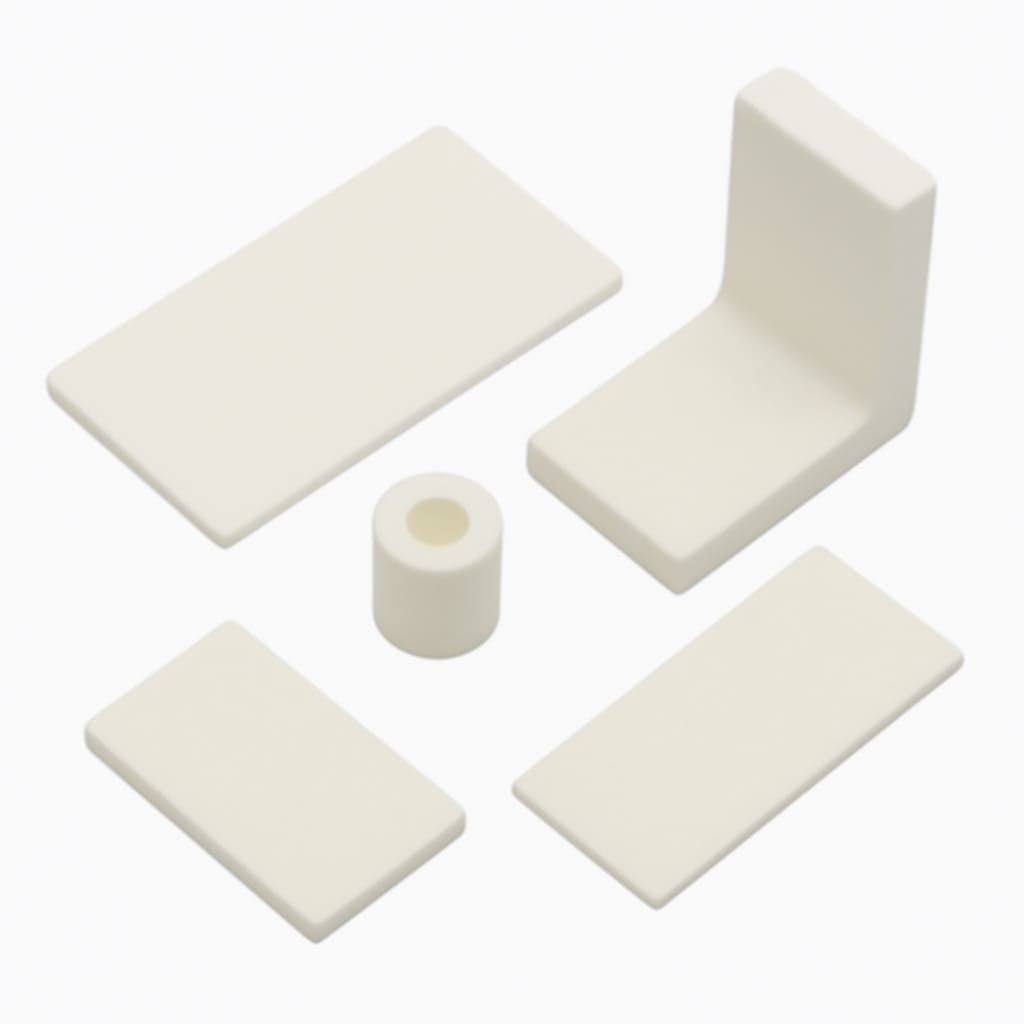
Beryllium Oxide Substrate
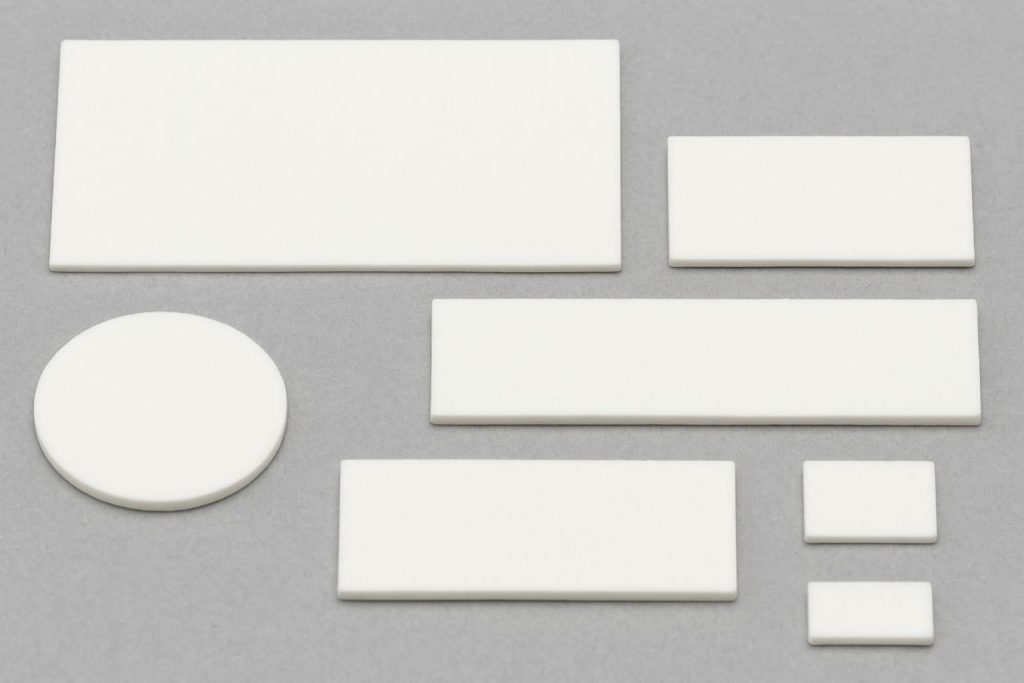
Beryllium Oxide substrate is a specialized ceramic circuit board and heat spreader renowned for its exceptional ability to combine high thermal conductivity with excellent electrical insulation. Made from over 99.5% pure Beryllium Oxide ceramic, it serves as a critical foundation for high-power and high-frequency electronic devices where efficient heat dissipation is paramount.
- Custom and standard options available.
- Fast lead times guaranteed.
- High performance at a competitive price.
Beryllium Oxide Substrate Data Sheet
| Color: | White |
| Chemical Formula: | BeO |
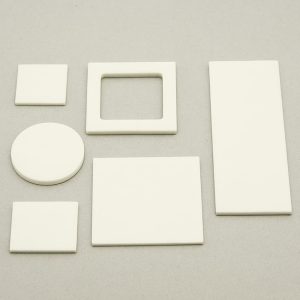
| Dimension: | customized |
| Machining Accuracy: | 0.01 mm |
| Surface Roughness: | 0.1 μm |
Beryllium Oxide Substrate Description
Beryllium Oxide (BeO) substrate is a high-performance ceramic material renowned for its exceptional ability to combine metal-like thermal conductivity (up to 330 W/mK) with outstanding electrical insulation properties, making it an ideal thermal management solution for high-power and high-frequency electronic applications. This unique combination allows for efficient heat dissipation from critical components like RF power transistors and laser diodes while maintaining reliable electrical isolation, even in demanding environments. With its low dielectric constant and loss tangent, BeO substrate ensures minimal signal loss and distortion in microwave circuits, and its high mechanical strength provides excellent dimensional stability. Available with various metallization options such as thick-film printing and direct bonded copper (DBC), it offers design flexibility for complex circuit layouts. It is crucial to note that while fully sintered BeO substrates are safe for use, machining them requires strict safety controls due to the toxicity of beryllium oxide dust.
Beryllium Oxide Substrate Chemical Compositions
| Element | Content (ppm) |
|---|---|
| Boron (B) | 2 |
| Aluminum (Al) | 46 |
| Chromium (Cr) | 8 |
| Iron (Fe) | 32 |
| Magnesium (Mg) | 1000 |
| Manganese (Mn) | 2 |
| Nickel (Ni) | 9 |
| Titanium (Ti) | 5 |
| Sodium (Na) | 173 |
| Calcium (Ca) | 31 |
| Silicon (Si) | 2100 |
Beryllium Oxide Substrate Features
- Exceptional Thermal Conductivity: Offers extremely high thermal conductivity (240-330 W/mK), rivaling metals, for superior heat dissipation and effective thermal management.
- Excellent Electrical Insulation: Provides high dielectric strength and volume resistivity, ensuring reliable electrical isolation even in high-voltage environments.
- Outstanding High-Frequency Performance: Features a low dielectric constant (~6.7) and very low loss tangent, minimizing signal delay and loss in RF/Microwave applications.
- High Mechanical Strength & Rigidity: Possesses robust mechanical properties, ensuring structural integrity and dimensional stability under stress.
- High Melting Point: With a melting point of up to 2570°C, it maintains stability and performance in high-temperature operations.
- Customizable Metallization: Supports various metallization options (Thick-Film, Thin-Film, DBC) for reliable circuit patterning and component attachment.
- Good Chemical Stability: Exhibits strong resistance to many chemical agents, enhancing its durability in various environments.
Beryllium Oxide Substrate Applications
- RF & Microwave Power Amplifier Packages and Carrier Boards
- Substrates for High-Power Laser Diode Arrays
- Heat Spreader Plates for IGBTs and Power Modules
- Microprocessor and ASIC Packaging in Extreme Environments
- Aerospace & Defense Electronics (Radar, EW, Avionics)
- Microwave Window Materials



Beryllium Oxide Ceramic Packaging
Beryllium oxide ceramic products are typically packaged in vacuum-sealed bags to prevent moisture or contamination and wrapped with foam to cushion vibrations and impacts during transport, ensuring the quality of products in their original condition.

Download
- SAFETY DATA SHEET (SDS) -Beryllium Oxide Substrate
FAQ
What is the primary advantage of Beryllium Oxide substrates over other ceramic substrates?
BeO substrates uniquely combine metal-like thermal conductivity with excellent electrical insulation, outperforming most other ceramics in thermal management.
What is the typical thermal conductivity range of Beryllium Oxide substrates?
BeO substrates typically offer thermal conductivity between 240-330 W/mK, significantly higher than alumina and many other technical ceramics.
Why are BeO substrates preferred for high-frequency RF applications?
Their combination of high thermal conductivity with low dielectric constant and loss makes them ideal for maintaining signal integrity in RF circuits.
What precision can be achieved in BeO substrate manufacturing?
We can achieve tight tolerances up to ±0.01mm with excellent surface finish quality for high-performance applications.
Can BeO substrates be used in high-voltage applications?
Yes, with high dielectric strength (14-16 kV/mm) and volume resistivity (>10¹⁴ Ω·cm), they’re excellent for high-voltage applications.
Get A Quote
Request a personalized quote tailored to your specific requirements.