
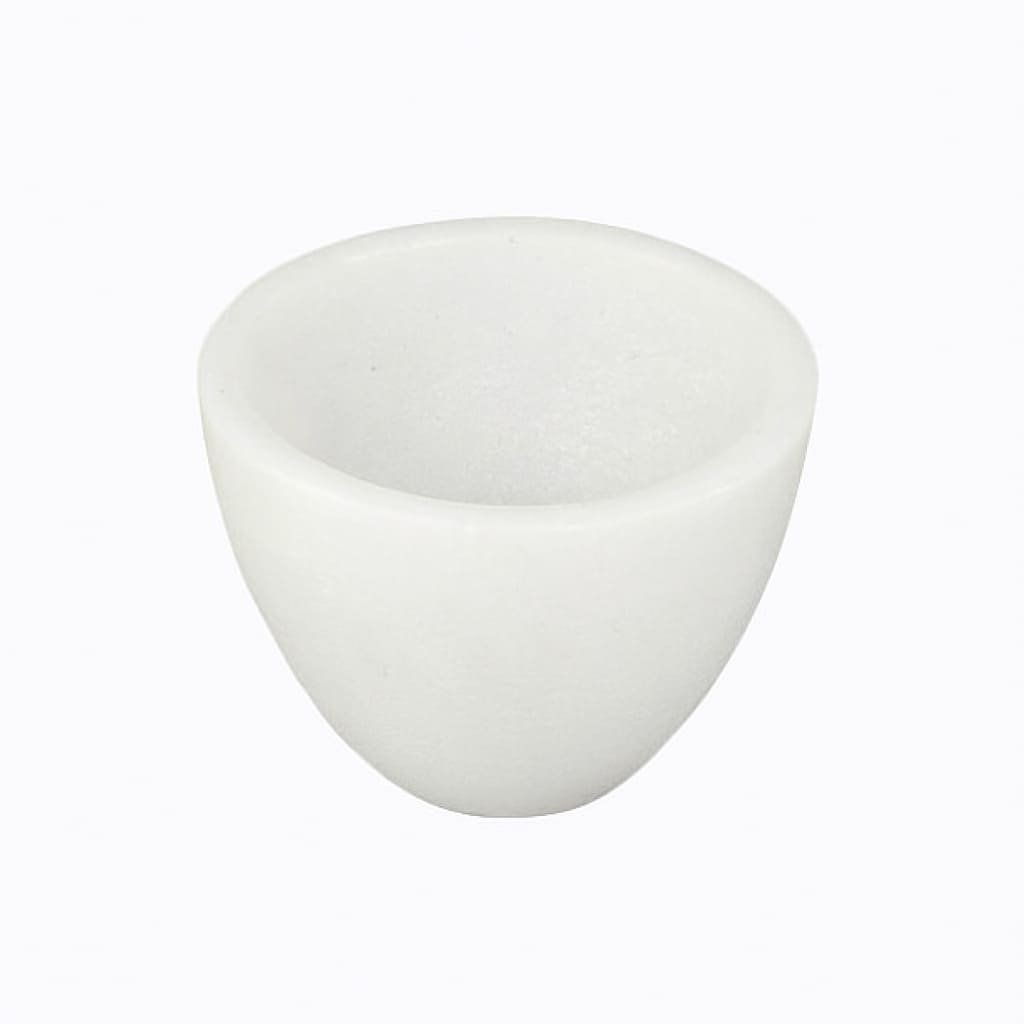
Quartz Crucible
Quartz Crucible is a high-purity laboratory and industrial vessel made primarily from fused quartz (silicon dioxide). It exhibits exceptional thermal stability, with a softening point around 1670°C, and offers outstanding resistance to rapid temperature changes. Due to its high chemical inertness, it does not contaminate sensitive processes and provides excellent optical transparency. Quartz crucibles are essential in semiconductor crystal growth (especially for silicon), high-temperature material synthesis, precision optical applications, and analytical chemistry. However, they are brittle and susceptible to damage from alkaline substances at high temperatures.
- Custom and standard options available.
- Fast lead times guaranteed.
- High performance at a competitive price.
Quartz Crucible Data Sheet
| Color: | White |
| Shape: | Cylinder, Conical Cylinder, Rectangular, T-shape, or customized. |
| Dimension: | Customized |
| Chemical Formula: | SiO2 |
| Compressive Strength: | ≥ 50 MPa |
| Thermal Expansion Coefficient: | ≤ 0.6 |
| Maximum Temperature (℃): | 1650 ℃ |
| Long-Term Operating Temperature (℃): | 1100 ℃ |
Quartz Crucible Description
A quartz crucible is a specialized high-temperature vessel fabricated from pure fused silica (amorphous silicon dioxide). Its defining characteristics stem from the exceptional material properties of quartz, including an extremely high melting point (over 1700°C), superior thermal shock resistance, and outstanding chemical purity and inertness. These qualities make it indispensable in ultra-sensitive applications where contamination must be minimized. The crucible is most notably the container of choice for pulling high-purity single crystal silicon ingots in the semiconductor industry via the Czochralski process. Beyond that, it is widely used in precision optical manufacturing, high-temperature material synthesis, and advanced analytical chemistry. However, its main limitations are brittleness and susceptibility to devitrification (crystallization) and corrosion when exposed to alkaline materials or certain metal oxides at elevated temperatures.
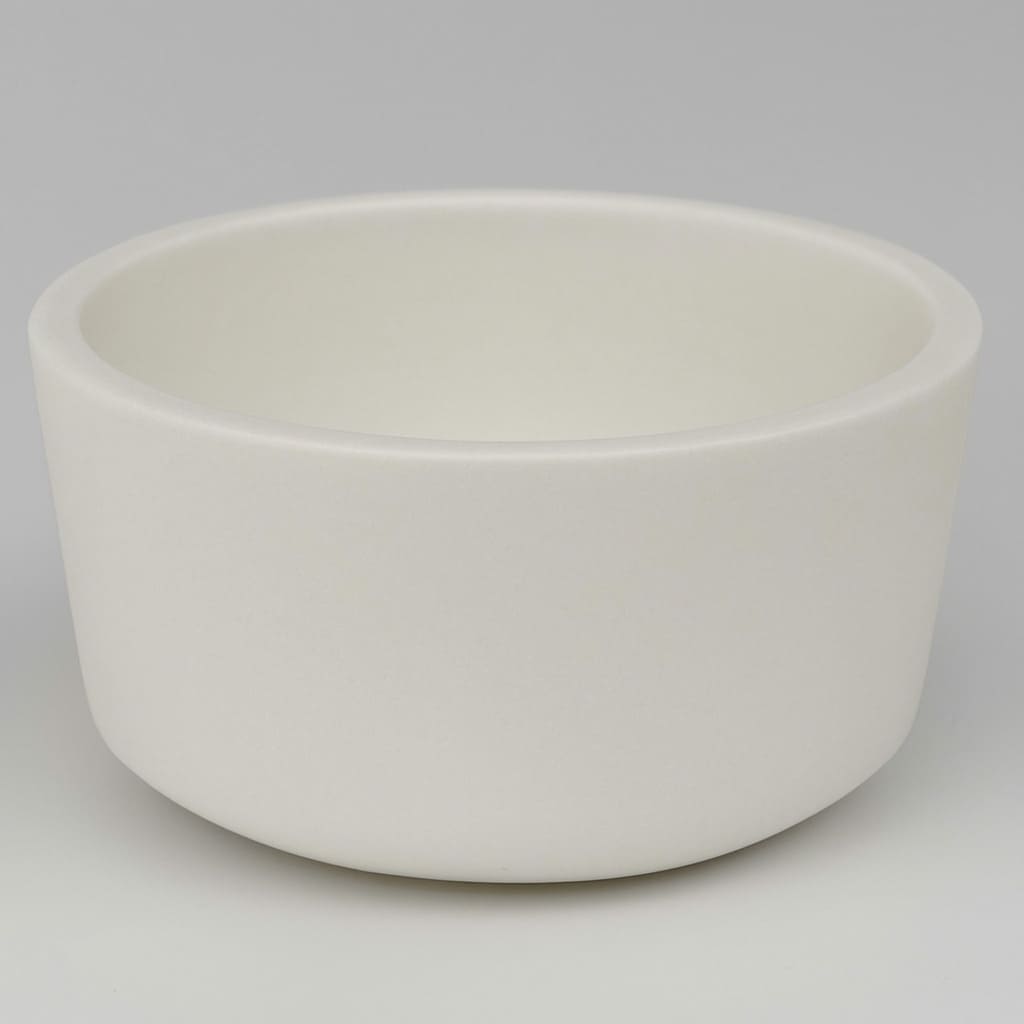
Quartz Crucible Specifications
| Shape | Dimensions (mm) |
|---|---|
| Square | 1100 × 1100 × 550 |
| Square | 878 × 878 × 480 |
| Square | 878 × 878 × 420 |
| Square | 720 × 720 × 420 |
| Square | 585 × 585 × 420 |
| Square | 440 × 440 × 350 |
| Square | 220 × 220 × 95 |
| Round | Φ610 × 420 |
| Round | Φ100 × 300 |
| Customized | Custom dimensions available |
Quartz Crucible Features
- Exceptional High-Temperature Resistance: With a softening point around 1670°C, it can operate continuously at extreme temperatures.
- Superior Thermal Shock Resistance: Capable of withstanding rapid and severe temperature changes without cracking.
- High Chemical Purity & Inertness: Made from high-purity quartz, it minimizes contamination of contents at high temperatures and is stable against most acids.
- Good Optical Transparency: Its high clarity allows for visual monitoring of reactions inside the furnace.
- Main Limitations: Relatively brittle with low mechanical strength; susceptible to attack by alkalis and some metal oxides at high temperatures, leading to corrosion and devitrification.
Quartz Window Applications
- High-Temperature Observation & Monitoring: Used in furnaces, reactors, and vacuum equipment to directly observe internal processes under high temperatures or corrosive environments.
- Precision Optical Systems: Serving as windows for lenses, prisms, or optical cavities. Due to their high transparency and low thermal expansion, they are widely used in lasers, spectrometers, and high-end microscopes.
- Semiconductor Manufacturing: Employed in photolithography machines, etching equipment, and CVD/PVD systems to provide clean optical pathways without contaminating the process environment.
- Analytical Instruments: Used as window components in UV-Vis spectroscopy, fluorescence detectors, and other instruments, particularly where high UV transmittance is essential.
- Special Environment Protection: Applied in spacecraft, deep-sea equipment, or nuclear facilities as observation windows that are resistant to radiation and high pressure.
Quartz Ceramic Material Properties
| Purity (%) | >99.8 | >99.5 |
| Density (g/cm3) | 1.9-1.95 | 1.9-1.95 |
| Flexture strength (MPa) | 28 | 28 |
| Compressive strength (MPa) | >50 | >50 |
| Bending strength (MPa) | 25 | 25 |
| Maximum working temperature (℃) | 1650 | 1650 |
| Thermal conductivity (W/m*K) | <1 | <1 |
| Thermal expansion coefficient (/℃) | 8.5*10-7 | 8.5*10-7 |
| number of use | ≥10 | ≥10 |
Quartz Ceramic Packaging
Quartz ceramic products are typically packaged in vacuum-sealed bags to prevent moisture or contamination and wrapped with foam to cushion vibrations and impacts during transport, ensuring the quality of products in their original condition.

Download
- SAFETY DATA SHEET (SDS) -Quartz Crucible
FAQ
What is a Quartz Crucible and what is it made of?
A quartz crucible is a container used for high-temperature experiments or industrial processes, typically made of high-purity fused quartz (silicon dioxide), offering exceptional heat resistance and chemical stability.
What is the maximum operating temperature of a quartz crucible?
It can be used continuously at temperatures above 1200°C and withstand short-term exposure up to around 1650°C, depending on purity and manufacturing.
Can quartz crucibles be used in acidic or alkaline environments?
They are highly resistant to acids but can be corroded by alkaline substances at high temperatures. Avoid contact with hydrofluoric acid, hot phosphoric acid, and strong bases.
Will a quartz crucible contaminate samples?
High-purity quartz crucibles are chemically inert and release minimal impurities at high temperatures, making them suitable for high-purity material preparation.
What is the lifespan of a quartz crucible?
Lifespan depends on operating temperature, environment, and handling. Under normal conditions, it can last for dozens to hundreds of heating cycles.
Get A Quote
Request a personalized quote tailored to your specific requirements.