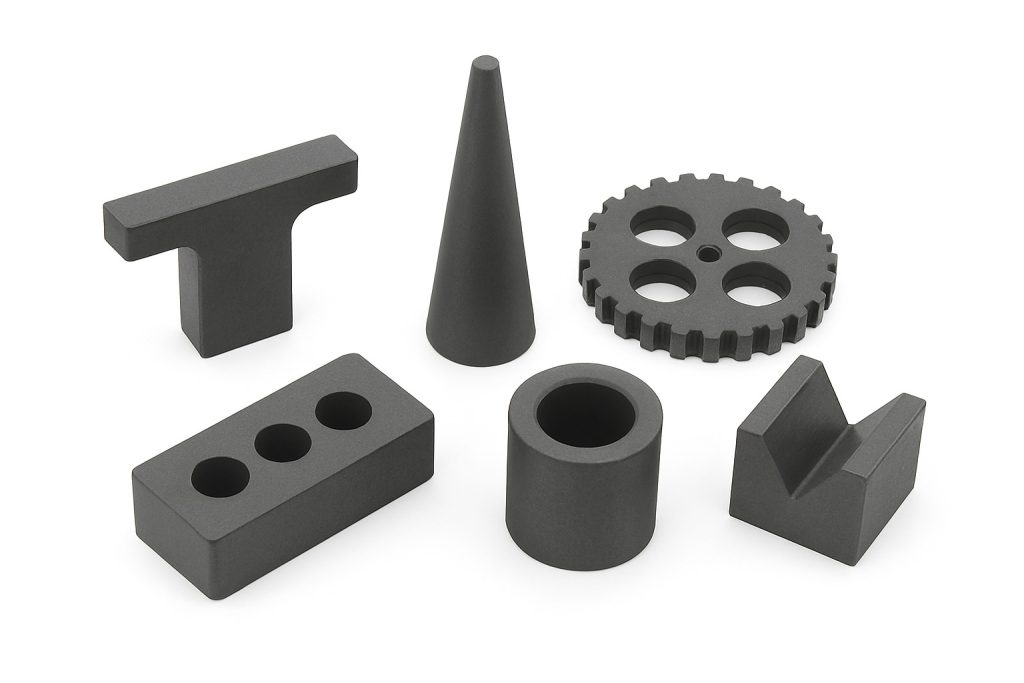
Graphite Customized Parts
Customized graphite parts are precision-engineered components manufactured to meet specific customer requirements using advanced machining techniques. Graphite material is renowned for its exceptional high-temperature resistance, excellent thermal and electrical conductivity, and strong chemical stability, capable of withstanding extreme temperatures (up to 3000°C in inert environments) while actually gaining strength at elevated temperatures. Its self-lubricating properties and low thermal expansion coefficient ensure superior performance in complex operating conditions.
- Custom and standard options available.
- Fast lead times guaranteed.
- High performance at a competitive price.
Graphite Customized Parts Data Sheet
| Purity | ≥99.9% |
| Color | Dark Gray to Black |
| Chemical Formula | C |
| Material Grades | Natural Graphite, Synthetic Graphite, Specialty Graphite, Composites Graphite |
| Density | 1.65–1.95 g/cm³ |
| Maximum Operating Temperature | Up to 3000°C (in inert atmosphere) |
| Thermal Conductivity | 100–200 W/m·K |
Graphite Customized Parts Description
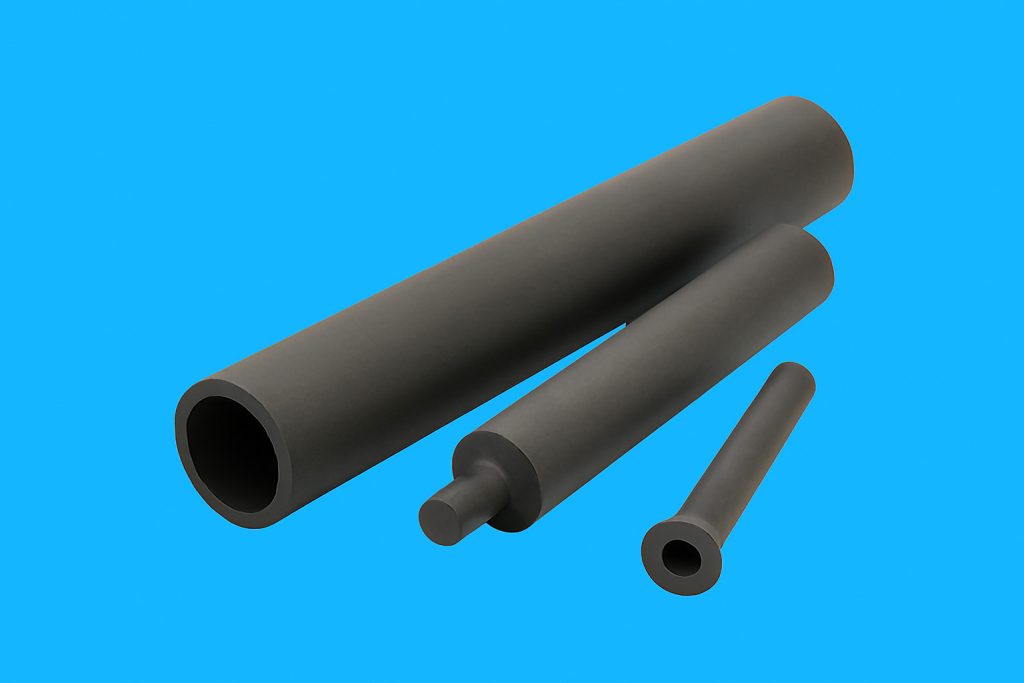
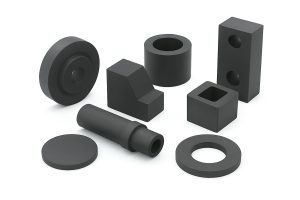
Graphite customized parts are industrial components manufactured from high-purity synthetic graphite or specialty graphite materials through precision machining, CNC engraving, isostatic pressing, and other processes. They exhibit a characteristic dark gray metallic luster on the surface, with uniform and dense texture, revealing fine layered or granular structures in cross-section. Products can be machined into complex geometric shapes, including special features such as precision threads, micro-hole arrays, and curved flow channels, achieving dimensional accuracy up to the micrometer level. The graphite material possesses unique porous characteristics, with porosity controllable within a specific range (typically 5-20%), providing excellent gas permeability and adsorption capacity. During high-temperature applications, a protective oxide layer forms on the surface, with oxidation resistance varying according to graphite grade. Installation requires attention to its brittle nature, avoiding localized stress concentration, typically using specialized graphite adhesives or mechanical clamping systems. These components perform optimally in vacuum or inert environments, requiring protective measures in oxidizing atmospheres.
Graphite Customized Parts Specifications
| Items | Unit | Value | |
| Grain Size | mm | 0.045-4 | |
| Bulk Density | g/cm3 | 1.65-1.95 | |
| Resistivity | μΩ•m | 8.0-11.0 | |
| Bending Strength | Mpa | 18-55 | |
| Compressive Strength | Mpa | 36-100 | |
| The Coefficient of Thermal Expansion (C.T.E) | ×10-6/ ℃ | 2.9-3.0 | |
| Ash | % | 0.1-0.3 | |
| Products can be customized as order requirements or specific drawings. | |||
Graphite Customized Parts Features
- High Temperature Resistance – Withstands temperatures above 3000°C in inert environments
- Thermal & Electrical Conductivity – Excellent heat dissipation and electrical conduction capabilities
- Self-Lubricating – Low friction coefficient requiring no additional lubricants
- Corrosion Resistance – Resists various acids, alkalis, and organic solvents
- Easy Machinability – Can be processed into complex shapes with precise dimensions
- Thermal Stability – Low thermal expansion coefficient with strong thermal shock resistance
- Lightweight & Strong – Density only 1/5 of steel with high strength retention
- Controlled Permeability – Adjustable porosity for selective gas/liquid penetration
- Chemical Inertness – Minimal reaction with most molten metals at high temperatures
- Cost-Effective – Extended service life reduces overall operational costs
Graphite Customized Parts Applications
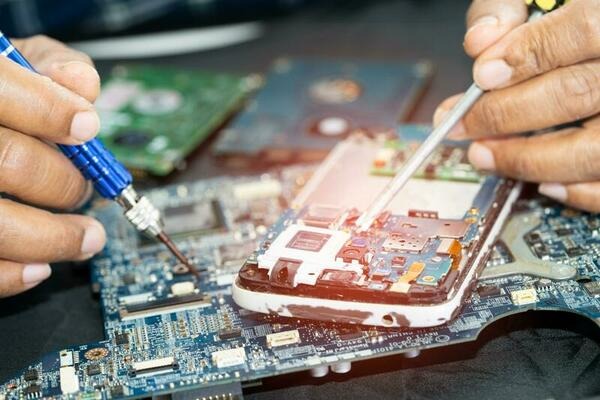
- Semiconductor Manufacturing – Single crystal furnace hot zone components, epitaxial growth susceptors
- Photovoltaic Industry – Polysilicon ingot furnace heaters, insulation modules
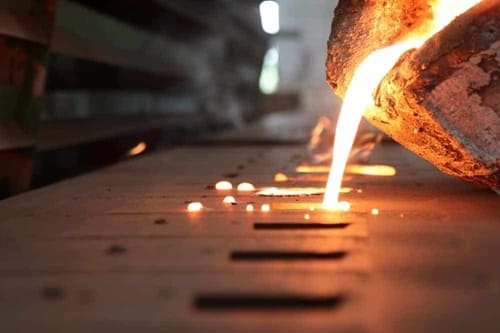
- Metal Smelting – Continuous casting molds, high-temperature melting crucibles
- EDM Machining – Precision electrodes, mold processing consumables
- Chemical Equipment – Corrosion-resistant heat exchangers, reactor seals
- Nuclear Energy – Reactor moderating materials, shielding components
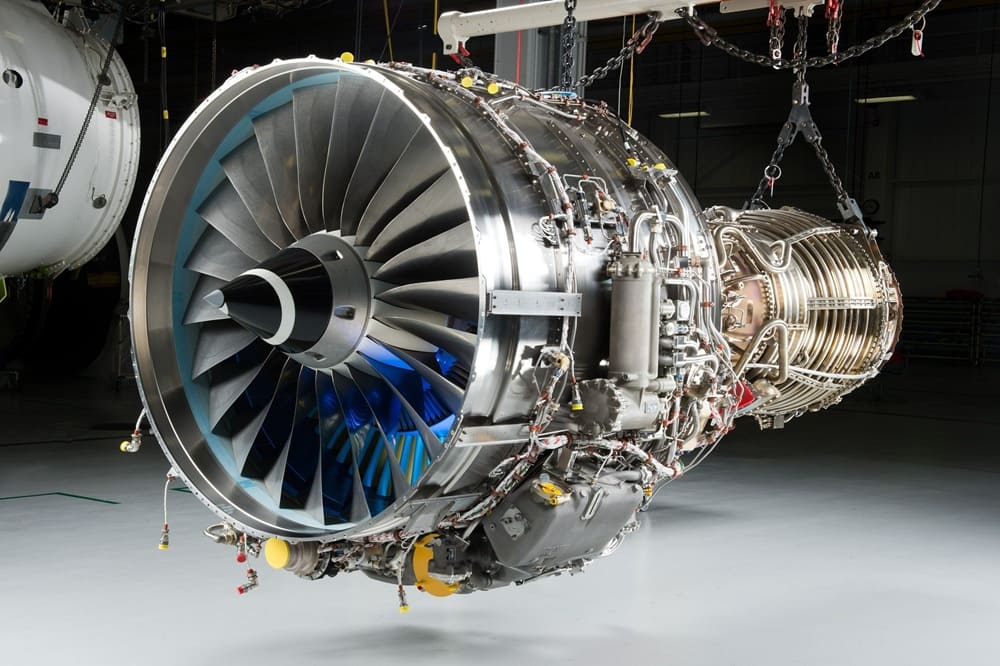
- Aerospace – Rocket nozzle liners, high-temperature test fixtures
- Glass Manufacturing – Float glass tin bath components, molds
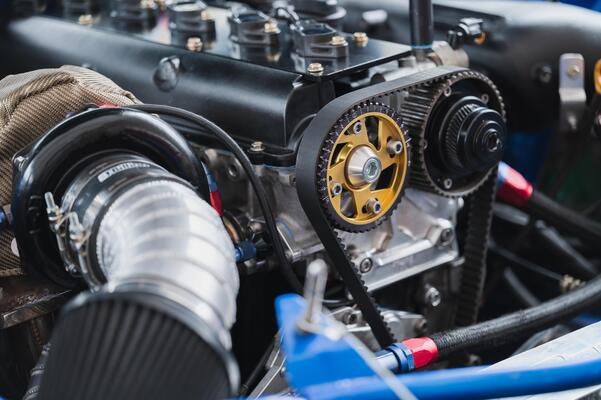
- New Energy Vehicles – Fuel cell bipolar plates, battery sintering molds
- Laboratory Equipment – High-temperature furnace heating elements, vacuum system components
Graphite Ceramic Packaging
Graphite ceramic products are typically packaged in vacuum-sealed bags to prevent moisture or contamination and wrapped with foam to cushion vibrations and impacts during transport, ensuring the quality of products in their original condition.

Download
- SAFETY DATA SHEET (SDS) -Graphite Customized Parts
FAQ
What are Graphite Customized Parts? How do they differ from standard graphite products?
Graphite customized parts are components specifically designed and manufactured according to customers’ technical requirements (dimensions, shapes, purity, performance), whereas standard graphite products are off-the-shelf items. Customized parts perfectly match unique equipment or process needs.
What are the main advantages of Graphite Customized Parts?
Key advantages include: Perfect Compatibility (precise equipment interface matching), Performance Optimization (adjustable density/purity/structure for specific conditions), Cost-Effectiveness (reduced system modification costs), and Rapid Response (shortened delivery cycles by specialized teams).
What types of graphite materials are typically used for customized parts?
Main materials include: Isostatic Pressed Graphite (isotropic, high strength), Molded Graphite (lower cost), Extruded Graphite (special length-diameter ratio parts), High-Purity Graphite (semiconductor grade, ash <5ppm), and Impregnated Graphite (enhanced sealing/strength).
Do Graphite Customized Parts oxidize at high temperatures? How to protect them?
Gradual oxidation occurs above 400°C in oxidizing atmospheres. Protection methods include: Surface coating (silicon carbide/ceramic coatings), Anti-oxidant impregnation, Protective structural design, and Recommended use in vacuum/inert atmospheres.
How to evaluate the quality of Graphite Customized Parts? What testing standards apply?
Key tests: Physical properties (density/hardness/flexural strength), Chemical purity (ash content/trace elements), Dimensional accuracy (CMM inspection), Microstructure (metallographic analysis). Standards include GB, ASTM, ISO, JIS, etc.
Get A Quote
Request a personalized quote tailored to your specific requirements.