Boron Carbide Rod
- Custom and standard options available.
- Fast lead times guaranteed.
- High performance at a competitive price.
Or email us at [email protected]
Boron Carbide Rod Data Sheet
| Purity: | ≥99.5% |
| Apparence: | Black or grey |
| Chemical Formula: | B₄C |
| Density: | 2.46-2.62 g/cm³ |
Boron Carbide Rod Description
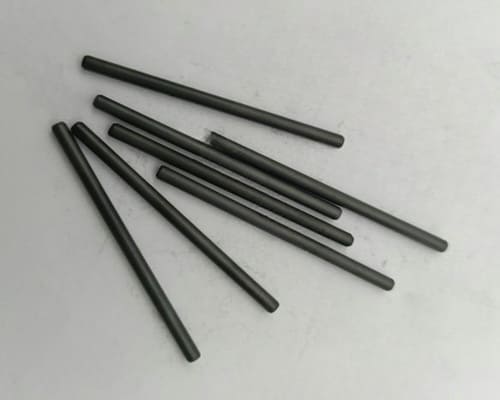
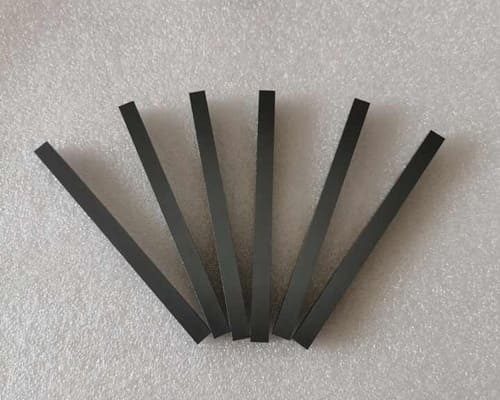
Boron carbide rods/bars are special rod-shaped inorganic non-metallic materials made from high-purity boron carbide powder as the core raw material, with a small amount of sintering aids added, through batching and mixing, compression molding, high-temperature sintering at 1800-2200℃, and precision grinding. They inherit boron carbide’s properties such as high wear resistance (Mohs hardness 9.3), excellent chemical stability, and neutron absorption capacity of the boron-10 isotope, while also having the structural strength of rod products. Widely used as neutron control rods in the nuclear industry, wear-resistant shaft cores in the mechanical field, and grinding rods in precision processing, they are high-performance functional rods suitable for multiple scenarios.
Boron Carbide Rod Advantages
- Exceptional Hardness & Wear Resistance
- Reliable Neutron Absorption
- Strong Chemical Stability
- Good Structural Strength & Processability
- Lightweight & High-Temperature Stability
Boron Carbide Rod Applications
- Nuclear Industry Neutron Control
Serves as neutron control rods in small nuclear reactors or test facilities. The boron-10 isotope efficiently absorbs neutrons to regulate reactor power and prevent excessive radiation leakage. - Mechanical Wear-Resistant Components
Used as shaft cores, guide rods, or bearing inserts in heavy-duty machinery (e.g., mining equipment, industrial pumps). Its high hardness resists wear from friction, extending part lifespan. - Precision Grinding Tools
Processed into grinding rods for polishing hard materials like ceramics, semiconductors, or alloy parts. Ultra-high wear resistance ensures consistent grinding accuracy and avoids caliber deformation. - Aerospace Lightweight Structural Parts
Applied as lightweight support rods or protective sleeves in aerospace components (e.g., satellite brackets, aircraft engine accessories). Combines strength and low density to meet strict weight limits. - Chemical Corrosion-Resistant Rods
Used as stirrer shafts or sensor probes in chemical reactors handling corrosive media (e.g., acids, alkalis). Chemical stability prevents corrosion, ensuring safe and continuous operation.

Boron Carbide Ceramic Packaging
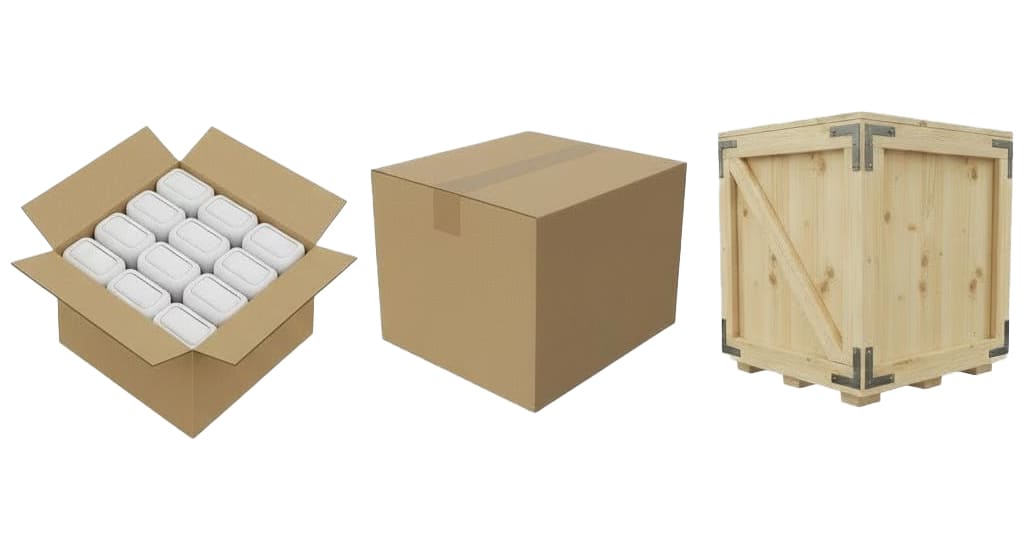
Boron Carbide ceramic products are typically packaged in vacuum-sealed bags to prevent moisture or contamination and wrapped with foam to cushion vibrations and impacts during transport, ensuring the quality of products in their original condition.
Download
- SAFETY DATA SHEET (SDS) -Boron Carbide Rod
FAQ
Why is boron carbide rod used as nuclear neutron control rod?
What makes boron carbide rod suitable for mechanical wear-resistant parts like shaft core?
Can the boron carbide rod work in corrosive chemical environments?
Yes. It resists corrosion from most acids, alkalis, and organic solvents, so it’s safe to use as stirrer shaft or sensor probe in chemical reactors without degradation.
Why is boron carbide rod applied in aerospace lightweight part?
What advantage does boron carbide rod have as precision grinding rod?
Its ultra-high wear resistance maintains a stable caliber during grinding, ensuring consistent accuracy when polishing hard materials like ceramics or semiconductors, avoiding machining errors.
Get A Quote
Request a personalized quote tailored to your specific requirements.