
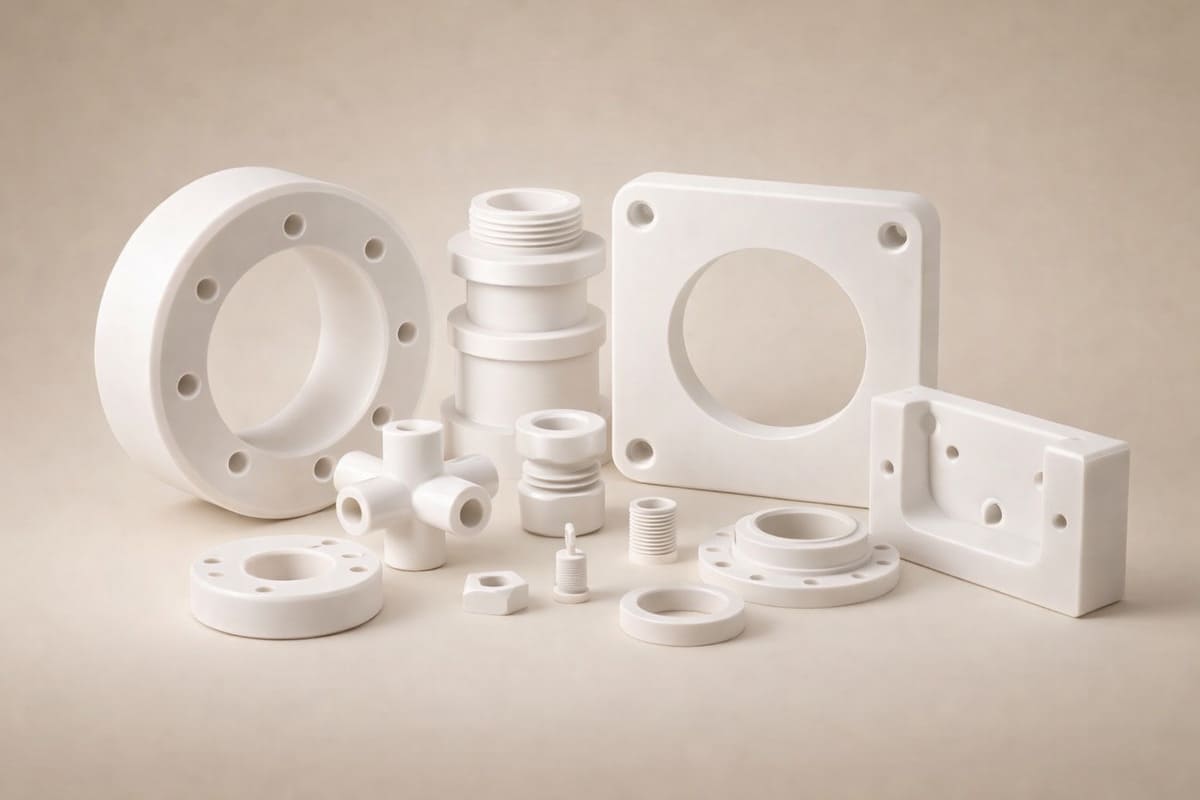
Alumina Custom Parts
- Custom and standard options available.
- Fast lead times guaranteed.
- High performance at a competitive price.
Alumina Custom Parts are precision components made from high-purity Al₂O₃, offering high hardness, wear resistance, electrical insulation, and chemical inertness. Produced via pressing, molding, or machining plus sintering, they’re used in electronics, mechanical engineering, medical devices, and chemical processing—reliably replacing metals or plastics in extreme conditions.NexusX Advanced Materials, as a premier manufacturer and supplier of high-quality. Alumina (Al2O3) products, focuses on producing high-precision aluminum nitride silicon structural compenents through advanced technologies for diverse application fields.
Or email us at [email protected]
Alumina Custom Parts Descriptions
Alumina Custom Parts are precision-manufactured components made from high-purity aluminum oxide (Al₂O₃) ceramic, designed to meet specific customer requirements for geometry, tolerance, and performance. These parts exhibit outstanding hardness (typically 9 on the Mohs scale), excellent wear resistance, high compressive strength, good thermal conductivity, superior electrical insulation, and exceptional chemical inertness even at temperatures exceeding 1600°C. Common manufacturing methods include dry pressing, isostatic pressing, injection molding, tape casting, and green machining followed by precision sintering, with diamond grinding for tight tolerances. Typical applications include electronic substrates and insulators, mechanical seal rings, bearing balls, nozzles, valve seats, wear plates, medical implants and surgical instruments, textile guides, and chemical processing components. Alumina Custom Parts provide a reliable, cost-effective alternative to metals and polymers in harsh environments where corrosion, abrasion, high temperature, or electrical conductivity pose challenges.
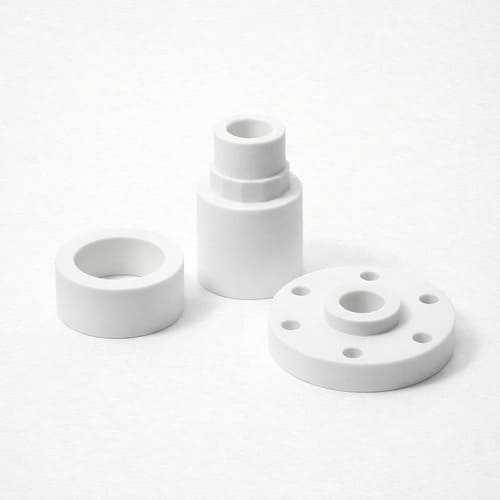
Alumina Custom Parts Advantages
- High Wear Resistance – Ideal for components subject to sliding, rotating, or abrasive contact, significantly extending service life.
- Excellent Electrical Insulation – High dielectric strength makes them perfect for electronic substrates, insulators, and spark plug components.
- Good Thermal Conductivity – Efficiently dissipates heat in applications such as power module substrates and heat sinks.
- High-Temperature Stability – Maintains mechanical strength and chemical inertness at temperatures exceeding 1600°C, suitable for furnace and kiln components.
- Chemical Corrosion Resistance – Resistant to most acids, alkalis, and harsh chemicals, ensuring long-term durability in aggressive environments.
- High Compressive Strength – Withstands heavy loads without deformation, ideal for structural and load-bearing ceramic parts.
- Customizable Geometry – Can be precision-machined or molded into complex shapes, tight tolerances, and specific dimensions to meet unique application requirements.
- Low Density – Lighter than many metal alloys, offering weight reduction without sacrificing strength or durability.
- Cost-Effective for Volume Production – Once tooling is established, alumina custom parts offer economical per-unit pricing for medium to high volumes.
- Long Service Life – Reduces replacement frequency and maintenance costs in demanding industrial environments.
Alumina Custom Parts Applications
- Valve Components – Produced as valve seats, balls, discs, and stems for chemical processing, oil and gas, and high-temperature fluid control.
- Medical Implants & Surgical Tools – Used in dental implants, hip joint balls, bone spacers, and ceramic scalpels due to biocompatibility and wear resistance.
- Textile & Fiber Guides – Employed as thread guides, tension discs, and yarn feeders where smooth, non-abrasive surfaces are required.
- Chemical Processing Components – Manufactured as mixing blades, diffusers, thermowell protectors, and column packing for corrosive environments.
- Furnace & Kiln Furniture – Used as burner nozzles, thermocouple sheaths, furnace rollers, and support beams for high-temperature processes.
- Aerospace Components – Applied in rocket engine liners, radar radomes, and sensor housings requiring thermal shock resistance and lightweight properties.
- Automotive Parts – Used in oxygen sensor housings, fuel injector components, ignition insulators, and turbocharger seals.
- Precision Measuring Tools – Manufactured as gauge blocks, comparator anvils, and CMM probe tips for dimensional inspection.
- Grinding & Milling Media – Formed into ceramic balls or cylinders for high-energy ball milling, dispersion, and fine grinding of minerals and paints.
- Lighting Components – Used as arc tubes for high-intensity discharge lamps, LED heat sink insulators, and lamp reflectors.
- Microwave & RF Components – Employed as dielectric resonators, antenna windows, and waveguide components due to low dielectric loss.




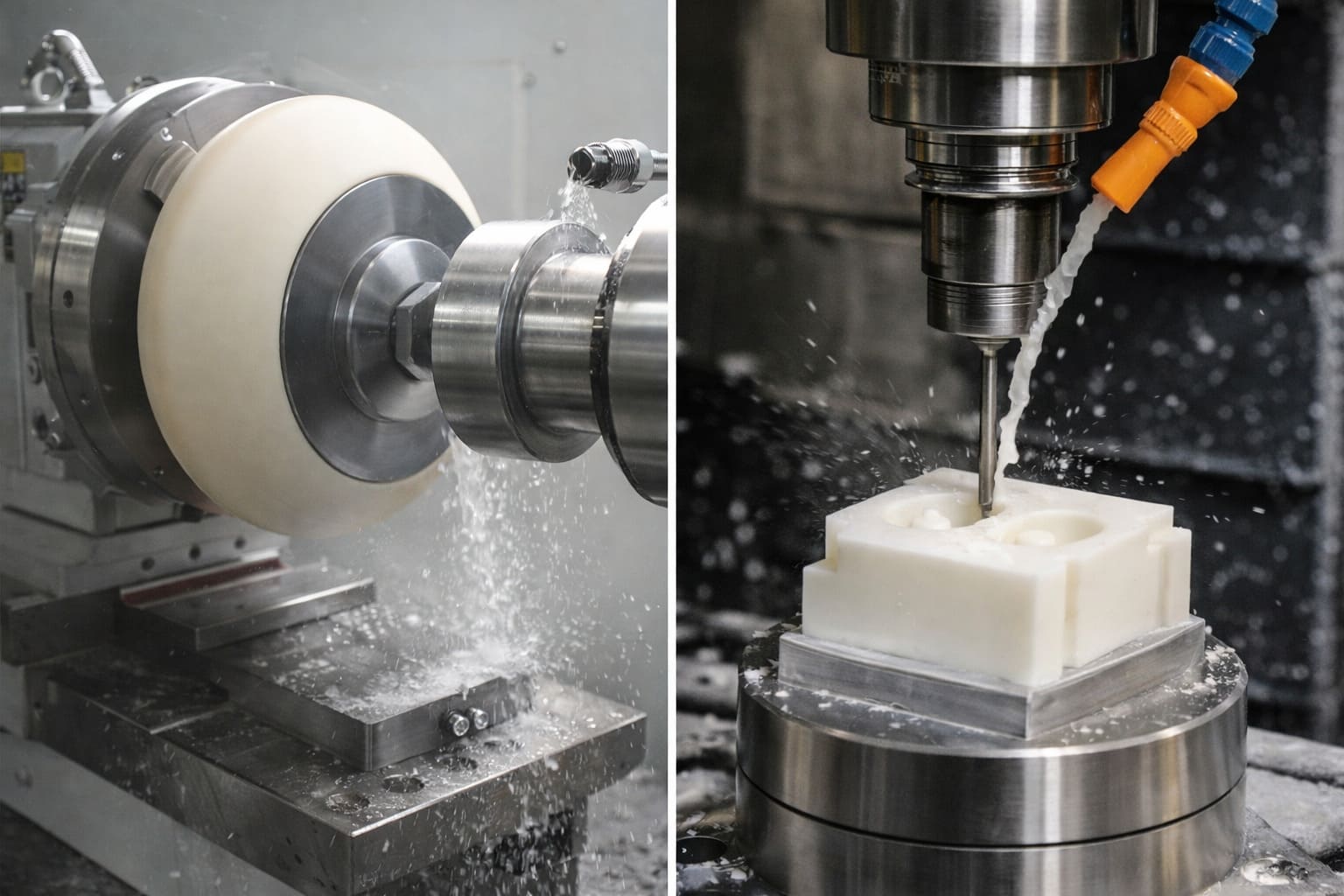
Alumina Ceramic Machining
Alumina ceramics are produced through methods such as injection molding, die pressing, isostatic pressing, slip casting, and extrusion. After sintering and densification, machining requires diamond grinding techniques. Advanced Ceramic Hub utilizes cutting-edge green and biscuit machining technology to produce more complex components with traditional methods. Our advanced machining center includes drilling, grinding, milling, polishing, sawing, tapping, threading, and turning, enabling the manufacture of alumina ceramic components with tight tolerances and high complexity. During the machining process, the following precautions should be observed:
- Shrinkage Control: Alumina ceramics shrink by about 20% during sintering, requiring dimensional adjustments in the green body stage.
- Tolerance Control: Precise tolerances are unachievable in the green or pre-sintered state; fine machining should follow sintering.
- Diamond Grinding: Post-sintering, high-hardness alumina requires diamond grinding, as conventional methods fall short.
- Tool Selection: Diamond-coated tools or grinding wheels are essential to handle ceramic hardness and prevent tool damage.
- Temperature Control: Strict temperature management during sintering prevents cracking or deformation.
- Stress Management: Excessive stress during machining must be avoided to prevent brittle failure.
- Cutting Speed and Feed Rate: Controlled speeds and feeds ensure quality and extend tool life.
- Surface Treatment: Post-machining polishing removes defects, enhancing performance and appearance.
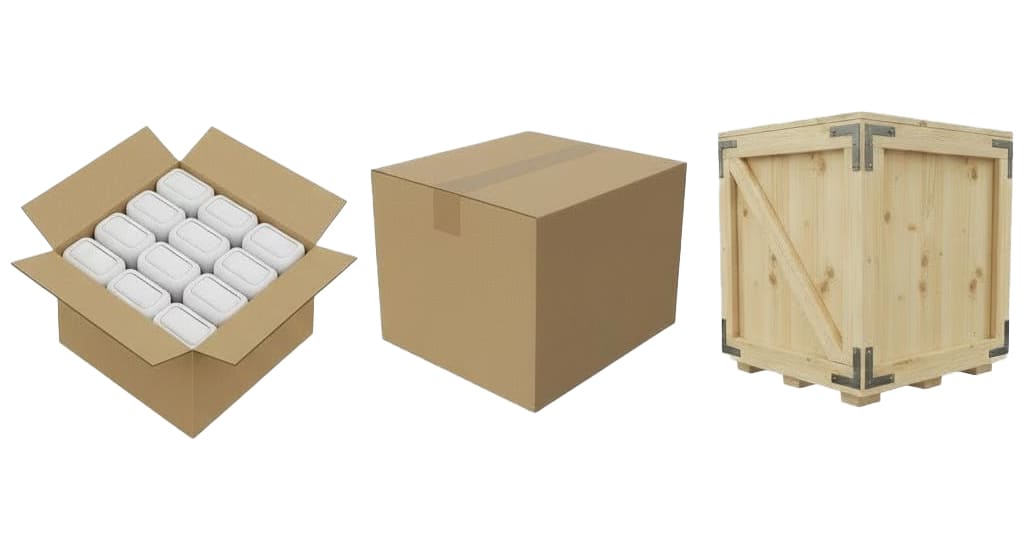
Alumina Ceramic Packaging
The Alumina Ceramic products are carefully placed in wooden cases or cartons with additional support from soft materials to prevent any shifting during transportation. This packaging method guarantees the integrity of the products throughout the delivery process.
Download
- SAFETY DATA SHEET (SDS) -Alumina Custom Parts
FAQ
What are Alumina Custom Parts?
Alumina Custom Parts are precision-engineered components made from high-purity aluminum oxide (Al₂O₃) ceramic, manufactured to specific customer requirements for geometry, tolerance, and performance.
What are the main advantages of Alumina Custom Parts?
Key advantages include exceptional hardness (Mohs 9), high wear resistance, excellent electrical insulation, good thermal conductivity, high-temperature stability (>1600°C), and strong chemical corrosion resistance.
What applications are Alumina Custom Parts used for?
Alumina Custom Parts are used in electronic substrates & insulators, mechanical seals, bearing balls, nozzles, valve seats, wear plates, medical implants, textile guides, furnace furniture, and chemical processing components.
Can Alumina Custom Parts be machined to tight tolerances?
Yes, after sintering, Alumina Custom Parts can be precision-ground using diamond tools to achieve tolerances as tight as ±0.005 mm or better, depending on part geometry and size.
Are Alumina Custom Parts corrosion resistant?
Yes, Alumina Custom Parts are highly resistant to most acids, alkalis, and harsh chemicals, ensuring long-term durability in chemical processing, oil and gas, and marine environments.
Get A Quote
Request a personalized quote tailored to your specific requirements.