
Aluminum Nitride Crucible
- Custom and standard options available.
- Fast lead times guaranteed.
- High performance at a competitive price.
Or email us at [email protected]
Aluminum Nitride Crucible Data Sheet
| Purity: | 95%-99% |
| Density: | 3.32 g/cm3 |
| Appearance: | Dark Gray / Light Gray / Beige |
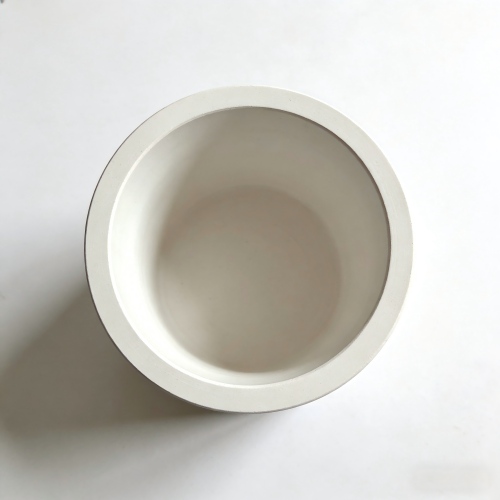
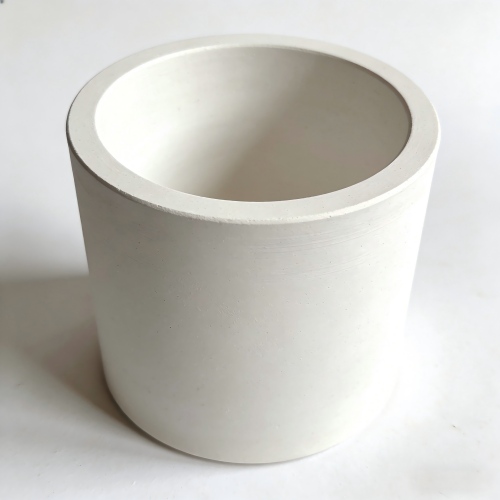
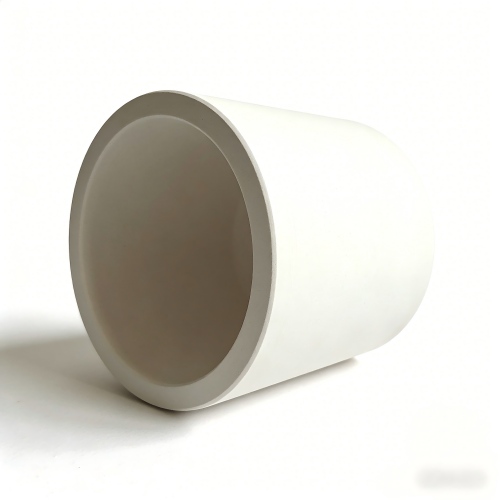
| Shape: | Cylinder, Conical Cylinder, Rectangular, T-shape, or Customized according to specific drawings. |
| Surface Roughness: | Ra: 0.3-0.5 μm |
| Machining Precision: | 0.01 mm |
Aluminum Nitride Crucible Description
Aluminum Nitride Crucible Advantages
- Exceptional High-Temperature Resistance
- Superior Thermal Conductivity
- Strong Chemical Inertness
- Excellent Electrical Insulation
- Good Thermal Shock Resistance
Aluminum Nitride Crucible Applications
- Electronic & Semiconductor Material Preparation: Used for melting and processing semiconductor materials (e.g., silicon, gallium arsenide) and sintering high-performance electronic components (such as ceramic capacitors). Its excellent insulation and chemical inertness prevent metal ion contamination, ensuring the electrical performance and purity of semiconductor wafers or electronic parts.
- Metallurgy & Precious Alloy Smelting: Ideal for smelting precious metals (gold, silver, platinum) and special alloys (titanium-based, nickel-based alloys). It resists reactions with molten metals, avoids alloy component deviation, and maintains the uniformity and high quality of the final metal/alloy products.
- High-Precision Laboratory Research: Applied in academic or industrial labs for high-temperature sample treatments, such as inorganic synthesis, ore composition analysis, and ceramic material sintering. Its thermal shock resistance and stable performance under extreme heat meet the strict requirements of precision experiments.
- LED & Optoelectronic Component Manufacturing: Used in the preparation of LED substrate materials (e.g., sapphire) and other optoelectronic materials. Its high thermal conductivity ensures uniform heating during material growth, while its chemical stability prevents impurities from affecting the optical properties of the final components.


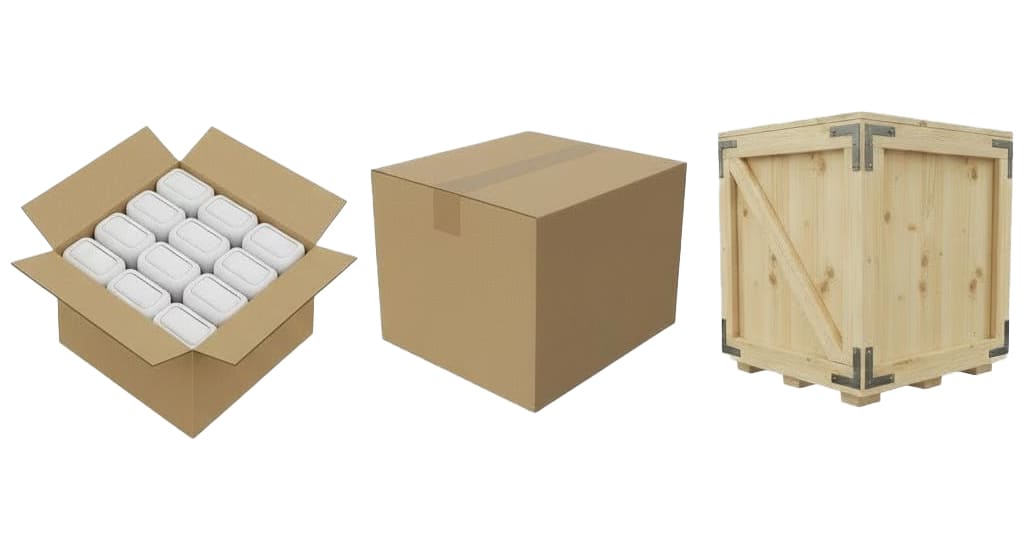
Aluminum Nitride Ceramic Packaging
Aluminum Nitride Ceramic products are typically packaged in vacuum-sealed bags to prevent moisture or contamination and wrapped with foam to cushion vibrations and impacts during transport, ensuring the quality of products in their original condition.
Download
- SAFETY DATA SHEET (SDS) -Aluminum Nitride Crucible
FAQ
What core material is an Aluminum Nitride Crucible made of, and what's the key reason for choosing this material?
It is made of aluminum nitride (AlN). The key reason is AlN’s balanced high-performance combination—including high thermal conductivity, excellent high-temperature resistance, and strong chemical inertness—all of which meet the strict requirements of high-precision heating scenarios.
Compared with traditional alumina crucibles, what advantage does an Aluminum Nitride Crucible have in terms of heat transfer?
Its thermal conductivity is significantly higher. The thermal conductivity of Aluminum Nitride Crucibles is about 170 W/m·K, nearly 6 times that of ordinary alumina crucibles (around 30 W/m·K). This enables faster and more uniform heat transfer, avoiding local overheating of materials and ensuring stable processing quality.
Can Aluminum Nitride Crucibles be used to melt molten metals like gold or silicon? Why or why not?
Yes. They have strong chemical inertness and do not react with most molten metals (including gold, silver, silicon, etc.). Unlike some reactive materials (e.g., graphite), they won’t contaminate the molten metal, thus maintaining the purity of the final metal or semiconductor products.
What is the typical maximum service temperature of an Aluminum Nitride Crucible, and can it withstand sudden temperature changes?
Its long-term stable service temperature is about 1600℃ (with a melting point of around 2200℃). Additionally, it has good thermal shock resistance—able to tolerate sudden heating or cooling without cracking—making it suitable for scenarios that require frequent temperature adjustments, such as laboratory experiments.
In the field of electronics, what specific role do Aluminum Nitride Crucibles play?
They are widely used in electronic material preparation, such as melting semiconductor materials (e.g., gallium arsenide) and sintering ceramic capacitors. Their excellent electrical insulation (room-temperature resistivity >10¹⁴ Ω·cm) prevents electrical leakage or interference, while their chemical inertness avoids metal ion contamination, ensuring the performance and reliability of electronic components.
Get A Quote
Request a personalized quote tailored to your specific requirements.