Boron Carbide Custom Part
- Custom and standard options available.
- Fast lead times guaranteed.
- High performance at a competitive price.
Boron Carbide Custom Parts Data Sheet
| Purity: | ≥99.5% |
| Apparence: | Black or grey |
| Chemical Formula: | B₄C |
| Density: | 2.46-2.62 g/cm³ |
Boron Carbide Custom Parts Description
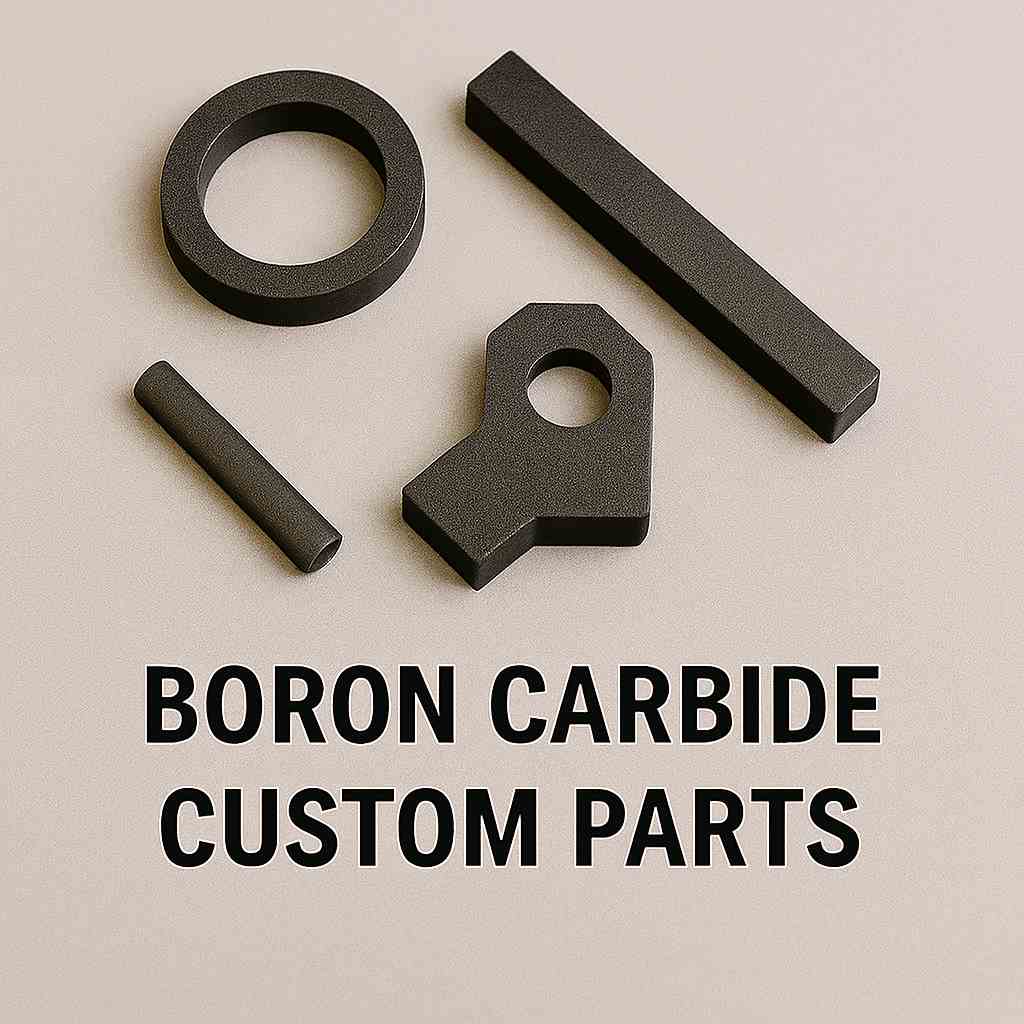
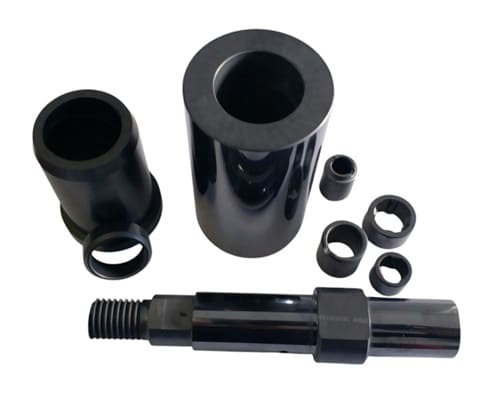
Boron carbide custom parts are made from boron carbide (B₄C), a material whose hardness is second only to diamond and cubic boron nitride. They possess ultra-high hardness (Mohs hardness 9.3), excellent neutron absorption capacity, and resistance to acids, alkalis, and high temperatures (stable below 800°C). Different from standard products, they can be customized in terms of geometry, performance parameters, and surface treatment according to industrial needs. These parts can be processed into forms such as precision grinding media, wear-resistant liners, neutron shielding plates, and high-temperature nozzles—including ultra-thin sheets (as thin as 0.1mm) and hole-punched components (tolerance of ±0.01mm). Widely used in aerospace, nuclear energy, and advanced manufacturing industries, they serve as key solutions for extreme scenarios.
Boron Carbide Custom Parts Advantages
- High hardness and high strength
- Excellent thermal shock resistance
- Excellent chemical inertness
- Excellent wear resistance
- Good corrosion resistance
- High temperature resistance
- High bending strength
- Light weight
Boron Carbide Custom Parts Pressureless Sintering Process
- Raw Material Preparation: Use high-purity boron carbide powder and sintering aids.
- Powder Mixing: Mix powder and sintering aids evenly.
- Molding: Shape the powder into the desired form.
- Degassing: Remove volatile components to avoid bubbles or cracks.
- Pressureless Sintering: Sinter at 1600-2000°C.
- Cooling and Inspection: Cool to room temperature and inspect for quality.
Boron Carbide Custom Parts Applications
- Nuclear Reactor Neutron Shielding Plates: Custom-sized to fit reactors, using boron carbide’s neutron absorption to block radiation and cut equipment weight (1/3 the density of steel).
- Mineral Processing Grinding Media: Custom spheres/cylinders (per particle needs) with Mohs 9.3 hardness, minimizing wear and refining minerals evenly.
- Chemical Reactor Sealing Rings: Custom-grooved for acid/alkali, ≤800°C conditions, preventing leakage via boron carbide’s chemical stability.
- Aerospace Wear-Resistant Components: E.g., custom fuel nozzle bushings—high hardness/low friction resists fuel erosion and extends life.
- Radioactive Material Storage Cans: Custom-volume with sealed interfaces, shielding radiation and staying lightweight for easy handling.

Boron Carbide Custom Parts Packaging
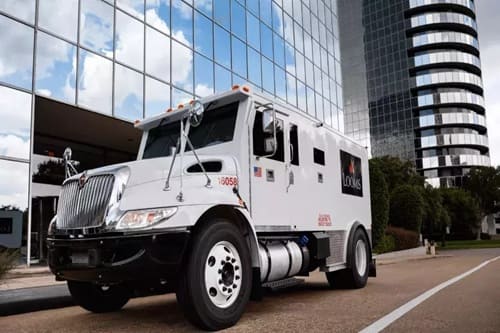
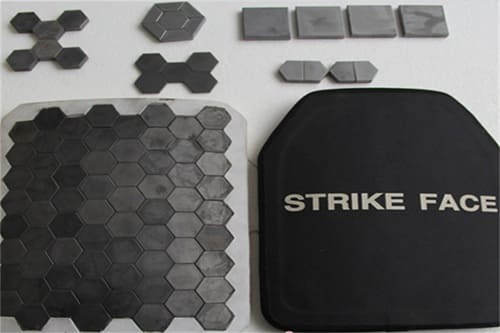
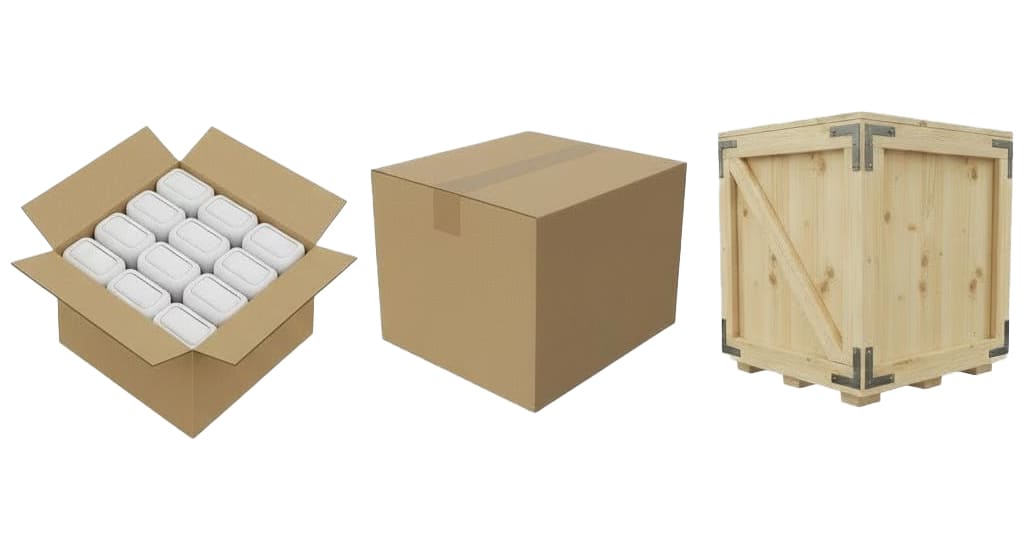
Boron Carbide ceramic products are typically packaged in vacuum-sealed bags to prevent moisture or contamination and wrapped with foam to cushion vibrations and impacts during transport, ensuring the quality of products in their original condition.
Download
- SAFETY DATA SHEET (SDS) -Boron Carbide Custom Parts
FAQ
What custom designs do boron carbide parts need for high-wear mineral processing, and why are they better than traditional wear-resistant materials?
Customize grinding media diameter (for different particle sizes) and liner shape (to fit equipment chambers). With a Mohs hardness of 9.3, they have ultra-low wear, no impurity contamination, and avoid efficiency loss from mismatches.
What key material properties matter for boron carbide custom parts in the chemical industry, and what are their common forms?
Prioritize acid-alkali resistance and high-temperature stability (stable below 800°C). Common forms: customized sealing rings (for tight sealing) and high-temperature nozzles (for stable fluid delivery), preventing medium leakage.
What machining precision can boron carbide custom parts reach, and why is it important?
Precision within ±0.01mm, minimum surface roughness (Ra) 0.2μm, ultra-thin parts down to 0.1mm. It fits high-precision scenarios like aerospace, avoiding performance issues caused by dimensional deviations.
What is the main competitive edge of custom boron carbide parts over standard ones?
Core edge is scenario adaptability. Custom parts can adjust shape and parameters for specific working conditions, delivering far better durability and functionality than standard parts.
What are the typical aerospace applications of boron carbide custom parts, and what special requirements must they meet?
Get A Quote
Request a personalized quote tailored to your specific requirements.