
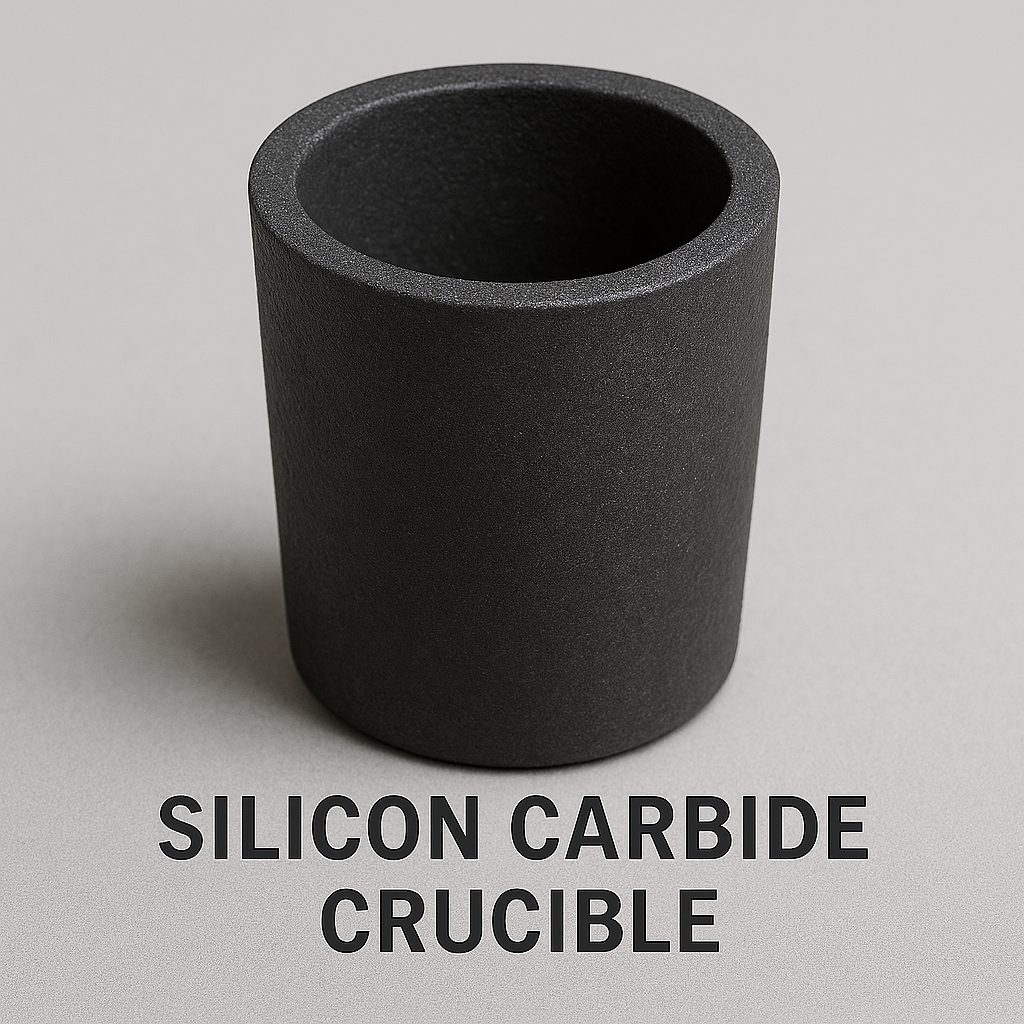
Silicon Carbide Crucible
- Custom and standard options available.
- Fast lead times guaranteed.
- High performance at a competitive price.
Silicon Carbide Crucible is made from high-purity silicon carbide (SiC), offering exceptional high-temperature resistance, thermal shock resistance, and chemical corrosion resistance. It is widely used in non-ferrous metal melting, semiconductor crystal growth, and high-temperature research. As a leading supplier and manufacturer of premium silicon carbide products, we can supply high-quality silicon carbide crucibles with various specifications and competitive prices, offering customized solutions to meet specific requirements.
Silicon Carbide Crucible Data Sheet
| Purity: | ≥99% |
| Color: | Black or Dark grey |
| Chemical Formula: | SiC |
| Material Grades: | Reaction Bonded SiC, Pressureless Sintered SiC, Hot-pressed SiC, etc. |
| Density: | >3.2 g/cm³ |
| Maximum Operating Temperature: | 1600℃ |
| Thermal Conductivity: | 120-200 W/m·K |
Silicon Carbide Crucible Description
Silicon Carbide (SiC) primarily exists in two crystal structures: the cubic β-SiC and the hexagonal α-SiC. Compared to other ceramics such as alumina (Al2O3) and boron carbide (B4C), SiC exhibits superior mechanical properties, better oxidation resistance, higher wear resistance, and a lower friction coefficient. Silicon Carbide Crucible is made from high-purity silicon carbide (SiC), featuring high thermal conductivity (120-200 W/m·K) and low thermal expansion. It ensures rapid and uniform heating while minimizing crack risks. NexusX can supply high-precision silicon carbide crucibles with customized solutions for diverse industry and research applications.
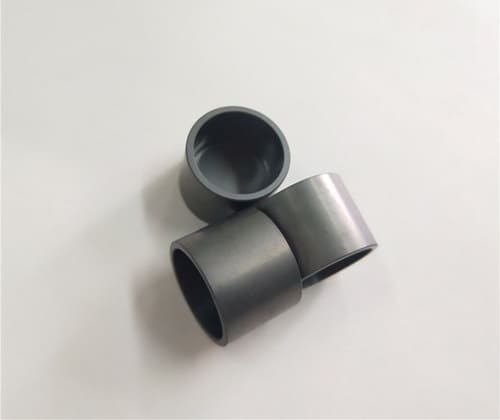
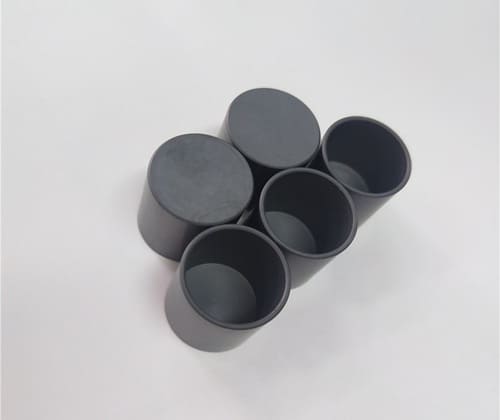
Silicon Carbide Crucible Features
- High Thermal Conductivity: Silicon carbide crucibles are made from heat-conductive materials. Their compact structure and low apparent porosity allow for fast heat transfer.
- Durability: The same material can extend the lifespan of conventional graphite crucibles up to two times.
- High Density: Thanks to advanced isostatic pressing technology, the material is uniform, flawless, and dense.
- High Strength: Silicon carbide crucibles feature excellent material selection, high pressing temperatures, good thermal strength, scientifically designed shapes, and strong load-bearing capacity.
- Corrosion Resistance: The complex composition of the crucible material allows it to withstand both physical and chemical corrosion from molten materials.
- Low Residue: The inner walls of the crucible have minimal material adhesion, eliminating thermal resistance, which significantly reduces the risk of crucible cracking.
Silicon Carbide Crucible Applications
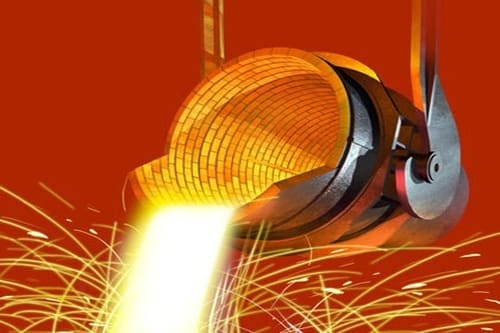
- Metal Smelting: Silicon carbide crucibles are commonly used for melting precious metals, aluminum, copper, steel, and other metals. Their high-temperature resistance allows them to operate stably in extreme environments for extended periods.
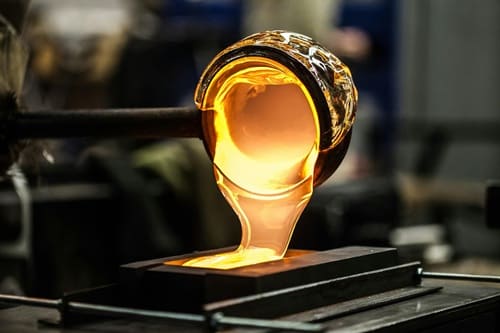
- Glass and Ceramic Manufacturing: In glass and ceramic production, silicon carbide crucibles are used to melt raw materials for glass or ceramics, helping to improve production efficiency and material quality.
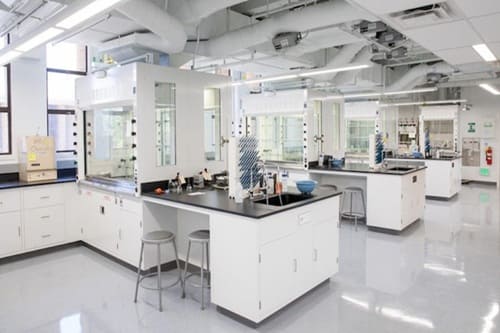
- Chemical Experiments: Silicon carbide crucibles are often used in chemical laboratories for high-temperature reactions, suitable for handling highly corrosive substances.
- Semiconductor Manufacturing: In the semiconductor industry, silicon carbide crucibles are used for crystal growth and material processing, providing stable melting conditions, especially in high-temperature environments.
- Casting Industry: Silicon carbide crucibles are also widely applied in the casting industry to melt alloys and maintain a stable molten state.
Silicon Carbide Crucible Packaging
Silicon carbide foam filter products are typically packaged in vacuum-sealed bags to prevent moisture or contamination and wrapped with foam to cushion vibrations and impacts during transport, ensuring the quality of products in their original condition.

Download
- SAFETY DATA SHEET (SDS) -Silicon Nitride Custom Parts
FAQ
What are the core advantages of silicon carbide crucibles compared with traditional crucibles (graphite, alumina, etc.)?
Silicon carbide crucibles have ultra-high temperature resistance, excellent thermal conductivity and thermal shock resistance, along with high hardness and corrosion resistance. They hardly react with molten materials and have a much longer service life than traditional crucibles.
What is the maximum temperature resistance of silicon carbide crucibles, and which high-temperature processes are they suitable for?
The conventional maximum temperature resistance of silicon carbide crucibles can reach 1600–1800℃, and high-performance modified models can withstand temperatures of around 2000℃. They are suitable for harsh high-temperature processes such as non-ferrous metal smelting, polysilicon directional solidification, and high-temperature calcination of lithium battery cathode materials.
What is the basic preparation process of silicon carbide crucibles?
Using high-purity silicon carbide powder as the raw material, add sintering aids to make a uniform blank, form it by cold isostatic pressing or slip casting, sinter it in a high-temperature furnace, and finally ensure dimensional accuracy and surface quality through precision finishing.
What are the key performance indicators for measuring the quality of silicon carbide crucibles?
The key indicators include high-temperature resistance, thermal shock stability, bulk density and porosity, mechanical strength, and resistance to molten material erosion.
What should be noted when using silicon carbide crucibles?
Get A Quote
Request a personalized quote tailored to your specific requirements.