
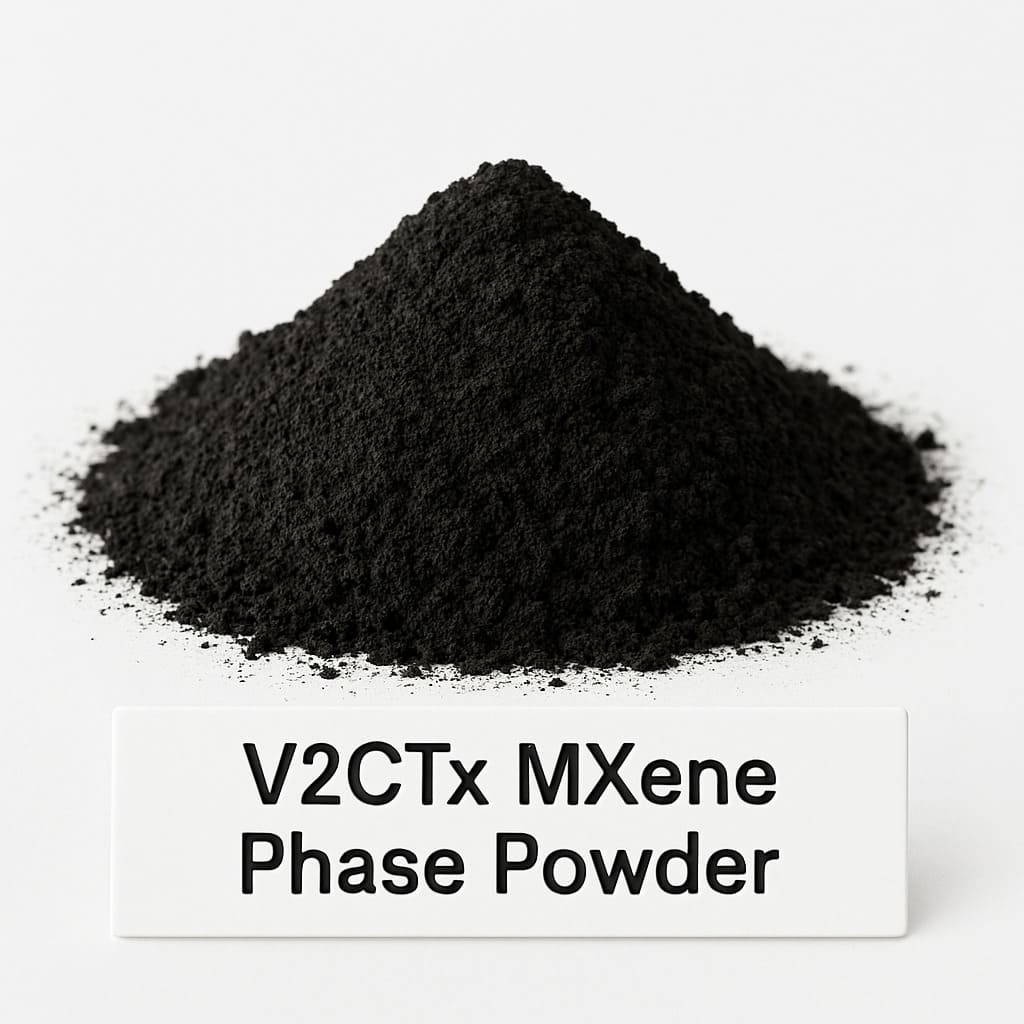
V2CTx MXene Phase Powder
V2CTx MXene Phase Powder is a two-dimensional inorganic material derived from the V2AlC MAX phase via selective etching of the aluminum layers. The “Tx” denotes surface terminations (e.g., -O, -OH, -F) introduced during synthesis. This powder exhibits high electrical conductivity, good hydrophilicity, and a layered structure, making it promising for applications in energy storage (e.g., lithium-ion and sodium-ion batteries), electromagnetic interference shielding, catalysis, and sensors. Its performance can be tuned by modifying surface chemistry and interlayer spacing.
- Custom and standard options available.
- Fast lead times guaranteed.
- High performance at a competitive price.
V2CTx MXene Phase Powder Data Sheet
| Purity: | ≥98% |
| Size : | 2–20 µm, 200–1000 nm or customized |
V2CTx MXene Phase Powder Description
V2CTx MXene Phase Powder is a two-dimensional transition metal carbide material synthesized from the V2AlC MAX phase through selective etching of the aluminum layers, typically using hydrofluoric acid or fluoride-containing etchants, which results in the accordion-like multilayered structure and the introduction of surface functional groups denoted by “Tx” such as -O, -OH, and -F. This powder is characterized by its metallic conductivity, hydrophilic nature, substantial specific surface area, and tunable interlayer spacing, which collectively contribute to its exceptional electrochemical performance, including high capacitance and fast ion intercalation kinetics, making it a prominent candidate for electrodes in advanced energy storage devices like batteries and supercapacitors. Furthermore, its unique electronic and surface properties facilitate promising applications in electromagnetic interference shielding, catalytic reactions including hydrogen evolution, chemical sensing, and potentially in composites for enhanced mechanical and functional characteristics, with ongoing research focusing on optimizing its oxidation stability, colloidal dispersibility, and functionalization for targeted end-use performance.
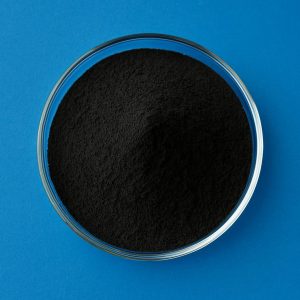
V2CTx MXene Phase Powder Specifications
| Attribute | Multilayer V2CTx Powder | Single-Layer V2CTx Powder |
| Etching Process | HF Etching | HF + Intercalating Agent Delamination |
| Size (µm) | 2–20 (µm) | 200–1000 (nm) |
| Number of Layers | Multilayer | ≤5 Layers |
| Conductivity (S/cm) | 10–100 | 1500 ± 500 |
| Surface Groups | -OH, =O, -F, -Cl | |
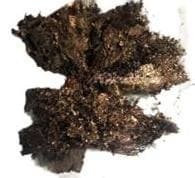
| Appearance | Brown powdered material | |
| Structure | Two-dimensional layered material | |
| Production Method | Prepared using hydrofluoric acid/intercalation reaction/lithium substitution, with excellent oxidation resistance | |
| Conductivity | High conductivity with multiple vanadium oxidation states, demonstrating excellent energy storage performance | |
| Storage | Stored in vacuum drying or inert environments | |
V2CTx MXene Phase Powder Features
- 2D Layered Structure: Derived from the V2AlC MAX phase by etching Al layers, resulting in stacked 2D nanosheets.
- Surface Functionalization (
Tx): Terminated with -O, -OH, and -F groups, which influence its chemical and electrochemical properties. - Metallic Conductivity: Exhibits high electrical conductivity, beneficial for electronic and electrochemical applications.
- Hydrophilicity: Good dispersion in aqueous solutions, facilitating solution-based processing.
- Tunable Interlayer Spacing: The interlayer gap can be modified via intercalation or pillaring, optimizing ion transport.
- High Redox Activity: Vanadium-based surface offers rich chemistry for energy storage (batteries, supercapacitors) and catalysis.
- Moderate Stability: More susceptible to oxidation compared to Ti-based MXenes, requiring careful handling and storage.
V2CTx MXene Phase Powder Applications
- Energy Storage: As a high-capacity electrode material for lithium-ion, sodium-ion, and potassium-ion batteries, and as an active material in supercapacitors.
- Electromagnetic Interference (EMI) Shielding: Used in coatings and composites to create lightweight, efficient shields that absorb and reflect electromagnetic waves.
- Catalysis: Serves as an efficient electrocatalyst or catalyst support for reactions such as the hydrogen evolution reaction (HER) and oxygen reduction reaction (ORR).
- Sensors: Applied in chemical and gas sensors due to its high surface area and variable electrical response upon analyte adsorption.
- Environmental Remediation: Used as an adsorbent for the removal of heavy metal ions and other contaminants from wastewater.
- Composites: Incorporated into polymer, ceramic, or metal matrices to enhance electrical conductivity, mechanical strength, and functional properties.
- Optoelectronics: Investigated for potential use in transparent conductive films and related electronic components.

V2CTx MXene Phase Powder Packaging
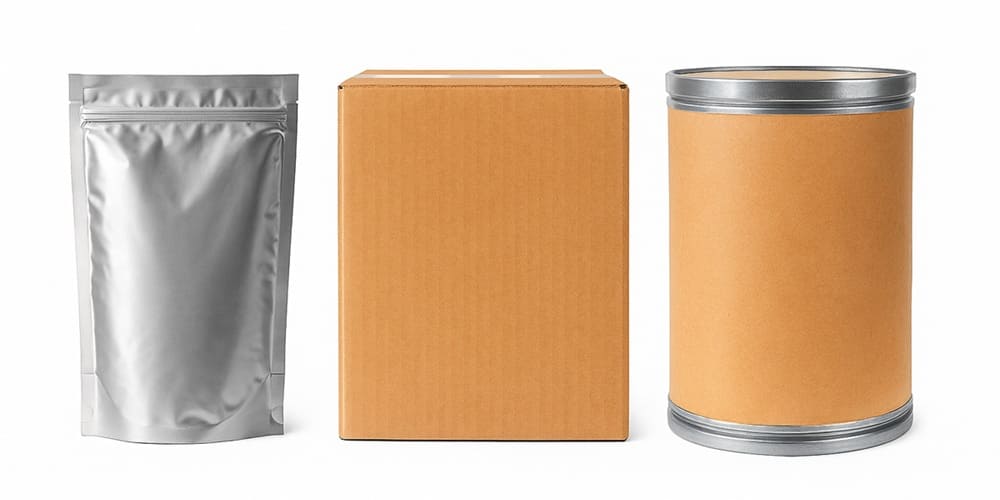
V2CTx MXene Phase Powder is typically packaged in sealed, moisture-proof plastic bags, then placed in sturdy drum containers or fiber cartons to prevent contamination and ensure safe transport. Standard packaging sizes include 1 kg, 5 kg, and 10 kg options, with custom packaging available upon request to meet specific usage or storage needs.
Download
- SAFETY DATA SHEET (SDS) -V2CTx MXene Phase Powder
FAQ
What is V2CTx MXene Phase Powder?
V2CTx MXene phase powder is a two-dimensional material derived from etching the aluminum layer from the V2AlC MAX phase. “Tx” represents surface functional groups like -O, -OH, or -F. It is known for its layered structure, high conductivity, and tunable chemistry.
What are the key properties of V2CTx MXene powder?
Key properties include high electrical conductivity, hydrophilicity, tunable surface chemistry, layered morphology, and good electrochemical activity.
How conductive is V2CTx MXene powder?
V2CTx exhibits metallic conductivity, making it suitable for electrodes and conductive composites.
How to store V2CTx MXene powder for stability?
Store in a dry, inert atmosphere (e.g., argon glovebox) or vacuum-sealed to prevent oxidation and moisture absorption.
How to optimize its electrochemical performance?
Performance can be enhanced by intercalation (e.g., with ions or polymers), controlling layer spacing, or annealing to modify surface chemistry.
Get A Quote
Request a personalized quote tailored to your specific requirements.