
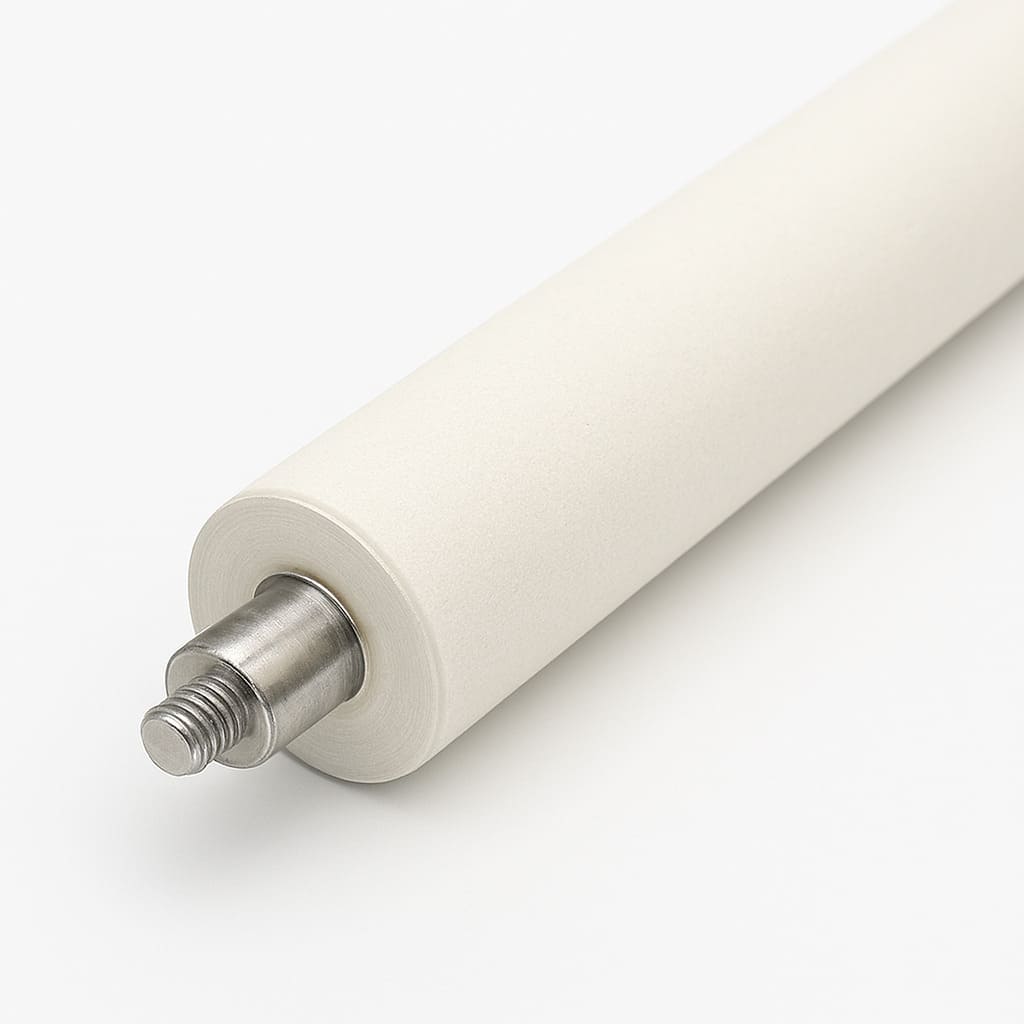
Quartz Ceramic Roller
A Quartz Ceramic Roller is a high-performance industrial roller made from high-purity fused quartz ceramic. It features exceptional high-temperature resistance, low thermal expansion, excellent thermal shock stability, and strong chemical inertness. Widely used in industries such as glass manufacturing, photovoltaics, semiconductors, and heat treatment, it serves as a critical component for support, transmission, or guidance within high-temperature furnaces.
- Custom and standard options available.
- Fast lead times guaranteed.
- High performance at a competitive price.
Quartz Ceramic Roller Data Sheet
| Color: | White |
| Shape: | Customized |
| Dimension: | Customized |
| Chemical Formula: | SiO2 |
Quartz Ceramic Roller Descriptions
A Quartz Ceramic Roller is a high-performance industrial component manufactured from high-purity fused quartz or silica ceramic through specialized sintering processes, characterized by its exceptional thermal and mechanical properties essential for demanding high-temperature applications. It possesses an extremely low coefficient of thermal expansion, granting it outstanding thermal shock resistance and dimensional stability when subjected to rapid temperature cycles from ambient conditions to over 1200°C, while its high purity ensures superior chemical inertness, resisting corrosion from most gases, molten metals, and aggressive atmospheres. With a smooth, non-porous surface that minimizes marking and adhesion, high hardness for wear resistance, and excellent creep resistance under load at elevated temperatures, it is a critical engineered component primarily used as a precision conveying and support roller in the float glass manufacturing process, as well as in kilns for ceramic firing, photovoltaic silicon wafer processing, and various other heat treatment furnaces where consistent performance and minimal contamination are paramount.
Quartz Ceramic Roller Specifications
| Diameter (mm) | Length (mm) | Purity (%) |
|---|---|---|
| 15 | 600 | 99.8 |
| 20 | 800 | 99.8 |
| 25 | 1000 | 99.8 |
| 30 | 1200 | 99.8 |
| 35 | 1250 | 99.8 |
| 35 | 1230 | 99.8 |
| 40 | 1415 | 99.8 |
| 45 | 1800 | 99.8 |
| 50 | 2000 | 99.8 |
| 55 | 2280 | 99.8 |
| 50 | 2166 | 99.8 |
| 55 | 2471 | 99.8 |
| 60 | 2515 | 99.8 |
| 60 | 2571 | 99.8 |
| 60 | 2400 | 99.8 |
| 65 | 2600 | 99.8 |
| 70 | 2788 | 99.8 |
| 75 | 3000 | 99.8 |
| 80 | 3200 | 99.8 |
| 85 | 3360 | 99.8 |
| 95 | 3615 | 99.8 |
| 95 | 3805 | 99.8 |
| 100 | 4000 | 99.8 |
| 105 | 4200 | 99.8 |
| 300 | 6000 | 99.8 |
Quartz Ceramic Roller Features
- Exceptional Thermal Shock Resistance – Can withstand rapid temperature changes due to extremely low thermal expansion.
- High-Temperature Stability – Maintains structural integrity and dimensional stability at temperatures exceeding 1200°C.
- Superior Chemical Inertness – Resistant to corrosion from most gases, molten metals, and aggressive industrial atmospheres.
- High Mechanical Strength & Hardness – Offers excellent wear resistance and load-bearing capacity at elevated temperatures.
- Low Thermal Conductivity – Provides energy efficiency in high-temperature processing applications.
- Smooth Non-Porous Surface – Minimizes product marking and adhesion, ensuring clean product handling.
- Excellent Creep Resistance – Maintains shape and roundness under continuous load at high temperatures.
- High Purity & Cleanliness – Minimizes contamination in sensitive processes like semiconductor and photovoltaic manufacturing.
- Long Service Life – Demonstrates remarkable durability in continuous high-temperature industrial operations.
- Precision Manufacturing – Can be produced to tight dimensional tolerances for consistent performance in automated systems.
Quartz Ceramic Roller Applications
- Flat Glass Manufacturing – Core component as support and conveying rollers in float glass production lines, especially within annealing lehrs.
- Glass Tempering & Processing – Used in roller hearth furnaces for processing tempered glass, coated glass, and laminated glass.
- Solar/PV Industry – Essential for conveying silicon wafers and solar panels through diffusion, PECVD, and firing furnaces.
- Technical & Specialty Ceramics – Serves as kiln furniture (setter rolls) for firing advanced ceramics and electronic components.
- Steel & Metal Processing – Employed in continuous galvanizing lines (CGL) and heat treatment furnaces for strip metal.
- Laboratory & Research Furnaces – Used in high-temperature R&D furnaces for material testing and process development.
- Fiberglass Production – Functions as forming rollers and guides in the production of continuous glass filaments.
- Semiconductor Manufacturing – Applied in specific high-temperature process steps for wafer handling.
- Heat Treatment Industry – Used in general industrial furnaces for annealing, sintering, and brazing processes.
Quartz Ceramic Material Properties
| Purity (%) | >99.8 | >99.5 |
| Density (g/cm3) | 1.9-1.95 | 1.9-1.95 |
| Flexture strength (MPa) | 28 | 28 |
| Compressive strength (MPa) | >50 | >50 |
| Bending strength (MPa) | 25 | 25 |
| Maximum working temperature (℃) | 1650 | 1650 |
| Thermal conductivity (W/m*K) | <1 | <1 |
| Thermal expansion coefficient (/℃) | 8.5*10-7 | 8.5*10-7 |
| number of use | ≥10 | ≥10 |
Quartz Ceramic Packaging
Quartz ceramic products are typically packaged in vacuum-sealed bags to prevent moisture or contamination and wrapped with foam to cushion vibrations and impacts during transport, ensuring the quality of products in their original condition.

Download
- SAFETY DATA SHEET (SDS) -Quartz Ceramic Roller
FAQ
What is a Quartz Ceramic Roller, and what is it made of?
A Quartz Ceramic Roller is a high-performance industrial roller manufactured by sintering high-purity fused quartz or silica through specialized ceramic processes. Its primary component is high-purity amorphous silicon dioxide.
What is the core advantage of Quartz Ceramic Rollers?
The core advantage is exceptional thermal shock resistance. Its extremely low coefficient of thermal expansion allows it to withstand rapid temperature changes from room temperature to over 1200°C without cracking.
Why are Quartz Ceramic Rollers essential in float glass production lines?
In the annealing lehr, they must stably support the soft glass ribbon at high temperatures without deformation or scratching. Their high-temperature stability, smooth surface, and precise roundness are critical for ensuring glass flatness and quality.
How to judge if a Quartz Ceramic Roller meets quality standards?
Key indicators include: roundness and straightness at high temperature, surface roughness, radial runout, thermal shock resistance test data, and long-term dimensional stability under simulated operating conditions.
Can Quartz Ceramic Rollers be customized in size and shape?
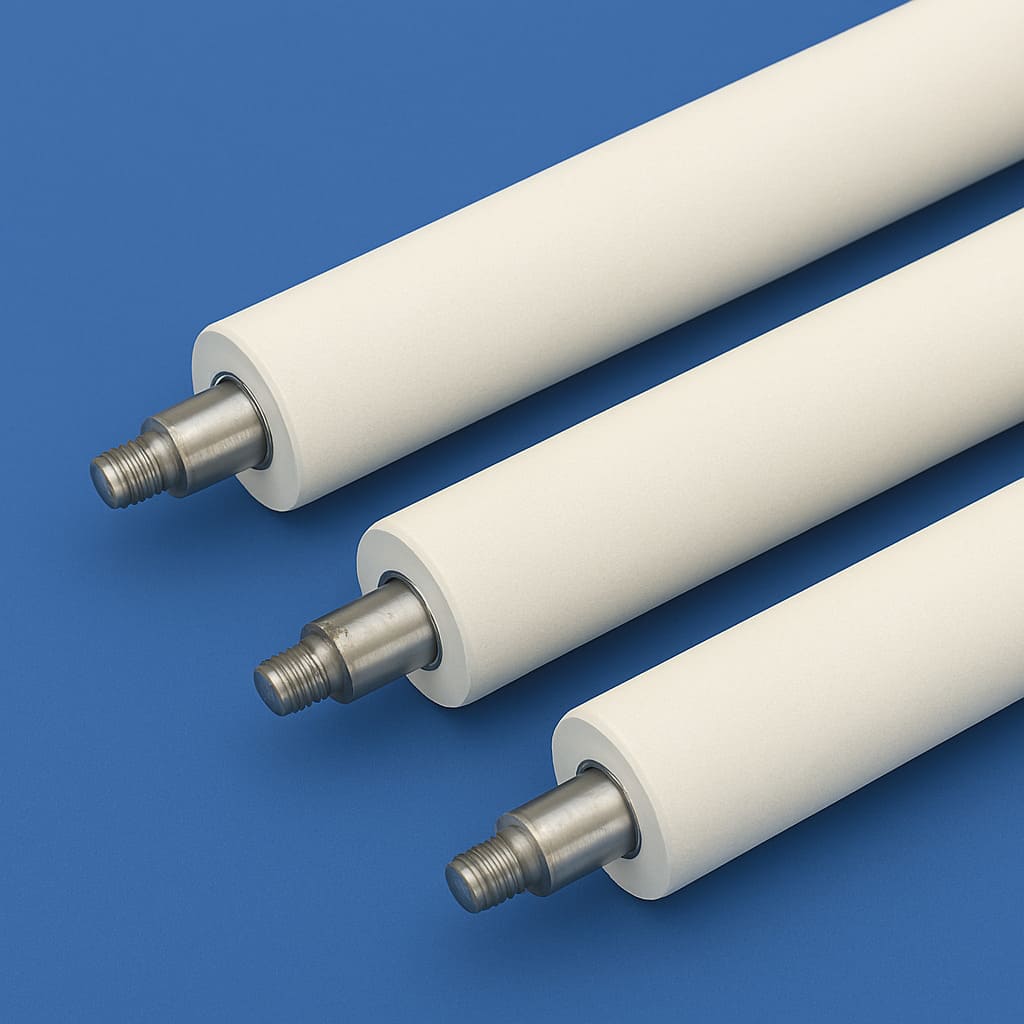
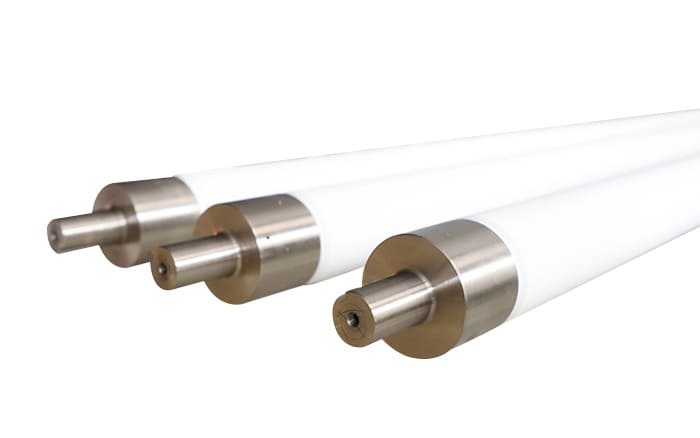
Yes. They can be customized with varying diameters, lengths, end configurations (e.g., through-holes, threaded ends), and special profiles based on equipment requirements, subject to proven manufacturing processes to ensure performance.
Get A Quote
Request a personalized quote tailored to your specific requirements.