
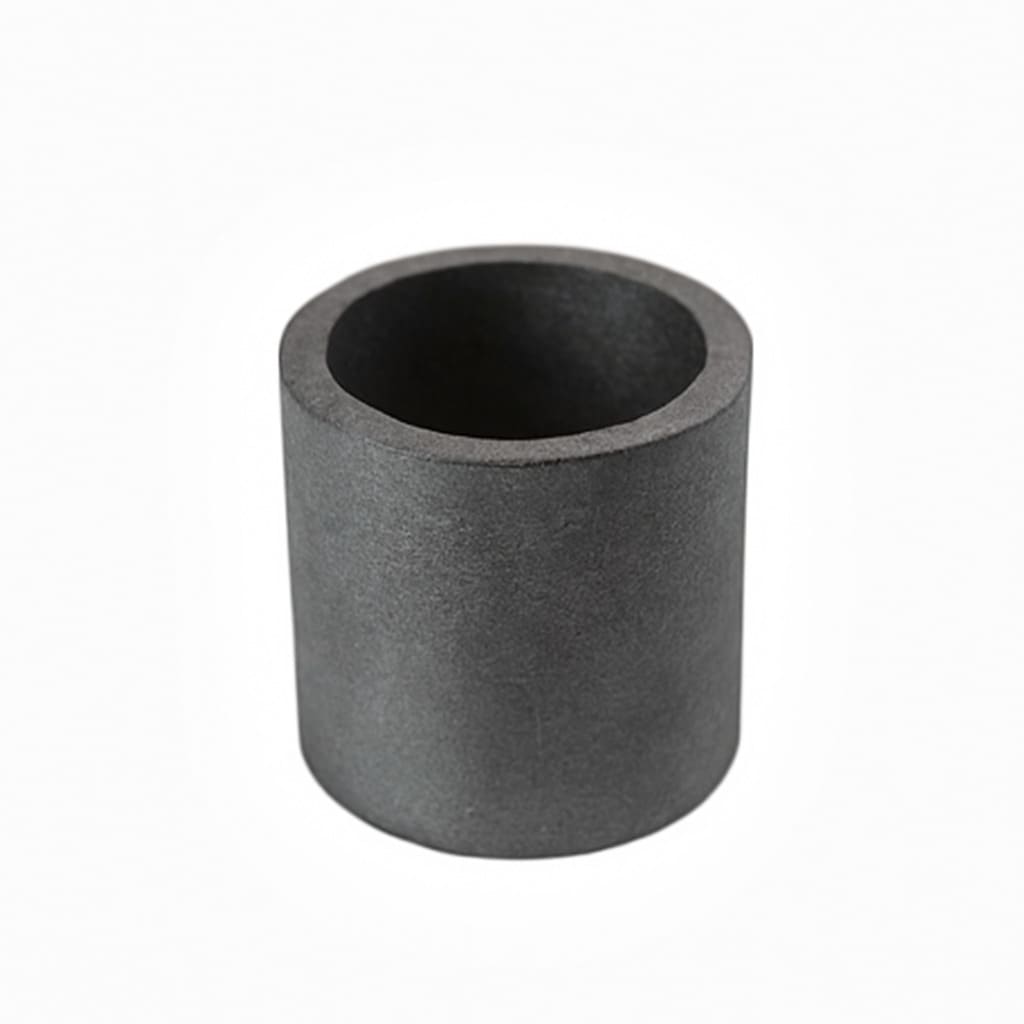
Graphite Crucible
The graphite crucible is a high-temperature resistant container with excellent thermal conductivity, widely used for melting and heat-treating metals, alloys, and non-metallic materials. Made of high-purity graphite, it offers outstanding thermal stability and thermal shock resistance, capable of withstanding extreme temperatures while resisting chemical corrosion. Designed for prolonged service life, it is suitable for high-temperature processes under vacuum or protective atmospheres, commonly employed in metallurgy, foundry, semiconductor, and photovoltaic industries.
- Custom and standard options available.
- Fast lead times guaranteed.
- High performance at a competitive price.
Graphite Crucible Data Sheet
| Purity | ≥99.9% |
| Color | Dark Gray to Black |
| Chemical Formula | C |
| Material Grades | Natural Graphite, Synthetic Graphite, Specialty Graphite, Composites Graphite |
| Density | 1.65–1.95 g/cm³ |
| Maximum Operating Temperature | Up to 3000°C (in inert atmosphere) |
| Thermal Conductivity | 100–200 W/m·K |
Graphite Crucible Description
A graphite crucible is a high-performance refractory vessel made primarily from high-quality natural flake graphite, renowned for its exceptional resistance to extreme temperatures (up to 3000°C), superior thermal conductivity and thermal shock resistance, as well as strong chemical stability. Ideal for melting, purification, and casting under demanding conditions, it is widely utilized in metallurgy for precious and non-ferrous metals, in the semiconductor and photovoltaic industries for silicon crystal growth, and in high-temperature laboratory applications. Designed to ensure efficient heat transfer and long-lasting durability, the graphite crucible serves as an essential component across advanced high-temperature industrial processes.
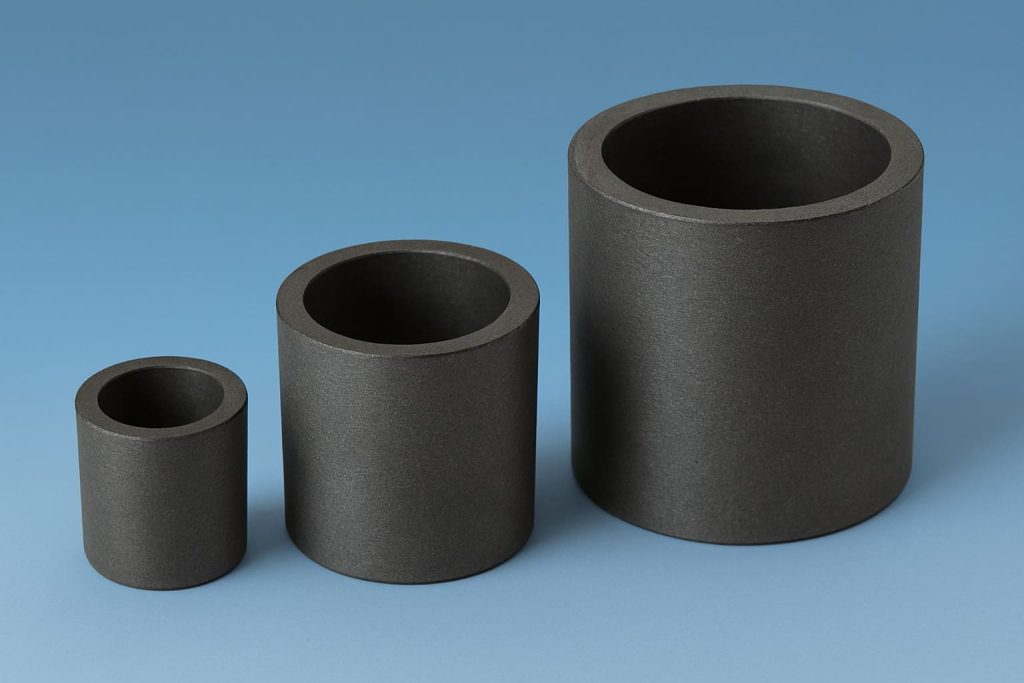
Graphite Crucible Specifications
| Items | Unit | Value | |
| Grain Size | mm | 0.045-4 | |
| Bulk Density | g/cm3 | 1.65-1.95 | |
| Resistivity | μΩ•m | 8.0-11.0 | |
| Bending Strength | Mpa | 18-55 | |
| Compressive Strength | Mpa | 36-100 | |
| The Coefficient of Thermal Expansion (C.T.E) | ×10-6/ ℃ | 2.9-3.0 | |
| Ash | % | 0.1-0.3 | |
| Dimensions | Diameter | mm | 10-1100 |
| Length | mm | ≤2500 | |
| Products can be customized as order requirements or specific drawings. | |||
Graphite Crucible Features
- Excellent high-temperature resistance (up to 3000°C).
- High thermal conductivity for fast and even heating.
- Strong thermal shock resistance under rapid temperature changes.
- Good chemical stability against acids, alkalis, and molten metals.
- Long service life with high mechanical strength.
Graphite Crucible Applications
- Precious Metal Melting: Widely used for refining and casting gold, silver, platinum, etc.
- Non-Ferrous Metal Processing: Ideal for melting copper, aluminum, zinc, and their alloys in foundries.
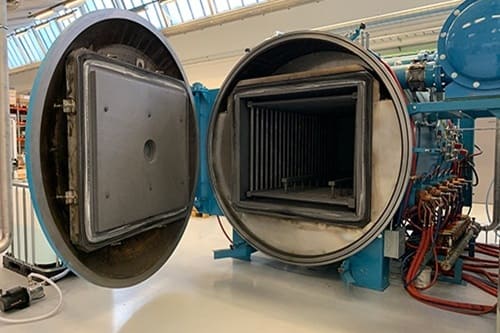
- Semiconductor & Photovoltaic Industry: Essential in pulling monocrystalline silicon rods and casting polycrystalline silicon ingots.
- High-Temperature Lab Research: Serves as a container in experimental furnaces for material synthesis or analysis.
- Special Material Preparation: Used for melting glass, rare-earth materials, and certain ceramic precursors.
Graphite Ceramic Packaging
Graphite ceramic products are typically packaged in vacuum-sealed bags to prevent moisture or contamination and wrapped with foam to cushion vibrations and impacts during transport, ensuring the quality of products in their original condition.

Download
- SAFETY DATA SHEET (SDS) -Graphite Crucible
FAQ
What is the maximum temperature a graphite crucible can withstand?
High-quality graphite crucibles can withstand extreme temperatures up to 3000°C, making them ideal for melting most metals.
Can I use a graphite crucible to melt steel or iron?
It is not recommended. Molten iron reacts with graphite, causing severe erosion. They are primarily designed for non-ferrous metals (e.g., gold, silver, copper, aluminum) and their alloys.
Does a graphite crucible need preheating?
Yes, preheating (“baking”) is strongly recommended. This removes internal moisture and prevents thermal stress cracks, thereby extending service life.
What is the difference between a graphite crucible and a clay-graphite crucible?
The main differences lie in composition and performance. Pure graphite crucibles offer faster heat transfer, better thermal shock resistance, and longer life but at a higher cost. Clay-graphite crucibles (with binders) are more economical but have slightly inferior performance.
How to store graphite crucibles safely?
Store them in a dry, well-ventilated environment to avoid moisture. It’s best to store them individually or with soft padding to prevent collisions and scratches.
Get A Quote
Request a personalized quote tailored to your specific requirements.